
Cochilco sees Chile reaching 50 tonnes of gold, but rank gains hinge on rivals
Atacama operations are reshaping Chile’s gold output, but the country’s place in the global table also depends on other producers’ year-end totals.
redimin.cl
Why it matters: A shift toward dedicated gold mines is changing the sources of Chilean output and could lift the country’s position among global producers.
50 tonnes — Cochilco’s Chilean gold production forecast for 2026
32.77 tonnes — national output from January to August, up 17.7% year on year
US$1.533 billion — projected investment in four gold initiatives for 2025–2034
US$4,650 per ounce — Cochilco’s average gold price forecast for 2027
Cochilco forecasts that Chile will produce 50 tonnes of gold in 2026, up nearly 10% from 45.27 tonnes of fine gold in 2025. The estimate would move Chile from 25th to 23rd in the global producer ranking, although its final position will depend on production totals from other countries at year-end.
Preliminary data from Chile’s National Statistics Institute, cited in Cochilco’s statistical bulletin, show national output reached 32.77 tonnes in the first eight months of 2026, a 17.7% increase from the same period a year earlier.
Atacama mines change the production mix
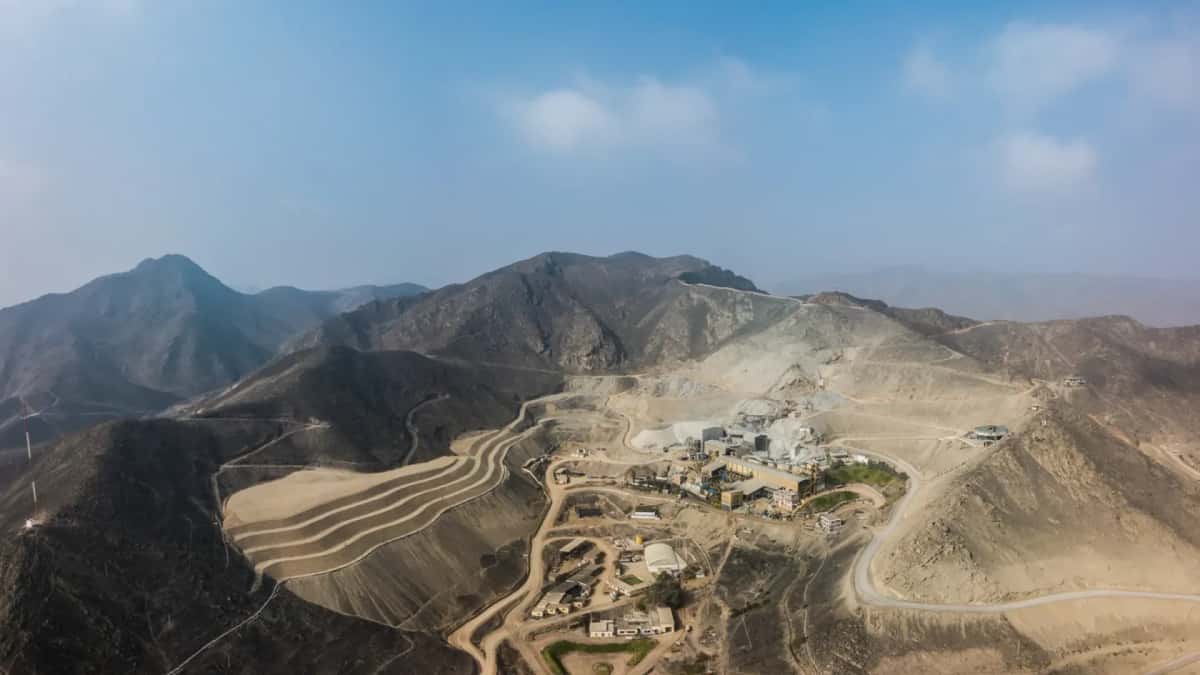
For much of the 2017–2024 period, Chile’s copper mines were the country’s main source of gold, recovered as a by-product. That pattern shifted in 2025, when dedicated gold operations overtook copper mines’ contribution, largely following the addition of Salares Norte, operated by South Africa’s Gold Fields.
Salares Norte produced 337,000 ounces of gold equivalent in the first half of 2026, a 173% year-on-year increase, according to Gold Fields’ financial results. Rio2 Limited’s Fenix Gold, also in the Atacama Region, recorded its first gold pour on January 23, 2026, and had produced 22,236 ounces by the end of September.
The two operations are central to the forecast’s growth, but their reported figures cover different periods and measures: Salares Norte’s figure is gold equivalent for the first half, while Fenix Gold’s cumulative production figure runs through September.
Four initiatives make up the investment pipeline
Cochilco’s 2025–2034 gold-mining investment portfolio includes four initiatives with combined projected investment of US$1.533 billion. The largest is Kinross’ Lobo Marte, estimated at US$1.08 billion, with potential start-up in 2030.
The portfolio also includes Kingsgate Consolidated’s Nueva Esperanza, valued at US$215 million, and Ciclón Exploradora, from Earth Elements SpA, at US$125 million. Kinross’ planned extension of the operating life of La Coipa and Purén accounts for a further US$113 million. The figures are portfolio estimates; the material does not establish that all four initiatives have reached construction or received final investment approval.
Cochilco’s price outlook points higher
Cochilco expects gold to average US$4,650 per ounce in 2027, compared with an average of US$4,522 through October 22, 2026. It also forecasts global gold demand of 5,228 tonnes in 2026 and central-bank purchases of 900 tonnes, up from 848 tonnes in 2025.
Chile’s projected move up the producer ranking remains contingent on both domestic performance and the output reported by competing countries when 2026 results are complete.
More in Resources

YPF and Chevron seek RIGI backing for US$11.688bn Vaca Muerta project
Narambuena’s long-horizon drilling plan now faces Argentina’s review of its eligibility for investment incentives.

Foresea expands Brazil drilling business as its five owned rigs stay with Petrobras
Its Foz do Amazonas campaign adds an exploration front, while undisclosed contract-level figures leave the revenue mix opaque.
Argentina targets US$32.7 billion in copper and lithium exports, but can it build?
The forecast leans heavily on copper, but Argentina has yet to build the large-scale operating base needed to deliver it.