
Argentina targets US$32.7 billion in copper and lithium exports, but can it build?
The forecast leans heavily on copper, but Argentina has yet to build the large-scale operating base needed to deliver it.
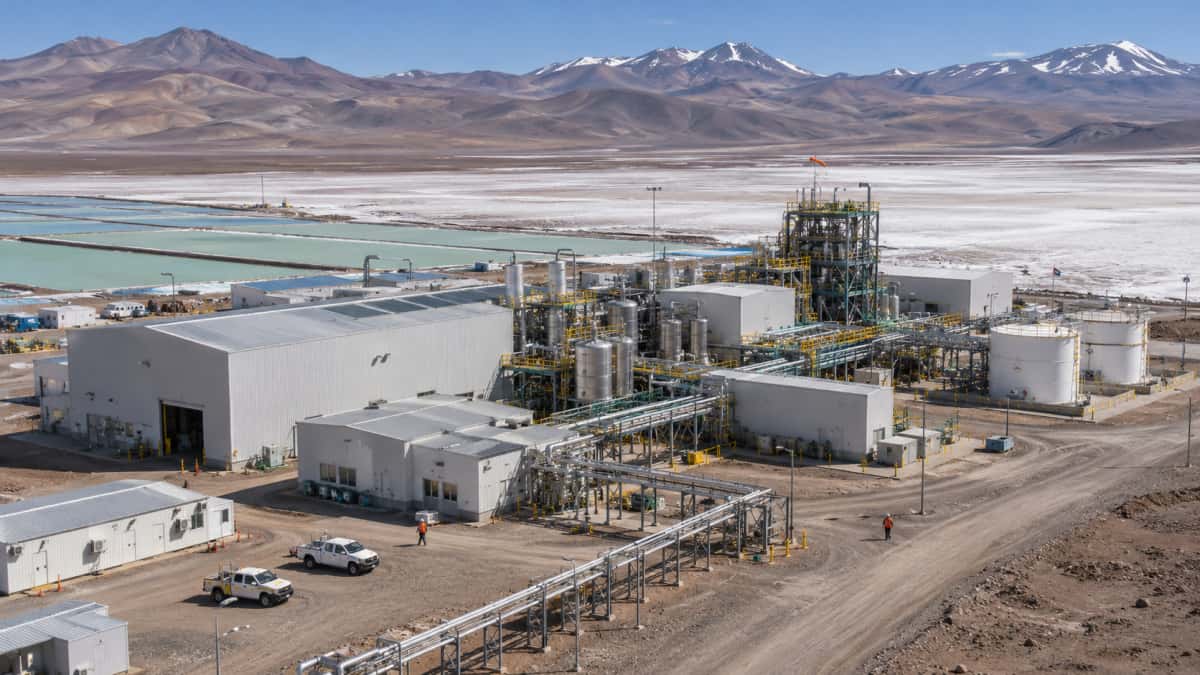
Why it matters: Delivering the export forecast would require Argentina to turn a largely undeveloped copper project pipeline into operating mines while expanding its existing lithium industry.
US$32.7 billion — projected annual copper and lithium exports by 2036
US$20.6 billion — projected annual copper exports, about 63% of the total
1.5 million tonnes — potential annual copper production from seven projects by 2035
US$6.723 billion — Argentina’s mining exports in the first nine months of 2026
Argentina’s mining secretary, Luis Lucero, projected annual copper and lithium exports of US$32.7 billion by 2036, with copper contributing US$20.6 billion and lithium US$12.1 billion. The forecast, presented in May 2026, depends on new projects reaching production and the country building capacity to operate large-scale copper mines.
The projected total would be more than five times Argentina’s entire mining export value in 2025, which was US$6.037 billion. Mining exports reached US$6.723 billion between January and September 2026, up 59.3% year on year, driven mainly by international metal prices and increased lithium production. That growth came before the country’s leading copper projects entered operation.
Copper pipeline carries most of the forecast
Seven advanced copper projects could produce a combined 1.5 million tonnes a year by 2035, equivalent to 6.1% of projected global output that year, according to the figures presented. The list includes Vicuña, which combines the Josemaría and Filo del Sol deposits in San Juan; Los Azules and Altar, also in San Juan; El Pachón; Taca Taca in Salta; Agua Rica-MARA in Catamarca; and PSJ Cobre Mendocino in Mendoza.
Their development stages differ, and the production potential is not yet operating capacity. Financing, technical studies, permits, engineering and final investment decisions remain among the hurdles. Chile and Peru, by contrast, have decades of experience operating large copper mines.
Vicuña received approval to enter Argentina’s Large Investment Incentive Regime (RIGI) on July 30, 2026. The project, backed by BHP and Lundin Mining, includes Josemaría and Filo del Sol and has an investment plan of about US$9.737 billion for mine and infrastructure development. RIGI approval is not equivalent to the full investment being disbursed or commercial production beginning.
Lithium has an operating base, but a steep growth target
Lithium is further along: four projects began production between 2024 and 2025, bringing Argentina’s active operations to seven by the end of that period. Exports reached about US$915 million in 2025. Reaching the US$12.1 billion annual projection would require more than a thirteenfold increase, supported by expansions, new processing plants and favourable market conditions. Jujuy, Salta and Catamarca account for much of the sector’s growth.
RIGI offers tax, customs and foreign-exchange benefits, as well as 30 years of regulatory stability for qualifying projects. But investment incentives alone cannot provide the electricity, roads, water, transport, skilled workers and industrial services needed to build and operate mines.
The expansion could also create business for Chilean suppliers and support cross-border infrastructure and logistics, though those opportunities require specific agreements and regulatory solutions. Ultimately, the forecast rests on projects advancing through investment, permitting and construction, as well as on future commodity prices.
More in Resources

Foresea expands Brazil drilling business as its five owned rigs stay with Petrobras
Its Foz do Amazonas campaign adds an exploration front, while undisclosed contract-level figures leave the revenue mix opaque.
Antofagasta records 40-plus robberies as mining security extends beyond sites
Copper loads, power infrastructure and digital systems widen the exposure, but the reported counts do not show how many attacks succeeded.

Gold retreats after US orders report splits between headline and capital spending
The total-orders reading and a business-investment measure diverged, leaving markets with two different readings of October demand.