
China opens Baotou’s 195-km hydrogen pipeline as supply lags capacity
The route links renewable production with steel and chemical users, but its cost-cutting case depends on a much larger supply base.
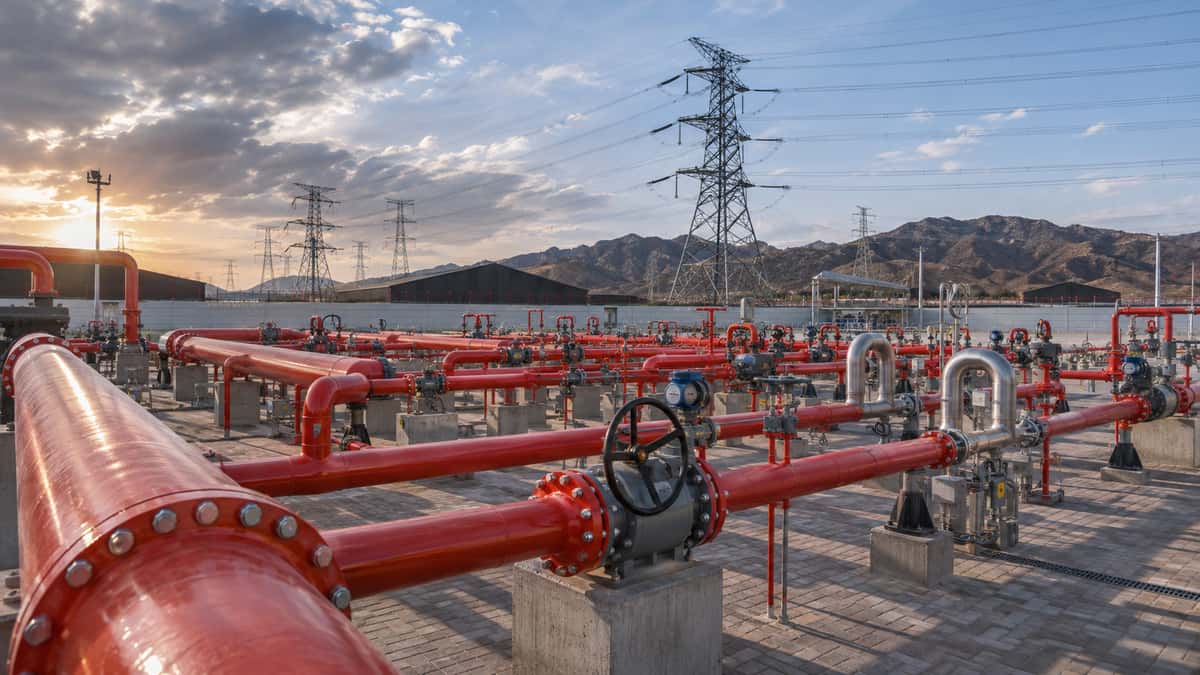
Why it matters: The pipeline could ease a key logistical constraint for industrial hydrogen, but its economics hinge on expanding renewable production and securing steady users.
195 km — pipeline connecting production areas with industrial users in Baotou
100,000 tonnes a year — designed hydrogen transport capacity
7,800 tonnes a year — current green hydrogen production capacity in Baotou
77% — projected transport-cost reduction at full design capacity
China commissioned a 195-kilometre hydrogen pipeline in Inner Mongolia on November 19, designed to carry up to 100,000 tonnes of pure hydrogen a year to industrial users in Baotou. The line’s capacity is far above the city’s current green hydrogen production capacity of about 7,800 tonnes a year, leaving supply growth central to the project’s commercial case.
The pipeline connects renewable-powered production facilities in Darhan Muminggan with industrial distribution infrastructure in Baotou. It is China’s first dedicated hydrogen pipeline longer than 100 kilometres, and is intended to serve metalworking, steelmaking and chemical industries. The project is part of pilot hydrogen developments promoted by China’s National Energy Administration.
Transport costs depend on using the pipeline at scale
The system is designed to operate at 6.3 megapascals, with pipe measuring about 457 millimetres in external diameter. It runs from the Barun industrial area near Bayan Obo to distribution facilities in Baotou’s Kundulun district, crossing areas including Guyang and Urat Front Banner.
Project estimates put transport costs at about 13 yuan per kilogram using specialised trucks, compared with a projected 3 yuan per kilogram once the pipeline reaches design capacity—a reduction of roughly 77%. That saving is a projection, not a result demonstrated during initial operations. The reported investment is 1.126 billion yuan.
Pipelines can move large volumes continuously, avoiding some of the capacity, compression and logistics constraints associated with truck transport. But the gap between the line’s design capacity and local production means the cost case depends on expanding supply and establishing sustained industrial demand.
Specialised steel addresses hydrogen embrittlement
Hydrogen can enter some metals and change their mechanical properties, increasing the risk of cracking and reducing strength under certain conditions. The resulting hydrogen embrittlement is a key design concern for high-pressure pipelines.
Baotou Iron and Steel Group developed specialised steel for the project to resist hydrogen’s effects. Construction also required specific welding and corrosion-protection procedures, as well as work across geologically complex terrain. The project’s materials and operating experience could inform later hydrogen pipeline developments in China, though the system will still need to demonstrate reliable safety, maintenance and performance over its operating life.
Industrial demand and regional networks remain unproven
Baotou’s steel, metal-processing and chemical industries offer potential uses for hydrogen. In steelmaking, hydrogen could replace some fossil fuels and reducing agents, including in direct-reduced iron processes. Chemical producers can use it as a feedstock for products such as ammonia and methanol. Those applications require adapted facilities, dependable renewable power and hydrogen at competitive prices; commissioning the pipeline does not mean connected industries have already switched fuels or eliminated emissions.
The project also offers a reference point for countries considering links between renewable production and industrial demand, including Chile’s mining regions. Its applicability elsewhere cannot be assumed: distances, demand, terrain and construction costs differ, while direct electrification is another option for some uses.
China is also developing a larger, approximately 805-kilometre hydrogen transport system between Inner Mongolia and the Beijing-Tianjin-Hebei region, with initial capacity projected at 300,000 tonnes a year. That network remains in development. For Baotou’s operating line, the immediate test is whether production and contracted industrial consumption can grow enough to use a meaningful share of its installed capacity.
More in Resources

Chile court keeps El Teniente copper-theft suspects in custody despite bail bids
The case reaches across alleged copper handling at Codelco’s mine and cable thefts from a regional power-transmission network.
Chile’s 14.7% mining decline hits GDP, but output weakness is not the whole story
Copper prices are forecast to stay high, yet geological and operational limits are keeping production from responding.
Amex Gold reaches 200 metres at Perron as bulk-sample test approaches
A 40,000-tonne extraction programme is intended to test whether the deposit’s models translate into workable underground conditions.