
Chile's October solar approvals all include batteries, testing its 2030 storage goal
The approvals add generation across three regions, while projects already under construction could alter the timetable for Chile's storage ambitions.
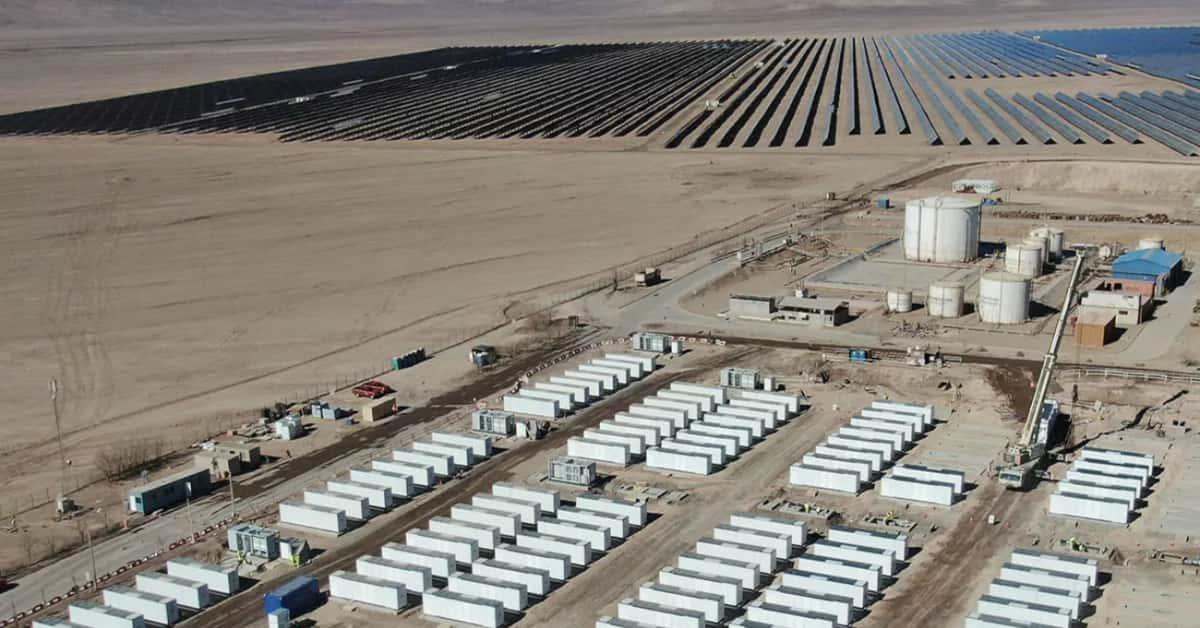
Why it matters: Battery systems are becoming part of Chile's solar project design, helping address when electricity can be delivered as well as how much can be generated.
892 MW — net capacity of the five solar projects approved in October
US$1.048 billion — estimated investment across the five projects
3,880 MW — storage capacity in operation at the end of October, about 65% of the 2030 target
US$3.066 billion — estimated investment in storage systems under construction
Chile's five power-generation projects that received favourable environmental assessments in October all include battery storage, according to Ministry of Energy figures. The solar projects total 892 MW of net capacity and an estimated US$1.048 billion in investment across the regions of Antofagasta, Atacama and Maule.
Four projects were assessed through Environmental Impact Declarations (DIAs) and one through an Environmental Impact Study (EIA), according to the Environmental Assessment Service (SEA). The approvals come as Chile expands storage capacity to manage renewable generation and electricity supply across different hours of the day.
Antofagasta projects account for the largest investments
The largest project is the 468 MW Parque Fotovoltaico Elena 2 in Antofagasta, with estimated investment of US$577 million. The 250 MW Parque Solar Fotovoltaico Ceibo in Atacama follows, with US$220 million. Together, the two projects represent about 76% of the investment associated with October's approved generation plants.
The other projects are the 90 MW Parque Fotovoltaico Hemera in Maule, estimated at US$130 million; a roughly 77 MW solar park intended to supply SQM facilities in Antofagasta, at US$111 million; and the 7 MW Planta Fotovoltaica Cayena in Atacama, at US$10 million.
Battery systems shift solar power beyond generation hours
Hemera's project documents describe installed battery storage capacity of 541.44 MWh. The system is designed to deliver 90 MW to the National Electric System for five hours. The project illustrates how storage can shift some electricity generated during strong sunlight into later periods, including after sunset.
The solar plant planned to supply SQM's facilities in María Elena includes a 320 MWh battery system. Its stated design allows it to provide 20 MW for 16 continuous hours, contributing to electricity supply for the company's Coya Sur operation. These are project-specific configurations; the approvals do not establish that the systems are already operating.
Operating capacity remains below Chile's 2030 target
Chile had 3,880 MW of energy storage in operation at the end of October, about 65% of its 6,000 MW target for 2030. Three battery systems entered service during the month, adding a combined 757 MW. The Ministry of Energy said the target could be reached in early 2027, based on projects in construction and testing.
At October's end, 31 storage systems were under construction, representing estimated investment of US$3.066 billion and combined capacity of 3,607 MW. That investment was higher than the US$3.007 billion associated with 42 generation plants under construction over the same period. The ministry's early-2027 projection depends on those projects advancing through construction and testing.
More in Resources
Acenor challenges Chile's ancillary-services market over cost allocation
With regulators considering new grid services, industrial users want proof that each charge meets a measurable system need.
Copper's 11-session slide puts Chile's 2027 price benchmarks under pressure
Chile's output is falling too, leaving export revenues exposed if the international correction persists.

World Gold Council’s digital gold pilot tests whether bullion claims can travel
The trial comes as the UK examines how tokenised gold should be traded, held and used as collateral.