
Acenor challenges Chile's ancillary-services market over cost allocation
With regulators considering new grid services, industrial users want proof that each charge meets a measurable system need.
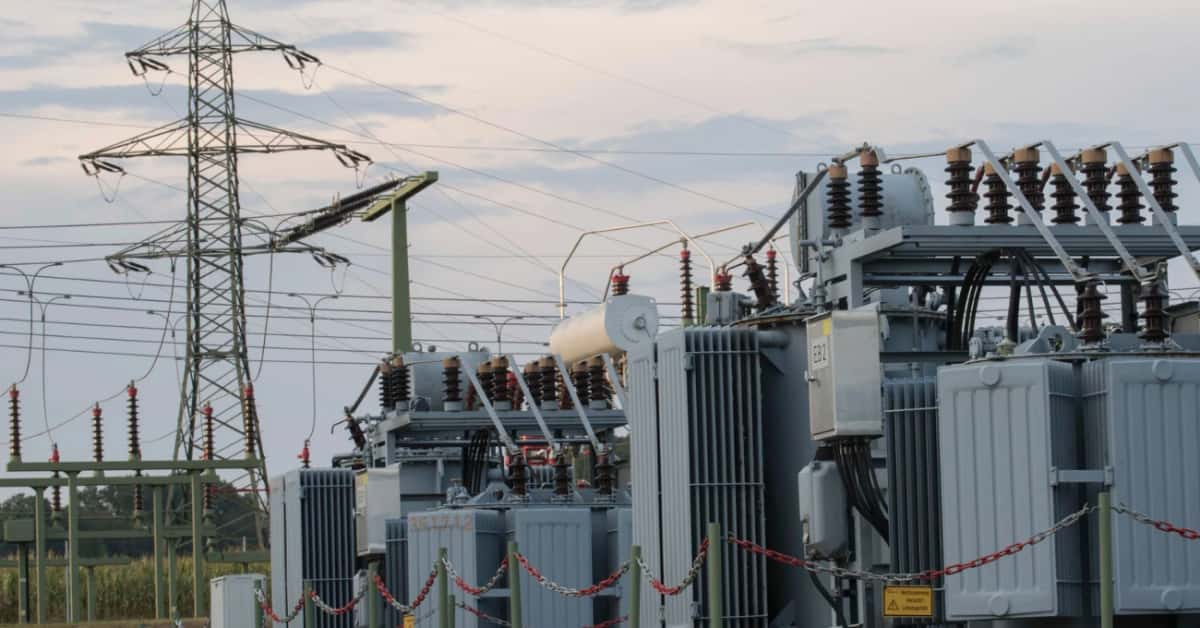
Why it matters: The way Chile allocates grid-stability costs can affect power bills for mines that depend on continuous electricity supply.
US$3.70 per MWh — average combined ancillary-services costs from October 2024 to October 2025.
US$10.01 per MWh — average for a broader group of system costs, not ancillary services alone.
Acenor, Chile’s Association of Unregulated Electricity Customers, is calling for a review of how the costs of ancillary services are allocated, arguing that the mechanism does not yet operate as a genuine market. The CNE reported that the services averaged US$3.70 per MWh withdrawn from the National Electric System between October 2024 and October 2025, costs that can flow through to mines and other large consumers depending on their supply contracts.
Acenor president Francesca Milani made the comments at an industry meeting organised by Wärtsilä Chile. She said ancillary services should not be used to restore revenues for any generation technology, and argued that investments to strengthen grid security should be tied to quantified needs and assessed against alternative solutions.
CNE figures include costs beyond ancillary services
The National Energy Commission’s 2026 report on electricity-supply tender working groups put ancillary-services-related overcosts at an average of US$2.76 per MWh for the period. Other remuneration for the services averaged US$0.94 per MWh, bringing the combined figure to US$3.70 per MWh.
The report also calculated an average of US$10.01 per MWh when other system charges were included, such as generation overcosts, start-up and shutdown costs, and compensation linked to stabilised prices. That broader figure is not an ancillary-services tariff or a rate charged directly to every mining company. The amount a consumer bears depends on its electricity use, supply period and contract terms.
According to the National Electric Coordinator, transfers for ancillary services are mainly distributed among generators making withdrawals to supply customers, with exceptions for particular services. Those costs may then be passed on to end users through electricity prices, depending on the contract between a customer and its supplier.
Acenor objects to automatic cost sharing
Milani’s concern is that charges may be spread across consumers without sufficiently distinguishing which projects, technologies or areas created the need. Acenor says each investment intended to improve security should have a quantified technical rationale and an economic assessment comparing possible solutions. It also argues that the system should procure the technical attributes it needs, rather than favouring specific technologies, with competition where possible and regulatory oversight where it is not.
The association has also warned against paying twice for equivalent functions. If new infrastructure removes an existing operational overcost, Acenor’s position is that the corresponding expense should also be removed from the payment structure, rather than continuing to be recovered from consumers.
In April 2026, Acenor and the Mining Council asked the CNE to assess proposed services related to frequency robustness and voltage strength. They called for evidence of technical and economic need, consideration of less costly alternatives and safeguards against duplicate remuneration. The CNE said the potential economic impacts and risk of overlapping services should be assessed before new categories are added, and reported that it was moving to commission a specialist study.
Reliability remains central to mining users
Acenor’s position is not a call to lower security standards. Milani said industrial consumers need a reliable grid because an interruption lasting seconds can result in hours of lost production. For mines, continuous power is important to keep equipment and processing operations available.
The Coordinator also recommended changes in April 2026 to the remuneration of frequency-control service auctions, including a move from payment based on the winning offer to a uniform-price model. It proposed changes to the methodology for side payments associated with generator operation.
The regulatory question is how to secure the required grid performance while tying costs to demonstrable needs and avoiding duplicate payments. The CNE’s planned specialist study is intended to inform its assessment; the reported system-wide averages do not establish the charge applicable to any individual mine.
More in Resources
Copper's 11-session slide puts Chile's 2027 price benchmarks under pressure
Chile's output is falling too, leaving export revenues exposed if the international correction persists.
Chile's October solar approvals all include batteries, testing its 2030 storage goal
The approvals add generation across three regions, while projects already under construction could alter the timetable for Chile's storage ambitions.

World Gold Council’s digital gold pilot tests whether bullion claims can travel
The trial comes as the UK examines how tokenised gold should be traded, held and used as collateral.