
Chile’s Central mining zone needs 7,625 workers by 2034 as youth share falls
Technical schools offer a potential pipeline, but men and women diverge sharply in whether they continue into mining-related studies.
Why it matters: An ageing workforce makes replacement hiring a central operational challenge for mines across central Chile.
7,625 workers — projected demand in the Central Macrozone by 2034
94% — share of demand attributed to replacing workers reaching retirement age
3.6% — share of the regional mining workforce under 29 in 2024, down from 9.2% in 2014
25,226 students — mining-linked technical secondary enrolment across 212 schools
The large-scale mining industry in Chile’s Valparaíso, Metropolitan and O’Higgins regions will need an estimated 7,625 workers by 2034, with replacement of employees reaching retirement age accounting for 94% of projected demand, according to the regional chapter of the 2025–2034 Chilean Large-Scale Mining Workforce Study.
The estimate represents 20.7% of projected national demand of 36,895 people, placing the Central Macrozone second behind Antofagasta. The region had 48,143 mining workers in 2024, or 23% of employment in the country’s large-scale mining sector.
The study was prepared by the CCM-Eleva alliance. Its published regional material does not detail the estimation method or break demand down by year, so the 7,625 figure represents a requirement by the end of the forecast period—not vacancies for a single hiring season.
Retirement drives most projected hiring
The workforce outlook points to a marked decline in younger employees. Workers under 29 made up 3.6% of mining company staff in the Central Macrozone in 2024, compared with 9.2% in 2014. The study describes this as part of a national trend towards an older workforce, with a growing presence of senior employees and a smaller share of younger workers.
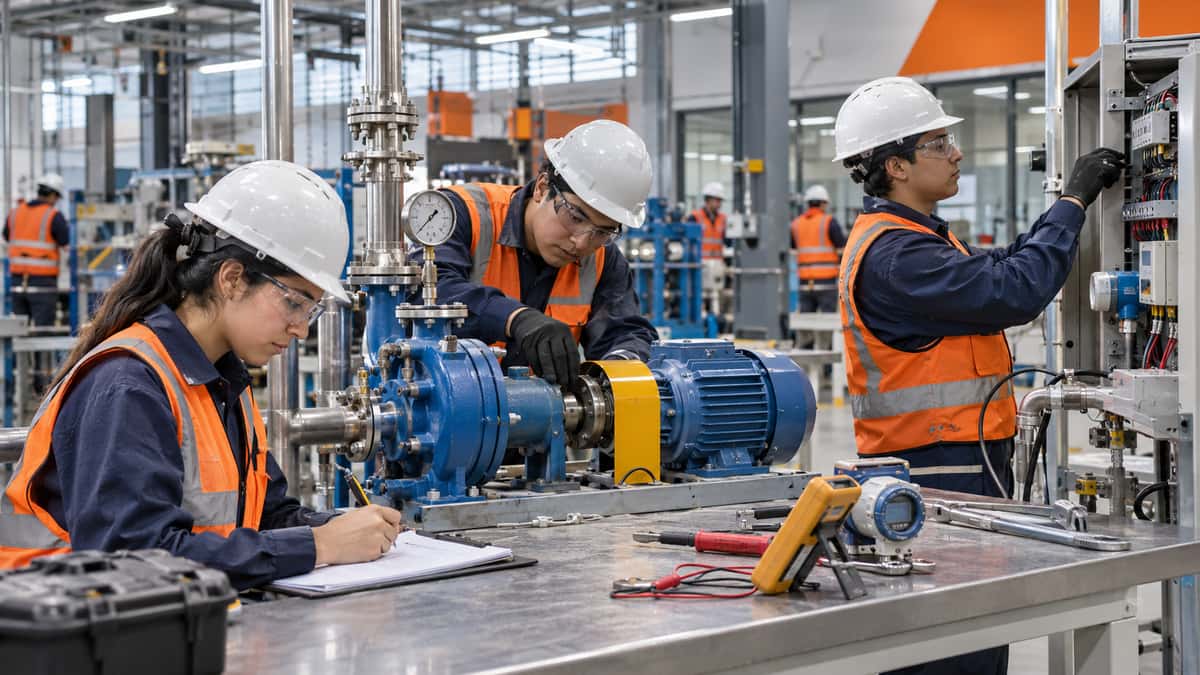
Maintenance and operations roles account for many of the projected requirements. The largest listed occupations are 1,503 mechanical maintainers, 778 mobile-equipment operators, 598 maintenance professionals and 528 electrical maintainers. Together, those four categories represent 3,407 workers. The published figures do not specify how the roles are distributed among the three regions or when the positions would be needed.
O’Higgins regional mining secretary Carla Ortiz said anticipating retirements and strengthening training for new talent are part of preparing the industry. The study’s estimate, however, identifies replacement—not only potential growth in operations—as the dominant source of demand.
Automation adds pressure to skills planning
The workforce projection coincides with changes in mine technology. The region’s autonomous truck fleet is forecast to grow from 26 to 48 units over the next decade. The Central Macrozone is also home to eight of Chile’s 15 Integrated Operations Centres and 77% of the people working in them.
The report links these trends to the need for skills suited to more automated and digital operations. It does not estimate how many of the 7,625 projected workers will be hired specifically for roles connected to those technologies, leaving the relationship between automation and occupational demand unquantified.
The education base is substantial: the region accounts for 45% of national enrolment in mining-linked Technical and Vocational Secondary Education, with 25,226 students across 212 schools. Vladimir Glasinovic, director of Fundación Chile’s Eleva programme, said the challenge is to turn that base into employment pathways and strengthen connections among schools, higher education and industry.
Women’s workforce share exceeds national average
Women made up 24.7% of mining company employees in the Central Macrozone in the first half of 2026, above the national average of 24.1%. But the study also reports a gap in continuation into further study among graduates of mining-related technical programmes: 78.7% of men who continued their education chose programmes aligned with the sector, compared with 38.3% of women.
The available figures do not track subsequent employment outcomes for those groups. The study identifies generational replacement, preparation for automation and the gender gap in further study as workforce challenges through 2034, but does not provide annual hiring targets or a breakdown of the forecast by region.
More in Resources

Black Cat adds 83 sq km at Kal East as Jones Find’s pit edge constrains plans
Historical drilling points southeast beyond the current tenure edge, but the added ground has yet to enter Jones Find’s mine planning.
Copper falls nearly 18% as US tariff bets cloud tightening supply
Metal moved into the United States ahead of possible duties could return to other markets even as mine and refined supply remain constrained.
Auren solar project targets Escondida, but grid exports remain undefined
The Antofagasta proposal pairs solar generation with batteries, but the filing does not state how long they can discharge.