
Chile forecasts 2027 copper recovery, but output remains below 2025 levels
Escondida, Codelco and Spence drove most of the recent losses, while lower grades and operating limits leave the recovery exposed.
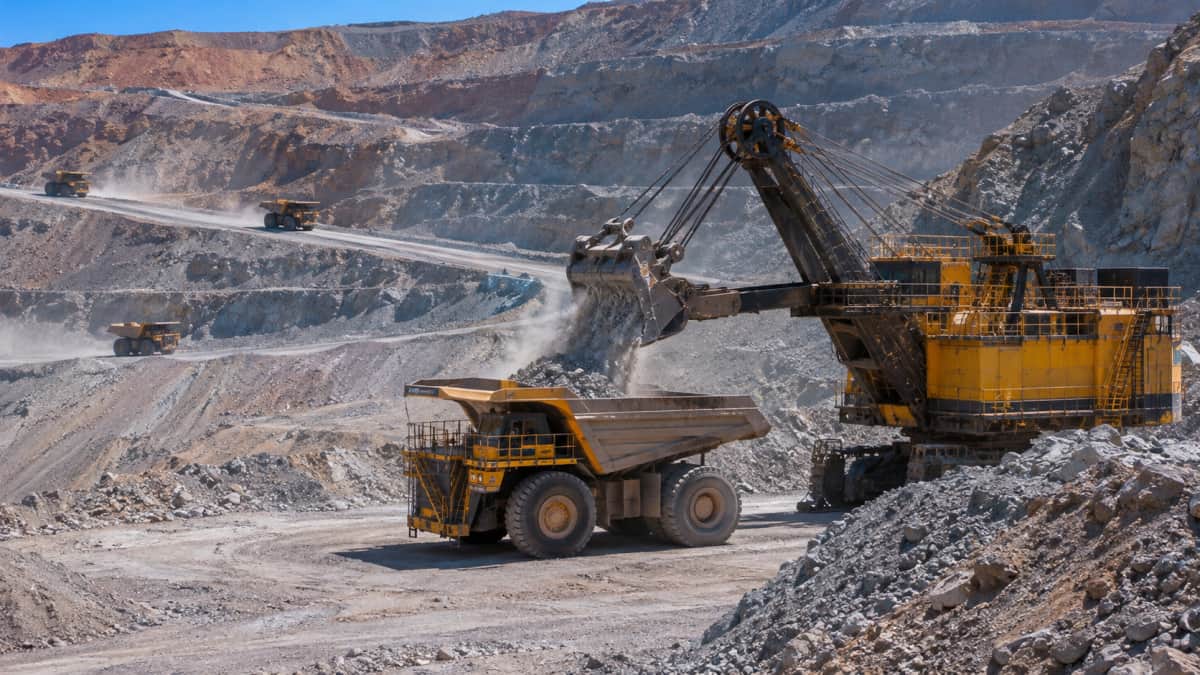
Why it matters: Chile’s ability to restore mine output will shape how much the world’s largest copper-producing country can contribute to a market with strong price expectations.
5.08 million tonnes — Cochilco’s Chilean copper output forecast for 2027
4.94 million tonnes — projected 2026 output, down 8.4% year on year
262,000 tonnes — combined year-on-year production decline at Escondida, Codelco and Spence through September 2026
US$5.95 per pound — Cochilco’s forecast average copper price for 2027
Chile’s copper production is forecast to rise 3% in 2027 to 5.08 million tonnes, according to the Chilean Copper Commission (Cochilco), but that would still leave output about 310,000 tonnes below the 5.39 million tonnes produced in 2025.
The forecast follows a projected 8.4% contraction in 2026, to 4.94 million tonnes, which would mark Chile’s lowest annual production since 2003. Cochilco cut its 2027 estimate from 5.55 million tonnes in August to 5.08 million tonnes in an update on October 30, a reduction of about 8.5%.
Three major operations account for most of the recent losses
Production declines at Escondida, Codelco’s own operations and Spence totalled 262,000 tonnes year on year through September 2026, or about 77% of the national decline over that period. Escondida was down 127,000 tonnes, Codelco 84,000 tonnes and Spence 51,000 tonnes.
Codelco produced 853,000 tonnes from its own operations in the first nine months of 2026, compared with 937,000 tonnes in the same period a year earlier. Operational constraints at El Teniente, Chuquicamata and Ministro Hales contributed to the fall. The state miner’s 2027 production is expected to be around 1.2 million tonnes.
Codelco also recognised US$4.82 billion in asset impairments at its Chuquicamata, Salvador and Gabriela Mistral divisions. The accounting charge does not directly reduce future production, but reflects economic challenges at those operations. El Teniente’s recovery, progress at Chuquicamata Subterránea and production at Rajo Inca will be among the factors affecting the company’s output.
Escondida produced about 891,300 tonnes in the first nine months of 2026, down 12.5% year on year. BHP’s guidance for its fiscal 2027, which runs from July 2026 to June 2027, is 1 million to 1.1 million tonnes, with lower ore grades cited as a constraint. A new concentrator is intended to support the mine over the longer term, but is not expected to lift production immediately in 2027. Spence’s recovery and chalcopyrite leach projects are also expected to contribute later, with first production anticipated in 2028.
Quebrada Blanca offers a counterweight, with execution risks
Quebrada Blanca’s production rose about 18% in the first nine months of 2026. Teck’s full-year forecast is 200,000 to 235,000 tonnes, despite adverse weather conditions in the third quarter. Further contribution depends on stable operations, tailings management and maintenance performance.
Cochilco forecasts global mine production of 24.08 million tonnes in 2027, up 3.4%. Chile’s projected 5.08 million tonnes would represent about 21.1% of that total. The commission also expects copper to average US$5.95 per pound in 2027, down from its US$6.18 forecast for 2026. Higher prices alone, however, do not increase export volumes if production remains constrained.
The national forecast therefore hinges on operating continuity, ore grades and whether planned investments translate into productive capacity. Cochilco’s 5.08-million-tonne estimate remains dependent on performance at the large existing mines and the stability of Quebrada Blanca’s operations.
More in Resources
Peru's mining investment boom contrasts with a September exploration decline
Most new spending is going to infrastructure and mine preparation as Peru competes with Chile for copper capital.
Chile’s copper energy use rises as output falls, putting ore grades in focus
With concentrators projected to take 55% of mining power by 2034, can equipment upgrades offset the changing rock entering the circuit?
Chile's mining investment leans on brownfields as falling grades test future output
Mature operations must process more material to sustain copper output, while new exploration still has to establish what lies beneath untested ground.