
Chile’s copper energy use rises as output falls, putting ore grades in focus
With concentrators projected to take 55% of mining power by 2034, can equipment upgrades offset the changing rock entering the circuit?
im-mining.com
Why it matters: If higher-grade ore reduces the tonnes that must be mined and processed for each tonne of copper, it could ease pressure on power, water and plant capacity.
210.6 PJ — Chilean copper mining’s total energy use in 2025, up 27.3% from 2015.
5.39 million tonnes — copper output in 2025, down from 5.77 million tonnes a decade earlier.
0.58% — average copper grade treated in Chile in 2025 across concentration and leaching.
981 GWh — modeled annual concentration-power saving if 500,000 tonnes of copper were produced at 1.2% rather than 0.6% grade.
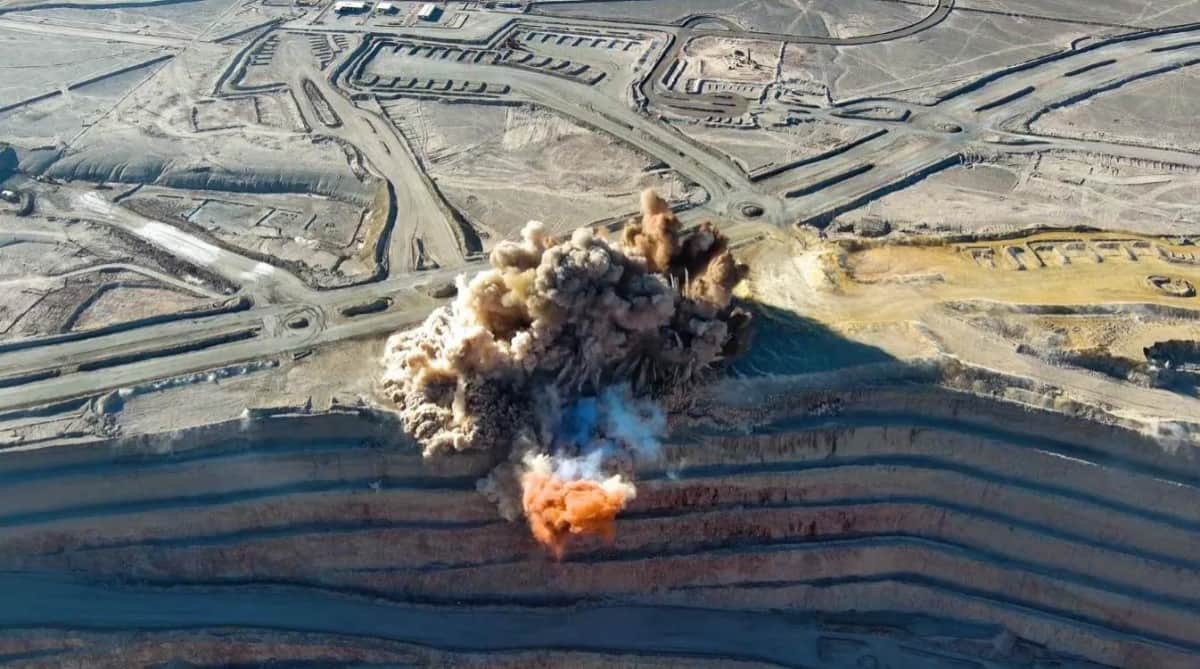
Chile’s copper industry consumed more energy in 2025 than in 2015 despite producing less metal, according to figures from the Chilean Copper Commission (Cochilco). The trend is renewing attention on ore grades: a higher concentration of copper in feed could mean less rock has to pass through energy- and water-intensive processing circuits.
The sector used 210.6 petajoules of energy in 2025, equivalent to 58.5 terawatt-hours, compared with 165.5 PJ in 2015. Copper production fell 6.6% over the same period, to 5.39 million tonnes. Energy use per tonne of copper rose from 28.7 to 39.1 gigajoules.
The figures do not by themselves show that mine operators became less technologically efficient. Cochilco’s account of the changing production conditions includes deeper deposits, more material moved, a shift toward sulphide processing and declining grades. Those factors can increase the work required to produce a unit of metal even as equipment and operating practices improve.
Lower grades mean more material through the plant
Cochilco projects copper-mining electricity demand will rise from 27.6 TWh in 2025 to 33.2 TWh in 2034, while production is expected to grow by 8.3%. Concentrators are projected to use 18.1 TWh in 2034, about 55% of the sector’s electricity. Water supply is another demand driver: the commission estimates 5.4 TWh will be associated with seawater use that year, including the energy needed to supply mines.
The average grade treated in Chile during 2025 was about 0.58%. At that grade, each tonne of ore contains 5.8 kilograms of copper before processing losses. The source analysis estimates that, at a uniform 90% metallurgical recovery, about 192 tonnes of 0.58%-grade ore would be needed to recover one tonne of copper, compared with 93 tonnes at 1.2% grade.
A modeled case shows the scale of potential savings
The analysis tests a hypothetical concentrator producing 500,000 tonnes of copper a year, using a 90% recovery rate, 21.2 kilowatt-hours of electricity per tonne of ore and water consumption of 0.6 cubic metres per tonne. At a 0.6% grade, the model requires 92.6 million tonnes of ore annually. At 1.2%, it requires 46.3 million tonnes.
Under those assumptions, annual concentration electricity falls from 1,963 GWh to 981 GWh, while water use falls from 55.6 million to 27.8 million cubic metres. The modeled reduction in daily processing capacity is also substantial: from about 264,550 tonnes a day at 0.6% grade to 132,275 tonnes at 1.2%, for the same annual copper output.
These are scenario results, not a forecast that Chile will discover or produce enough higher-grade ore to replace lower-grade feed. The model holds recovery and unit consumption constant; actual outcomes depend on deposit characteristics, mineralogy and plant design. Its water-related energy estimate also assumes the avoided water would otherwise be desalinated and pumped to altitude, and excludes friction losses and other auxiliary requirements.
More in Resources
Chile's mining investment leans on brownfields as falling grades test future output
Mature operations must process more material to sustain copper output, while new exploration still has to establish what lies beneath untested ground.
Argentina targets new copper mines as Chile spends to sustain mature operations
Seven advanced Argentine projects face a different test from Chile’s brownfield pipeline: turning proposed capacity into operating mines.
Chile's copper output gap could exceed US$11 billion, but not all is exploration
Cochilco's 2026 forecast sits below Chile's 2015 output, while ageing mines and operational disruptions complicate the cause.