
What would it cost Chile to finance an Australian-style exploration market?
Chile has exchange, custody and geology-data systems in place, but discovery-stage companies still lack a dedicated market for risk capital.
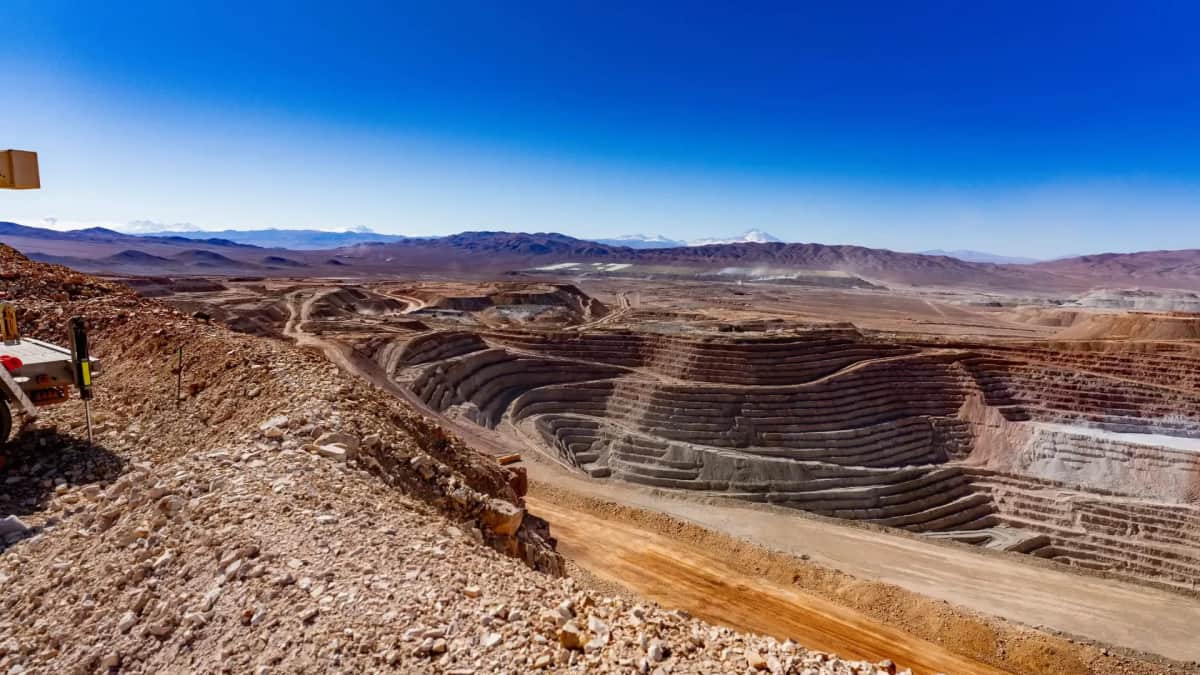
panorama-minero.com
Why it matters: A dedicated financing system could help fund discoveries that replenish Chile’s mineral pipeline, while sharing exploration risk between the state and private investors.
US$10 million — illustrative initial cost to establish a specialised market using existing infrastructure
US$100 million a year — proposed direct public funding for exploration and related functions
US$200 million — assumed annual private capital alongside the public programme
US$179.2 million — indicative first-year public commitment, including estimated tax revenue foregone
Chile could establish a specialised junior mining market for an illustrative US$10 million in initial implementation costs, then commit US$100 million a year to exploration-related funding and infrastructure, according to a proposal that draws on existing financial institutions. With assumed private investment of US$200 million annually, the plan would support US$300 million in yearly financing.
The figures are planning assumptions, not an approved government budget or official cost estimate. Including estimated tax incentives, the proposal’s indicative public commitment would reach US$179.2 million in the first year and US$169.2 million in later years, before any recovery of investment capital.
Australia’s model extends beyond its stock exchange
The Australian Securities Exchange has helped mining, metals and steel companies raise about US$66 billion through initial listings and later capital raisings between July 2016 and June 2026. That figure covers producers and developers as well as explorers, so it is not an exploration-financing total.
Australia’s system also includes public geological information, specialist investors and brokers, technical reporting standards, universities and government co-funding. Its national Resourcing Australia’s Prosperity initiative allocates A$3.4 billion over 35 years to improve knowledge of mineral, energy and groundwater resources. Western Australia’s Exploration Incentive Scheme separately provides up to 50% co-funding for eligible drilling and geophysical work, subject to programme limits.
The proposal argues Chile need not reproduce every institution from scratch. The Bolsa de Santiago and nuam, the ScaleX market for growing companies, the Financial Market Commission, the Central Securities Depository and Sernageomin’s geological information systems are among the existing assets it identifies. A specialised market could build on those systems; creating liquidity, attracting investors and sustaining analyst coverage would be a separate challenge.
Tax incentives are still moving through Congress
A market-capital reform introduced in September 2026, Bill 18.643-05, proposes a special framework for innovation and mineral exploration companies. The original financial report from Chile’s Budget Office estimated that, in 2027, a tax credit for investments in the junior segment—including start-ups—could reduce revenue by CLP32.654 billion. A separate exploration-expense benefit was estimated to reduce revenue by CLP29.628 billion.
Together, those estimates amount to CLP62.282 billion, or about US$69.2 million using the proposal’s illustrative exchange rate of CLP900 per US dollar. The junior-segment credit also covers non-mining innovation companies, so the entire amount cannot be attributed to mining. As of 27 November 2026, the bill remained under legislative consideration and its terms could change.
A proposed programme would seek to multiply public funding
The proposed annual US$100 million public programme allocates US$35 million each to competitive drilling co-funding and a venture-capital fund for junior companies. It assigns another US$20 million to public geological and geophysical information, with US$5 million each for oversight and international promotion and market development.
Under the illustrative financing model, public drilling support would be matched by US$35 million in private money, while US$35 million for specialised funds would attract a further US$105 million. Independent market offerings are assumed to raise US$60 million. The resulting US$200 million in private capital is an assumption, not a forecast; it depends on available projects and investor participation, with no double-counting between funding channels.
The proposal estimates initial market implementation at US$10 million, covering regulatory work, platform changes, disclosure and oversight systems, geological-data integration, training and promotion. It stresses that these are not official budgets or supplier quotations. The next step would be to update the fiscal estimates and define the programme’s terms as the legislation proceeds.
More in Mining Stocks
Why Chile has not built a lasting junior market for mineral exploration
Major producers absorbed most exploration spending in 2025, while earlier exchange efforts struggled to turn listings into repeat financing.
Chile’s 1% copper-export exploration scenario leaves the funding model open
The hypothetical pool would target early-stage work, but export receipts are not automatically available to the state.
Chile’s mining concessions span 13.6 million hectares, but exploration is hard to track
Falling grades are sharpening the need for new targets as Chile changes what concession holders report and pay.