
Chile's US$111bn mining pipeline puts greenfield funding in focus
Tax certainty targets large projects, while proposed financing tools for junior explorers have yet to clear Congress.
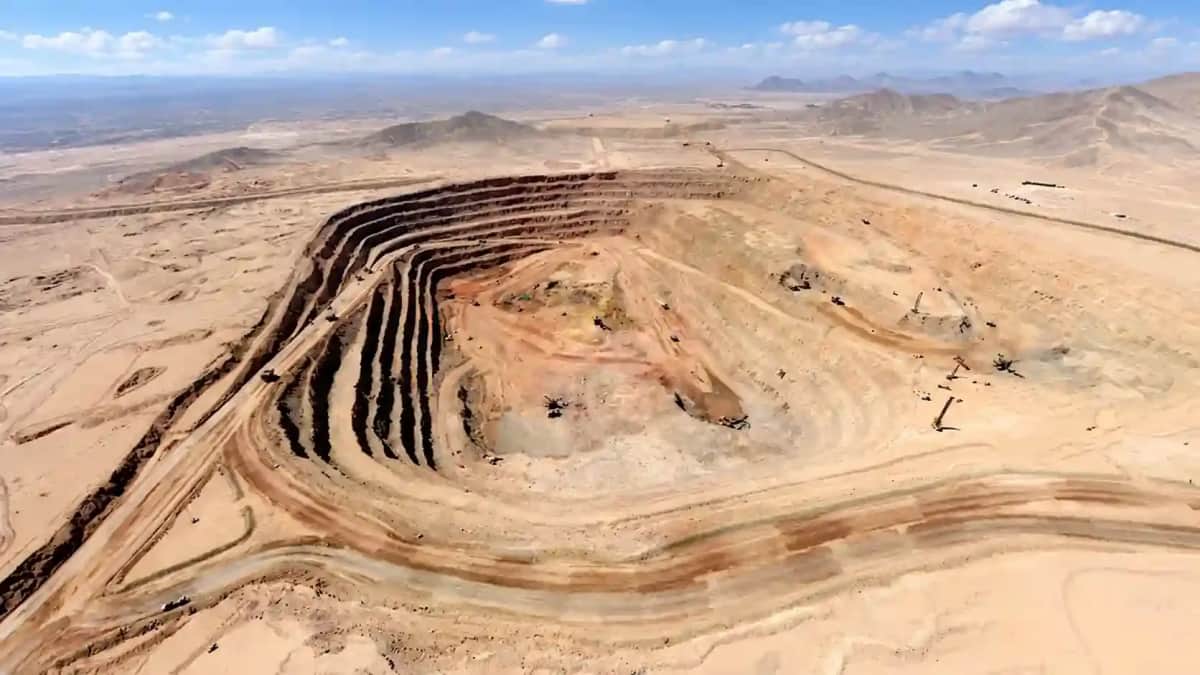
econosur.org
Why it matters: Chile's ability to replace declining ore grades depends not only on funding mines, but also on financing exploration before deposits are proven.
81% — share of Cochilco's 2025-34 investment portfolio assigned to brownfield projects
US$111.149 billion — value of Chile's 2026-35 mining investment pipeline
US$874.7 million — Chile's exploration budget in 2025
14.8% — share of that exploration budget attributed to junior companies
Chile's mining investment pipeline reached US$111.149 billion for 2026-35, its highest level in 13 years, but the previous portfolio shows how heavily capital has favoured existing operations over new mine development. Cochilco's December 2025 inventory assigned 81% of its US$104.549 billion total to brownfield projects and 19% to greenfield projects.
That 81% split applies to the 2025-34 portfolio only; it cannot be carried over to the newer pipeline, for which the same breakdown was not provided. Still, the contrast highlights the financing challenge facing a country seeking to renew its mineral base as falling ore grades weigh on sector productivity.
The exploration risk comes before mine financing
Brownfield projects expand or sustain operations with existing infrastructure and geological information. Greenfield projects start earlier in the cycle, when companies may need to fund years of surveys and drilling without knowing whether a deposit can support a commercial mine. That makes early-stage exploration harder to finance than a project with established resources, studies and a route to revenue.
Chile recorded US$874.7 million in exploration spending in 2025. Copper accounted for US$669.6 million, or 76.5% of the total. Major mining companies supplied 78.9% of the budget, while junior explorers accounted for 14.8%; Chile ranked fourth globally by exploration budget.
The figures point to a funding gap between large companies able to use internal capital and independent explorers that have no operating income. Chile's geological potential, skilled workforce, mining suppliers, infrastructure and access to renewable power support investment, but do not remove the risk that exploration spending will fail to identify an economic deposit.
Tax certainty targets large projects, not discovery risk
Law 21.850 establishes a new tax-invariance regime from January 1, 2027, for eligible projects with investment of at least US$50 million. Depending on project size, the law provides for invariance periods of 10, 15 or 20 years from the start of operations, subject to its conditions. The regime covers certain taxes, including the treatment of mining royalty, in exchange for a 1.5 percentage-point surcharge on the first-category corporate tax rate, among other requirements.
The reform also provides for a gradual reduction in the general corporate tax rate, from 27% in 2026 to 23% in 2029. These measures may improve fiscal predictability for major investments, but they do not directly address the cost of drilling that precedes a mine's construction decision.
A separate capital-markets reform, introduced by the government on September 9, 2026, proposes a dedicated exchange segment for junior companies, tax benefits on certain capital gains, a tax credit of 35% subject to requirements and limits, and the transfer of eligible greenfield exploration expenses to qualifying investors. As of November 27, the bill remained in its second constitutional stage, so the proposed benefits were not yet in force.
State initiatives include a private-sector exploration partnership
Chile's National Mining Policy 2050 sets a target to double annual greenfield exploration investment by 2030 against the average used when the policy was formulated, and to sustain that effort through 2050. The government has also modernised Sernageomin's SIGEX geological information system, while a framework law on sectoral authorisations is being implemented.
Codelco illustrates the balance between extending established mines and searching for new deposits. Its structural projects include Chuquicamata Underground and Rajo Inca; in October 2026, it also agreed with BHP to begin exploration activities at the Anillo project in Antofagasta Region. The partnership combines Codelco's mining properties with BHP's exploration and financial capabilities, but does not guarantee a commercial discovery.
The next test for Chile's junior-financing proposals is their progress through Congress; the Anillo agreement, meanwhile, remains an exploration initiative rather than a confirmed new resource.
More in Mining Stocks
Why Chile has not built a lasting junior market for mineral exploration
Major producers absorbed most exploration spending in 2025, while earlier exchange efforts struggled to turn listings into repeat financing.
Chile’s 1% copper-export exploration scenario leaves the funding model open
The hypothetical pool would target early-stage work, but export receipts are not automatically available to the state.
Chile’s mining concessions span 13.6 million hectares, but exploration is hard to track
Falling grades are sharpening the need for new targets as Chile changes what concession holders report and pay.