Ausenco’s Peru growth target depends on active mines as Zafranal stays paused
Sustaining-capital contracts could provide a wider pool of work, but the firm says it has yet to measure its share of that market.
Why it matters: Ausenco’s outlook links its expansion in Peru to the spending decisions of producing mines, not just the progress of new projects.
10%–15% — projected growth for Ausenco’s Peru office in 2027, conditional on elevated metal prices
About 20% — expected growth for the office in 2026
More than 700 — current employees in Peru, with at least 740 expected at the start of 2027
12 to nine months — the engineering timeline an Ausenco executive said AI tools could reduce
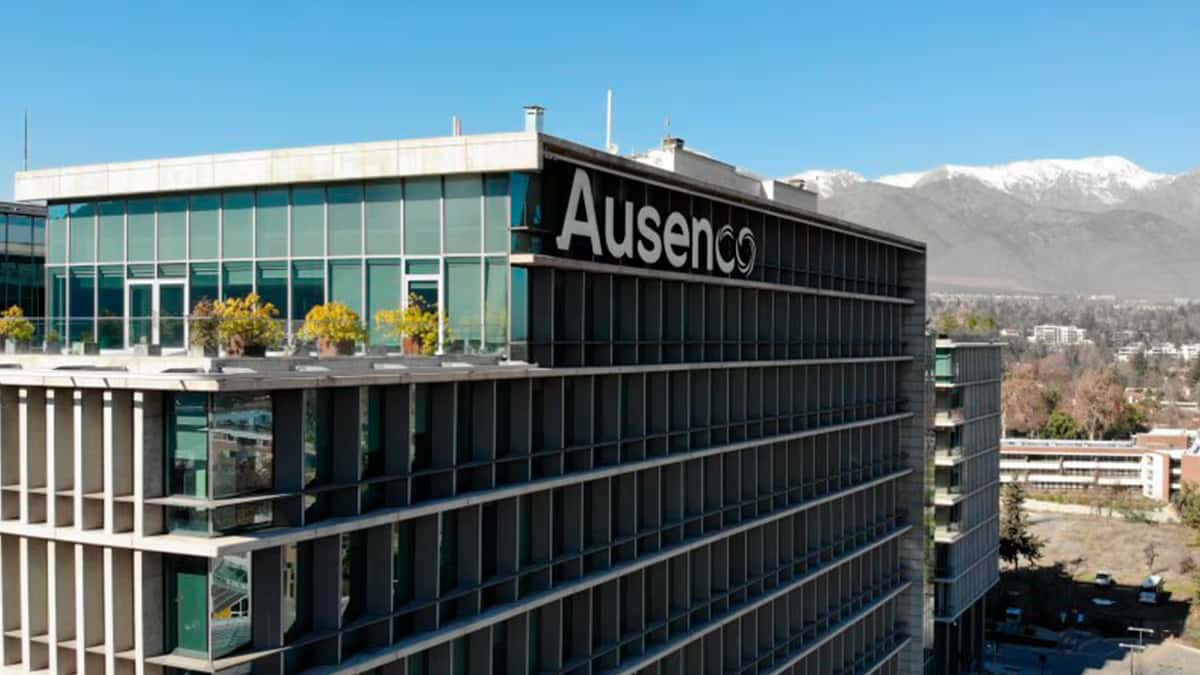
Ausenco expects its Peru office to grow 10% to 15% in 2027 if copper, gold and silver prices remain high, as it seeks more work supporting operating mines while the Zafranal project remains paused. The office is expected to close 2026 with growth of about 20%, Andrés Obrecht, the company’s vice-president in Peru, said.
The company’s expansion is tied to professional-services capacity rather than investment in mining assets. Ausenco’s Peru office has more than 700 employees and is expected to start 2027 with at least 740, compared with about 1,000 at its largest South American office in Chile. “We sell professional hours,” Obrecht said. The company generally leases offices and vehicles.
Operating mines are the focus for sustaining-capital work
Ausenco wants to increase its share of sustaining capital, the annual spending mines use to maintain operations. Such work is often secured through framework agreements and involves engineering at existing facilities. Obrecht said the company has not yet measured its share of that market and is working to establish its size.
The Peru office handles between 30 and 50 services at a time, while about 20 contracts account for most of its revenue. Clients include MMG’s Las Bambas, Antamina and Anglo American, with work linked to the growth of existing operations.
Execution-stage services require the most staff and generate the greatest volume of work, but occur less frequently. Obrecht described the number of Peruvian mine projects currently at that stage as limited. Ausenco’s business spans work from early studies to engineering for mine closures, which he said is progressing at broadly similar rates.
Peru is the company’s second-largest South American office, behind Chile and ahead of Brazil. Obrecht said the two leading markets have similar profitability, while Chile has greater copper-production volume: about 5.5 million tonnes a year, compared with 2.8 million tonnes in Peru.
Zafranal work continues despite the pause
Zafranal, a greenfield project in Arequipa, entered a pause at the end of 2025. Ausenco is still working on optimising project components, Obrecht said. The project has already seen investment, including construction of a camp last year.
Obrecht said faster permitting and greater certainty around permits already granted would help move projects into production. He cited a forecast that the world would need as much copper in the next 18 years as has been extracted throughout mining history—about 700 million tonnes—and said proposed measures to simplify Peru’s permitting process could help if implemented.
AI could shorten engineering timelines
Ausenco expanded its use of artificial-intelligence tools in 2026 under an internal governance framework. Obrecht estimated that AI could reduce an engineering process from 12 months to nine and allow teams at early stages to compare ten scenarios, instead of three.
He cautioned that professionals must still make decisions and review the tools’ output, warning that accepting AI responses without scrutiny could lead to complex errors. In his view, AI could save months in engineering, while faster permitting could save years.
Obrecht said El Niño was not then affecting a specific mining operation, although Ausenco includes the risk in project analyses and proposals. Mining accounts for nearly 90% of the company’s global business. It has also worked with port, transport and wind-energy clients; in Peru, it has participated in proposals for ports and railways but had no active services in those sectors.
More in Mining Stocks
YPF’s Argentina LNG decision nears, but financing remains unresolved
The export chain still depends on financing, regulatory approvals and long-term buyers.
SQM’s US$3 billion lithium plan faces a fresh test as prices retreat
Recent market declines could feed into lower fourth-quarter realised prices, even as SQM prepares to expand capacity.

Anthropic’s record Nasdaq debut puts the economics of AI spending in focus
The Claude developer’s listing follows a record share sale, while its infrastructure commitments leave investors weighing how growth can translate into returns.