SQM’s US$3 billion lithium plan faces a fresh test as prices retreat
Recent market declines could feed into lower fourth-quarter realised prices, even as SQM prepares to expand capacity.
Why it matters: SQM’s investment plans will depend on whether growing lithium demand can support returns as prices weaken and the company adds capacity.
About US$3 billion — planned investment for 2026-2028.
About 30% — SQM’s forecast for global lithium demand growth in 2026.
US$1.569 billion — net profit reported for January-September 2026, up 288% year on year.
SQM plans to invest about US$3 billion from 2026 to 2028, averaging roughly US$1 billion a year, as it forecasts continued growth in lithium demand but warns that falling prices could weigh on fourth-quarter sales. The Chilean producer expects global demand to rise approximately 30% in 2026, while its net profit for the first nine months reached US$1.569 billion.
The investment outlook was presented alongside third-quarter results covering SQM’s operations in Chile and Australia. Chief financial officer Gerardo Illanes said spending in 2026 would be below the three-year annual average, so the programme is not expected to be evenly distributed. The company’s planned capital expenditure is not equivalent to money already spent: individual projects remain subject to technical progress, commercial conditions and their own schedules.
Demand forecasts meet a weaker price environment
SQM estimates that global demand could approach 2.5 million tonnes in 2027, representing growth of 15% to 20%, and exceed 3 million tonnes of lithium carbonate equivalent by 2030. These are market forecasts, not production commitments. The company cited electric vehicles, larger battery capacity and stationary battery energy storage systems (BESS) as sources of demand growth.
The outlook contrasts with a recent price correction. SQM’s average realised lithium price in the third quarter was about 10% below the second-quarter level. The company also reported further market-price declines in recent weeks and said they could result in significantly lower realised prices in the fourth quarter. Higher sales volumes, therefore, do not guarantee higher revenue or margins if prices fall.
SQM’s January-September results reflected a recovery against the same period of 2025: consolidated revenue was US$6.3405 billion, adjusted EBITDA was US$3.1897 billion, and lithium and derivative sales volumes reached 232,300 tonnes, up 28%. Lithium and derivatives accounted for about 79% of accumulated gross profit, underscoring how exposed the group’s financial performance is to the commodity.
Chilean brine and Australian spodumene underpin expansion
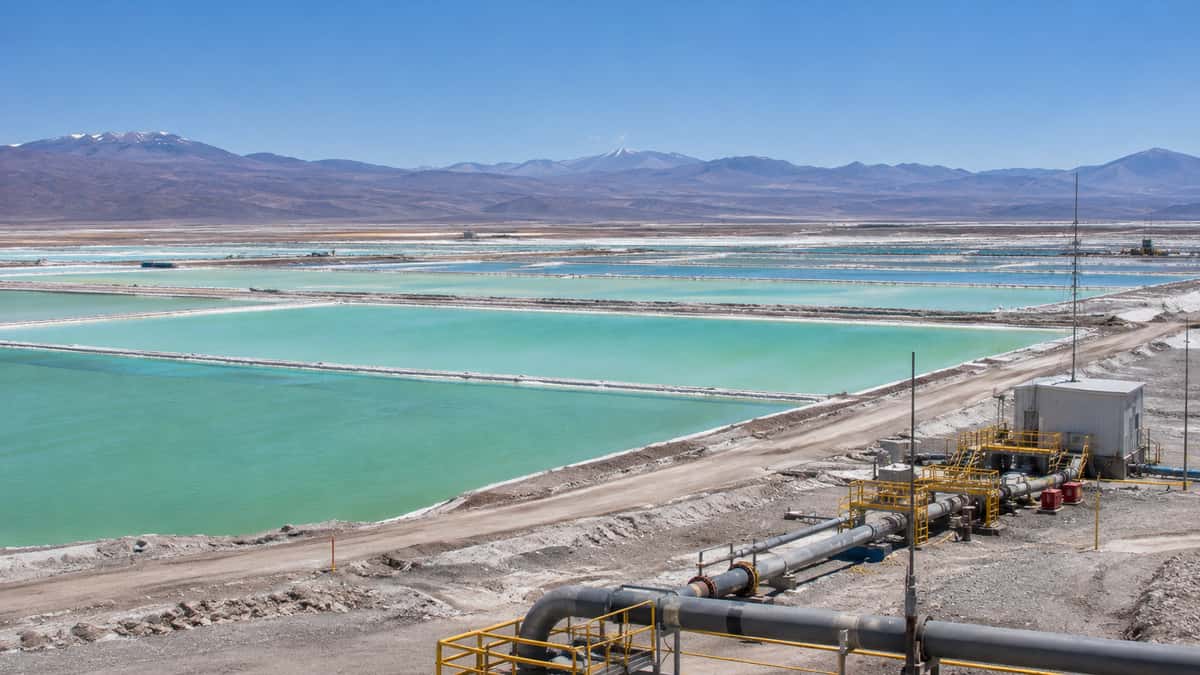
In Chile, SQM’s Salar de Atacama operation, conducted through the Novandino division in association with Codelco, sold about 73,300 tonnes of lithium products in the third quarter, 16% more than a year earlier. Its average realised price was US$19.6 per kilogram: 123% above the year-earlier quarter, but around 10% below the second quarter. Novandino’s sales for January-September totalled 211,500 tonnes, compared with 167,000 tonnes in the prior-year period.
In Australia, SQM has started expanding the Mount Holland mine and concentrator. The company aims to increase its attributable annual spodumene concentrate capacity from roughly 175,000-185,000 tonnes to about 350,000 tonnes by 2030-2031. The Australian hard-rock operation would add to the company’s exposure to Chilean brine production, but also brings its own investment and operating requirements.
The projects’ delivery schedules, technical progress and economics remain key conditions for the planned expansion. Meanwhile, SQM’s next quarterly results will show how the latest price declines affect realised sales prices.
More in Mining Stocks
YPF’s Argentina LNG decision nears, but financing remains unresolved
The export chain still depends on financing, regulatory approvals and long-term buyers.

Anthropic’s record Nasdaq debut puts the economics of AI spending in focus
The Claude developer’s listing follows a record share sale, while its infrastructure commitments leave investors weighing how growth can translate into returns.
EnQuest’s US$960 million UK sale hinges on a separate Malaysia deal
The proposed package extends beyond producing fields to infrastructure interests and UK decommissioning liabilities.