
SpaceX gets approval for 1 million orbital data-centre satellites, putting Chile’s skies in focus
The FCC’s authorization sets a 2040 horizon for the constellation, while observatories in northern Chile rely on dark, unobstructed skies.
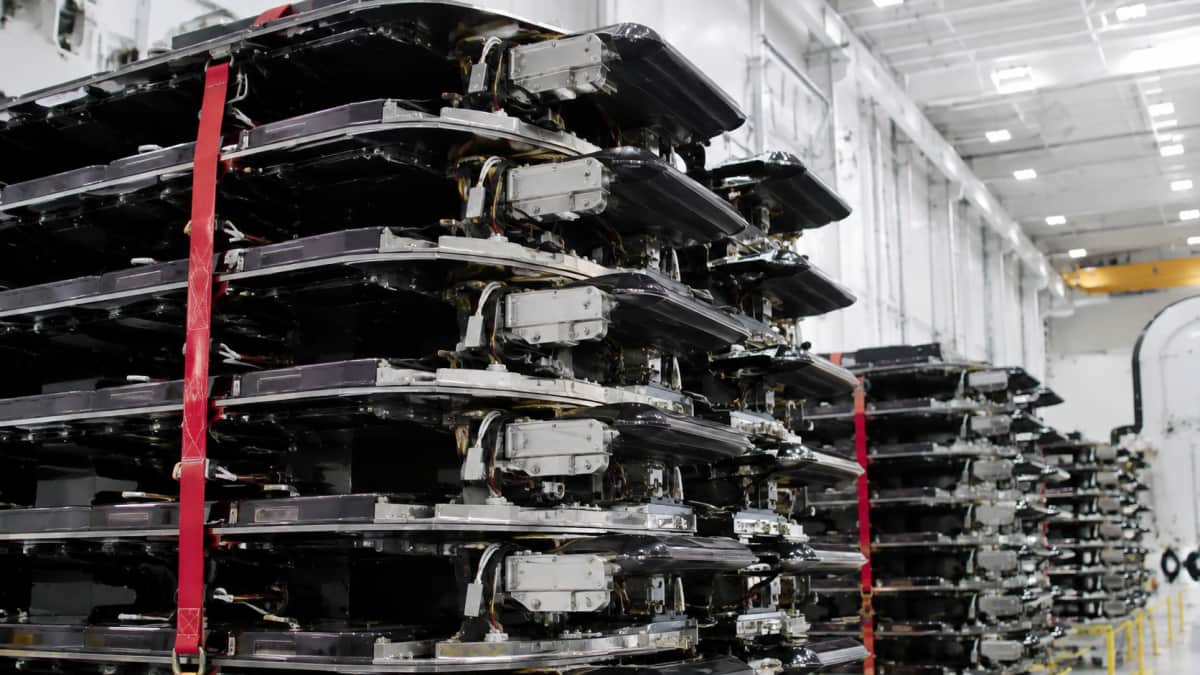
Why it matters: Starmind connects the race to supply power for AI computing with orbital congestion risks near Chile’s major astronomical observatories.
1 million satellites — the maximum permitted for Starmind, not a confirmed deployment target.
November 2035 — deadline for SpaceX to deploy 100,000 satellites.
500–1,002 km — the planned orbital altitude range.
415 TWh to 945 TWh — projected global data-centre electricity use in 2024 and 2030, respectively.
The US Federal Communications Commission authorized SpaceX on November 25, 2026, to deploy up to one million satellites for Starmind, a proposed low Earth orbit network of solar-powered data centres. The license sets staged deployment deadlines through November 2040, while the scale of the plan has drawn concern from astronomers, including the European Southern Observatory (ESO), which operates major facilities in northern Chile.
FCC sets staged deployment through 2040
The authorization requires SpaceX to place at least one operational satellite in orbit by November 2033, 100,000 by November 2035 and 500,000 by November 2038. The full ceiling of one million is permitted by November 2040. The authorized maximum does not mean SpaceX will ultimately launch that many units.
The satellites are planned for orbits between 500 and 1,002 kilometres above Earth. SpaceX must also meet conditions covering communications, orbital safety and space debris management. Reaching the permitted scale would require a major increase in satellite manufacturing and launch frequency, as well as systems able to operate for extended periods without on-site maintenance.
Starmind is intended to move some computing capacity from terrestrial data centres to orbit, where solar energy could power processing and results could be transmitted back to Earth. The proposal comes as data-centre electricity demand rises: global consumption was about 415 terawatt-hours in 2024, equivalent to 1.5% of electricity demand, and could reach 945 TWh by 2030, according to the figures cited in the project’s rationale.
Engineering and cost hurdles remain
Orbital computing would have to solve technical challenges that do not arise in the same way in ground-based facilities. Without air, processors cannot shed heat through conventional convection, so satellites would need radiators that release thermal energy by radiation. Equipment would also need protection from space radiation and micrometeorites, alongside high-speed optical communications, power storage and autonomous operation.
SpaceX plans to draw on its Starlink communications infrastructure to link orbital systems with Earth. But the economics remain unproven: savings on terrestrial power, cooling and facilities would have to outweigh satellite manufacturing, launch, operating and replacement costs. No consolidated investment figure or definitive estimate of Starmind’s computing capacity has been disclosed.
Chile’s observatories and mineral supply chains in focus
ESO warned on November 26 that a constellation of this size could affect night-sky observations. Sunlight reflected by satellites can leave streaks in telescope images, while radio interference, launch and re-entry emissions, and collision risks are additional concerns. The issue is relevant to Chile’s Atacama Desert, home to facilities including ALMA and the Very Large Telescope, and the site of the under-construction Extremely Large Telescope.
The project could also add demand for materials used in satellites, solar equipment, batteries and communications systems, including copper, aluminium, lithium, gallium, germanium, rare earths and silver. There is no public estimate of Starmind’s potential mineral requirements, so its impact on supply chains remains unquantified. The next test is whether SpaceX can meet the license’s deployment and technical conditions while demonstrating a commercially viable system.
More in Frontier Mining
Mars organic finds deepen the life question, but biology remains unproven
At Jezero, carbon survived in ancient sediment, while minerals in a separate rock can form through biological or geological processes.
Ivanhoe brings AI to Angola’s geology archives, but no drill targets are disclosed
The archive project supports a copper programme across two provinces, but its document count and implementation schedule remain unknown.
Japan-Germany rain-energy study faces the gap between charged drops and usable power
Rainfall’s uneven timing complicates designs intended for sensors and industrial water systems.