
Narwhal tusk study probes how a spiral tooth grows straight
The Arctic canine’s layered mineral-and-fibre structure may offer a design clue for composites, but translating it into engineering remains untested.
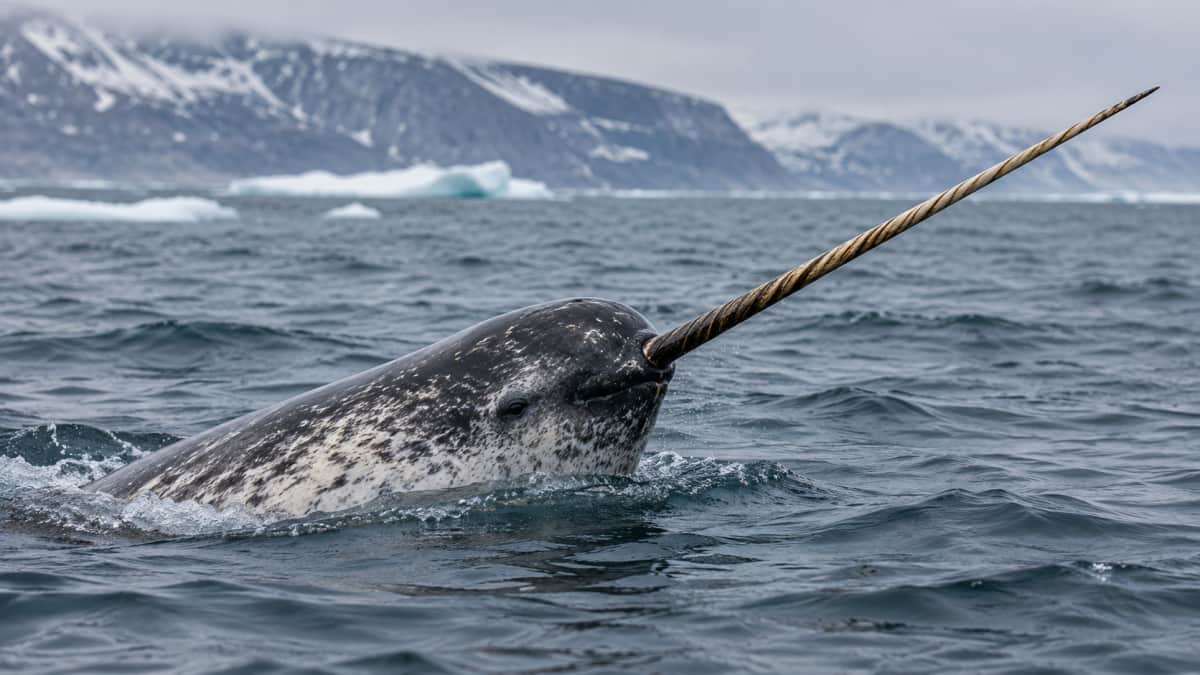
Why it matters: The tusk’s internal architecture could guide research into composite materials designed to withstand complex mechanical loads, although no engineered application has yet been demonstrated.
Up to 3 metres — the reported length of a narwhal tusk.
Three facilities — synchrotron X-ray sources used in the investigation.
0.3 mm to 5 mm — the diameters of samples examined.
An international research team used high-intensity X-rays to map the narwhal tusk’s internal structure, finding two microscopic helical arrangements that turn in opposite directions. The study, published in Nature Communications on August 18, 2026, offers a possible explanation for how the long tooth can grow straight despite its spiralling exterior.
The work was conducted by researchers from Aarhus University, Chalmers University of Technology, the Paul Scherrer Institute and the Greenland Institute of Natural Resources. It could inform biomimetic materials research, but the team has not produced a commercial material or demonstrated performance gains in industrial equipment.
Opposing helices inside the tusk
The narwhal (Monodon monoceros) lives mainly in Arctic waters, including areas near Greenland and Canada. Its tusk is an upper canine tooth that passes through the animal’s lip and can continue growing for much of its life. It must combine hardness with some flexibility to withstand forces as the animal moves underwater.
Researchers led by Adrian Rodríguez-Palomo identified different fibre orientations in the tooth’s outer cementum and inner dentine. Mineralised fibres in the cementum follow a left-handed helix, while structures in the dentine follow a helix in the opposite direction. The team suggests this arrangement could help counter torsional forces during growth and support mechanical stability; the study does not establish that as the sole cause of the tusk’s straight growth.
The structure combines collagen fibres with small crystals of calcium phosphate. Its properties therefore depend not only on the materials present, but also on how their components are arranged from microscopic scales to the full-length tooth.
X-ray imaging traced structure across scales
To examine the architecture, the team used synchrotron facilities at MAX IV Laboratory in Sweden, the Swiss Light Source and the European Synchrotron Radiation Facility in France. Tensor tomography and X-ray scattering helped determine the three-dimensional orientation of mineralised fibres. Samples measuring 5 mm, 1 mm and 0.3 mm in diameter allowed the researchers to investigate different structural scales.
The imaging and analysis drew on millions of measurements to connect microscopic organisation with the visible spiral. The researchers say this kind of hierarchy could offer principles for designing composites that manage bending, torsion and repeated mechanical loading. Potential areas for future investigation include drilling components, heavy machinery, industrial pipes and structural reinforcement used in mining. Those are prospective applications, not tested outcomes of this study.
Engineering applications remain a research question
The tusk offers a natural example of a composite built through biological growth, rather than by adding thickness or weight to meet a mechanical requirement. Understanding how its fibres and mineral crystals are organised could help materials scientists explore whether similar arrangements can be reproduced synthetically and what advantages they might provide over conventional designs.
The tusk also retains chemical information in layers formed as it grows, which can help researchers examine diet, contaminant exposure and environmental change over an animal’s life. The immediate engineering challenge, however, is to determine whether the opposing-helical architecture can be replicated and whether it delivers measurable benefits in manufactured materials.
More in Frontier Mining
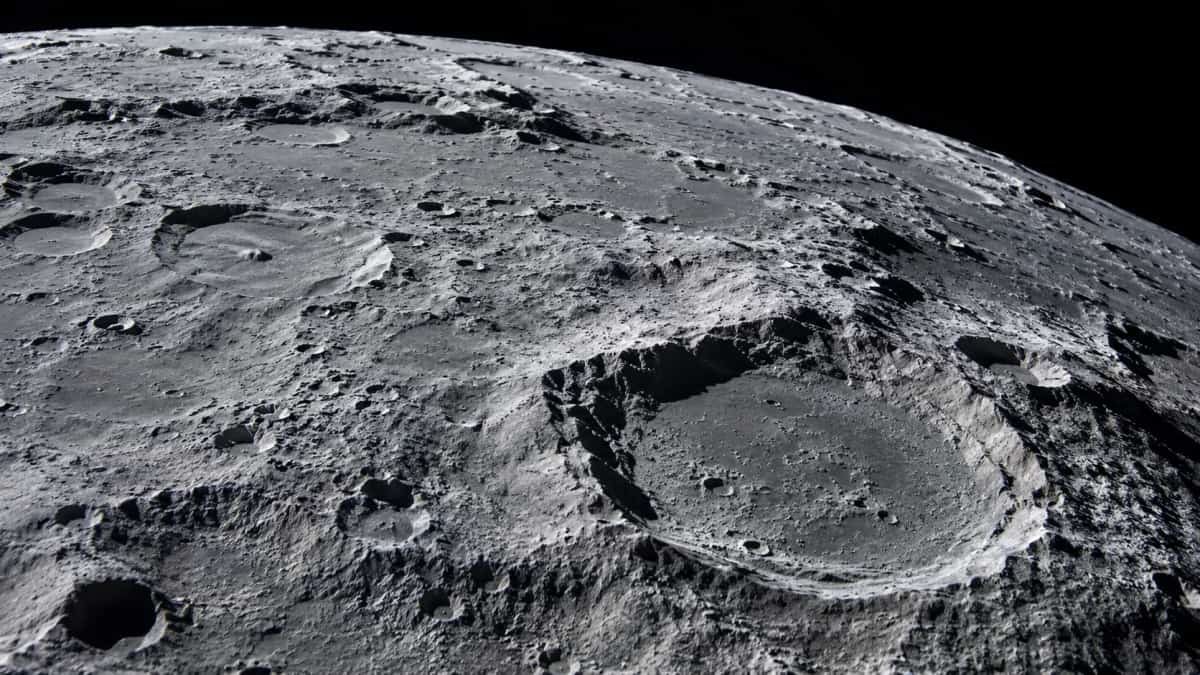
Lunar south-pole mining race puts scarce sites at the centre of a rules dispute
At the lunar south pole, water ice and sustained sunlight occur in scarce locations that future bases may need to share.

MIT's SLIC AI targets analog chip design without data-centre-scale computing
Analog designers must balance signal gain against power draw; SLIC aims to automate trade-offs that typically require repeated simulations.

Volvo tests humanoid robots in Ghent as 2027 factory use hinges on validation
Workers are teaching AEON units to place components, but the first task is only a narrow test of factory readiness.