
Lunar south-pole mining race puts scarce sites at the centre of a rules dispute
At the lunar south pole, water ice and sustained sunlight occur in scarce locations that future bases may need to share.
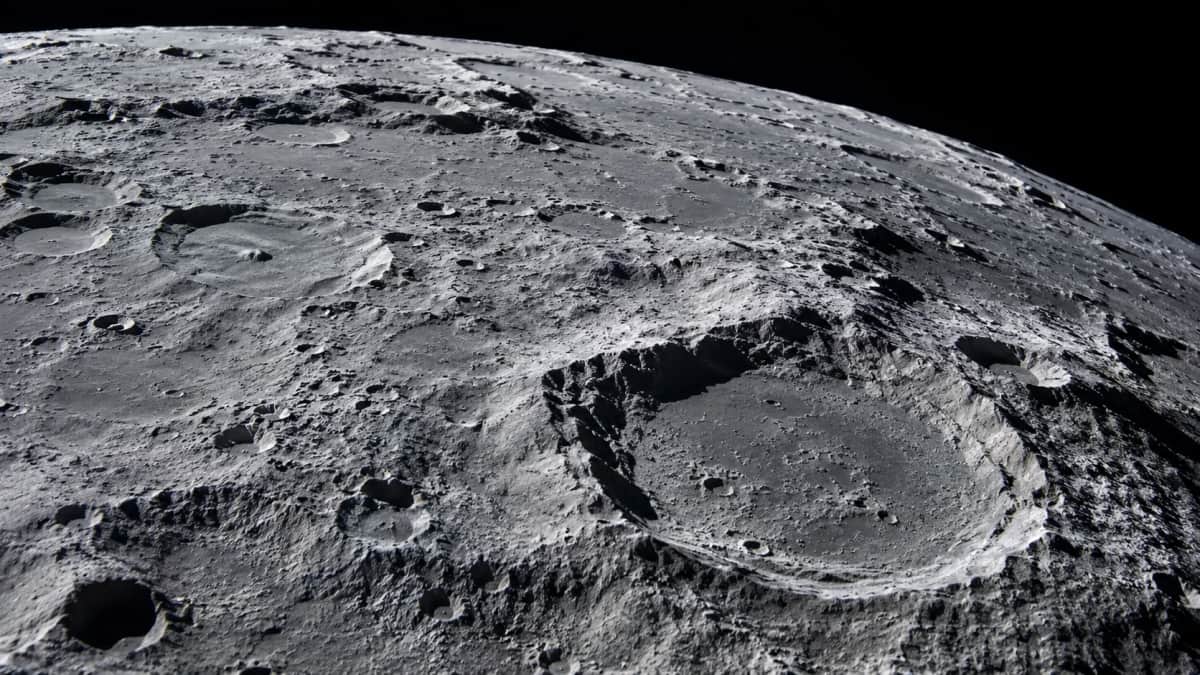
Why it matters: Control of a few strategically useful lunar sites could shape who can reach resources and build infrastructure, even without a formal claim to territory.
1967 — the year the Outer Space Treaty entered into force.
2035 — the target year for China’s planned basic infrastructure near the lunar south pole.
More than 75 — countries had signed the Artemis Accords by September 2026.
One-sixth — the Moon’s gravity compared with Earth’s, adding to the engineering challenges of extraction.
The United States and China are advancing plans for a sustained lunar presence as researchers call for a moratorium on industrialisation until stronger international governance mechanisms are in place. The dispute centres on whether access to water, minerals and strategically useful locations can be managed before permanent infrastructure makes some sites difficult for others to use.
In November 2026, Florian Rabitz of Vilnius University and Xiao-Shan Yap of Utrecht University proposed a pause on lunar industrialisation in an article published in Global Environmental Politics. Their proposal comes as national programmes and private-sector activity move beyond scientific exploration towards using lunar resources to support operations in space.
Water ice and sunlight make the south pole strategic
Water, rather than a metal or terrestrial critical mineral, is the resource currently drawing the most interest. Ice deposits may be present in permanently shadowed craters near the lunar south pole. Water could support crews, be separated to produce oxygen, or potentially be used in making fuel for spacecraft.
Nearby elevated areas can receive extended periods of sunlight, making them potential locations for solar power systems. But the sites that combine access to ice with favourable conditions for energy generation are limited. Bases, extraction equipment, communications systems and power plants could therefore restrict other operators’ practical access, even if no state claims sovereignty over the ground.
The Moon also contains iron, titanium, aluminium, silicon and helium-3, while rare earths occur in some formations. Their presence does not establish commercial viability: concentrations, distribution, accessibility, extraction costs and processing options remain to be determined. No economically exploitable lunar rare-earth reserves have been demonstrated.
US and Chinese programmes move towards infrastructure
NASA’s Artemis programme aims to lay the groundwork for a sustained human presence. The Artemis II lunar flyby in April 2026 advanced validation of systems intended for future crewed missions. China’s International Lunar Research Station programme, meanwhile, envisages basic infrastructure near the south pole by 2035. Its Chang’e-8 mission, initially planned for 2028, is set to test the use of materials available on the lunar surface.
In August 2026, Chinese researchers completed an updated global geological map of the Moon at a scale of 1:5,000,000. Mapping and resource characterisation are early steps in assessing whether extraction can be carried out; the source material offers no demonstrated commercial reserves or established lunar mining operation.
Treaty rules leave commercial questions open
The 1967 Outer Space Treaty bars national appropriation of the Moon and other celestial bodies through sovereignty claims, occupation or other means, and says exploration should benefit all countries. It does not set out a detailed system for ownership of materials extracted from them.
US law passed in 2015 recognises rights over certain space resources recovered by its operators, subject to applicable international obligations. The Artemis Accords, established in 2020, set out principles including cooperation, transparency and safety, but are not a universal multilateral treaty and do not settle all disagreements over commercial exploitation. A United Nations working group is examining legal aspects of space-resource activities.
Extraction economics remain unproven
Lunar operations would have to contend with a vacuum, radiation, extreme temperatures, abrasive dust and gravity about one-sixth of Earth’s. These conditions require specialised machinery, autonomous extraction and processing systems, and infrastructure capable of operating with limited human intervention.
A study published on 26 November 2026 on the development of lunar commodities points to energy, logistics and commercial infrastructure as prerequisites for future extraction. In early phases, using materials in space may be more plausible than shipping them to Earth, but commercial viability has not been demonstrated. The proposed moratorium is an academic recommendation, not a binding international prohibition; the UN working group’s examination of possible regulatory mechanisms remains a concrete next step.
More in Frontier Mining

Narwhal tusk study probes how a spiral tooth grows straight
The Arctic canine’s layered mineral-and-fibre structure may offer a design clue for composites, but translating it into engineering remains untested.
MIT's SLIC AI targets analog chip design without data-centre-scale computing
Analog designers must balance signal gain against power draw; SLIC aims to automate trade-offs that typically require repeated simulations.

Volvo tests humanoid robots in Ghent as 2027 factory use hinges on validation
Workers are teaching AEON units to place components, but the first task is only a narrow test of factory readiness.