
Yukon Metals pushes AZ copper-gold search beyond drilling, but scale remains unknown
At AZ, surface sampling reaches beyond the drilled footprint, but the company has yet to show whether the three target areas connect.
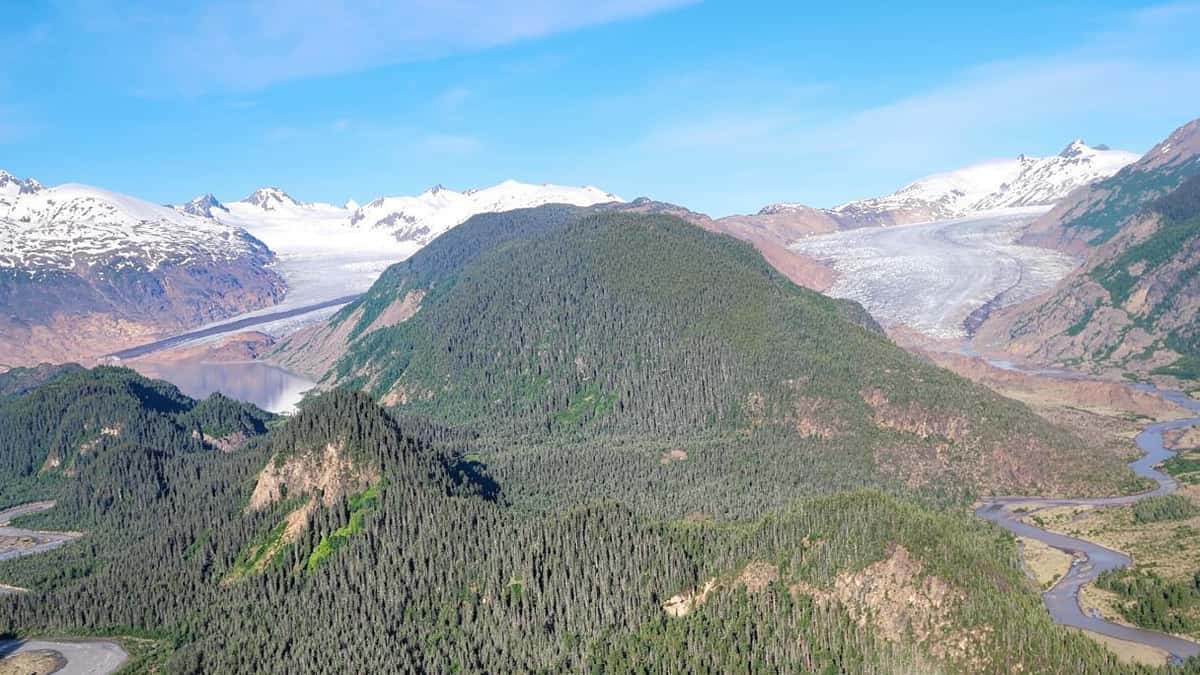
Why it matters: Surface anomalies and porphyry-style alteration point to a broader exploration target at AZ, but do not establish a continuous deposit or its size.
2 kilometres — distance east of the 2026 drill area reached by Viper anomalies
325 soil samples — collected during the regional campaign, alongside 227 rock samples
8.2 metres — downhole interval in AZ26-007 grading 0.11% copper and 0.10 g/t gold
10.41% copper — highest reported selective rock sample at Saddle
Yukon Metals reported copper and gold anomalies at three zones—Viper, Saddle and Wrangell—at its 100%-owned AZ project in Yukon, 36 kilometres south of Beaver Creek. The results combine surface sampling with previously unreported assays from one drill hole. They identify exploration targets, but do not define the size or continuity of mineralization.
Viper anomalies extend east of the drill area
At Viper, surface anomalies extend as far as two kilometres east of the area drilled in 2026. Rock samples returned up to 2.81% copper, 1.74 g/t gold and 335 parts per million molybdenum; soil samples reached 1,895 parts per million copper, 0.87 g/t gold and 209 parts per million molybdenum. The company describes the elevated values as a west-northwest to east-southeast geochemical corridor running from the drilling area toward the eastern edge of the sampling grid.
Yukon Metals also reported assays from AZ26-007, where 8.2 metres from 426.5 to 434.7 metres downhole graded 0.11% copper and 0.10 g/t gold. A 0.9-metre interval within that section averaged 0.33% copper and 0.37 g/t gold. Separately, 0.5 metres from 412.5 to 413 metres returned 759 parts per million molybdenum. These are downhole lengths, not true widths. The company said it had held the assays while completing internal quality assurance and quality control checks.
Three Viper holes had previously intersected porphyry-style alteration, with localized mineralization, according to the company. Its 2026 regional campaign collected 325 soil and 227 rock samples, excluding quality-control samples. Yukon Metals cautioned that rock samples were selected during prospecting and that reported averages are arithmetic means of collected material, not representative grades for a deposit.
Saddle and Wrangell show different geological settings
At Saddle, south of the AZ claims, mapping identified limestone and marble altered to skarn, with mineralization at contacts with metamorphosed sedimentary rocks, basalts and intrusions. Selective rock samples reached 10.41% copper and 6.27 g/t gold.
At Wrangell, copper and molybdenum mineralization is associated with a large granitic intrusive body. Samples returned up to 0.99% copper, 1.23 g/t gold and 658 parts per million molybdenum. The company reported disseminated and vein-hosted chalcopyrite and molybdenite in potassically altered granite near a quartz-feldspar porphyry intrusion.
Yukon Metals interprets Wrangell as a possible second porphyry centre at AZ. The company says skarn near porphyry-style mineralization may reflect coexisting systems, but the extent of alteration and mineralization still needs to be established. It plans to focus upcoming work at Wrangell on refining the geological interpretation and assessing its scale.
The company had announced an approximately 5,000-metre funded drilling program across AZ and Birch, with rigs operating. It has not reported a mineral resource estimate or economic assessment for AZ; the current results are from exploration drilling and surface sampling.
More in Discoveries
QGold reports 564 g/t gold at Mine Centre, but vein continuity remains untested
At South Foley, drilling intersected quartz beneath a surface sample, but the assay comparison is still pending.
Yukon Metals maps three copper-gold targets at AZ, including ground east of drilling
At Viper, a soil corridor follows the orientation of dikes and veins seen in 2026 holes, but the pattern still needs a subsurface test.

Parbo intersects greenstone beneath Mount Padbury granite, forcing a gravity-model reset
GoldenEye has supplied a geological reference, while assays from pyrite-bearing Goldfinger breccias remain outstanding.