
WhiteRock extends Spodumene Mountain trend in Quebec, with 37 assays pending
The latest holes span central, northeast and southwest zones, but drilling still has to establish whether the pegmatites continue between them.
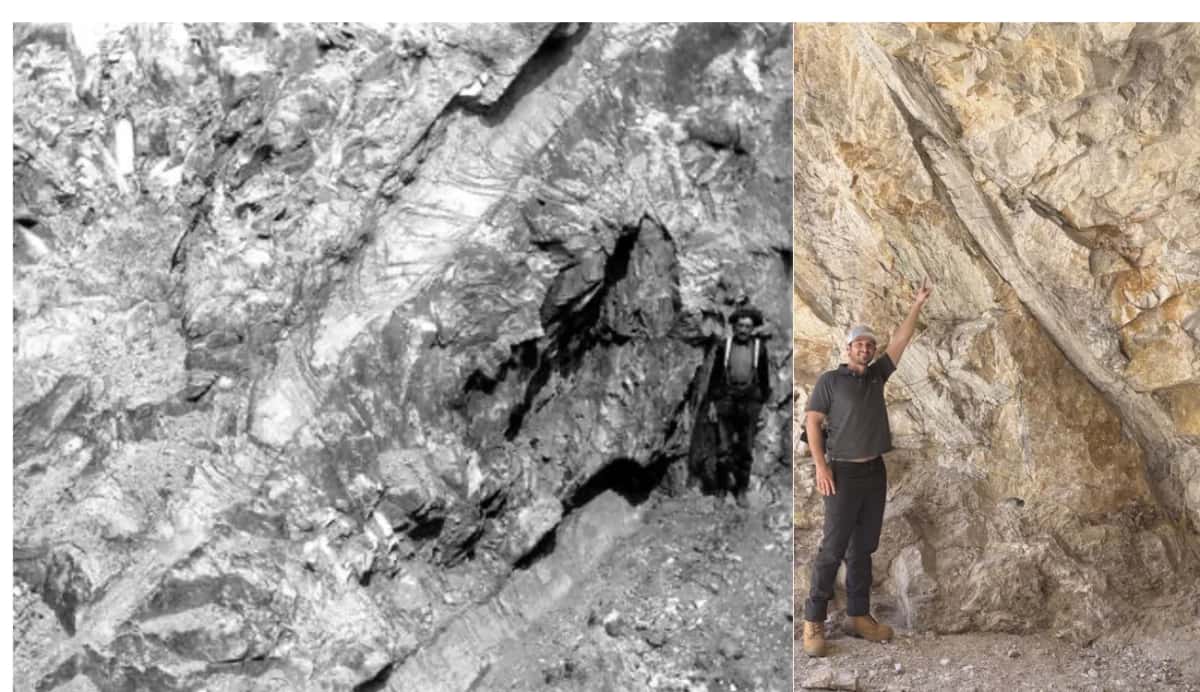
stockhead.com.au
Why it matters: The next assays and geological modelling will help determine whether the interpreted pegmatite trend represents connected mineralization across the prospect.
91.3 metres at 1.81% Li₂O — the longest highlighted new interval, from 40.5 metres in the central zone.
28 of 65 holes reported — results cover 19,481 metres of drilling.
About 1.4 kilometres — WhiteRock’s interpreted pegmatite trend, compared with an initial trace of about 650 metres.
37 holes — results remain outstanding from the campaign.
WhiteRock Lithium has reported assays from 11 additional diamond drill holes at Spodumene Mountain, part of its Banana project in Quebec. The results include a central-zone interval of 91.3 metres grading 1.81% Li₂O from 40.5 metres. The company has now reported results for 28 of the 65 holes drilled in a 19,481-metre campaign.
The reported lengths are downhole intervals; the company did not specify true widths. Results cover the central, northeast and southwest areas of the prospect, while assays from the remaining 37 holes are expected in the coming weeks.
Central and northeast holes return broad lithium intervals
A second central-zone hole returned 63.5 metres at 1.81% Li₂O from 2.4 metres. WhiteRock said the drill collar was positioned within a pegmatite.
In the northeast, two holes intersected 54.9 metres at 2.38% Li₂O from 201.9 metres and 53.5 metres at 2.27% Li₂O from 200.9 metres. The latter interval includes 28.9 metres at 3.07% Li₂O. That higher-grade section occurs within a broader mineralized interval; the assay alone does not establish the body’s continuity or geometry.
The company also reported mineralized intersections in the southwest, but did not provide specific lengths or grades for that zone in this batch. WhiteRock describes the pegmatites as stacked and gently dipping, an interpretation that remains to be tested against the full drilling dataset.
Interpreted trend more than doubles from initial trace
The campaign was laid out approximately on a 100-by-100-metre grid to test the prospect beyond its initially mapped 650-metre trace. Based on mapping and extension drilling, WhiteRock now interprets the pegmatites as extending about 1.4 kilometres. Results from the first 17 holes were reported in October; the latest assays add laboratory confirmation from other mapped areas.
WhiteRock says mineralization remains open along the interpreted trend and at depth. Those extensions have not been quantified as mineral resources. The company’s current exploration target of 190 million to 275 million tonnes at grades of 1.2% to 1.6% Li₂O covers Spodumene Mountain, Isabella and Marine collectively, and is not a mineral resource estimate for Spodumene Mountain alone.
Chief executive Simon Hay said work is focused on processing the remaining core, validating assays and advancing the geological model to support an initial estimate targeted for the first half of 2027. That work will incorporate the outstanding results and test whether the interpreted pegmatite bodies continue between the drilled areas.
More in Discoveries
Forte secures access to Alto Ruri, but Peru drilling remains unpermitted
The gold system has a 2-by-1.5-kilometre alteration footprint, yet modern surface work has not tested it systematically.
Waratah Minerals hits high-grade gold at Goldenclad as deeper assays remain pending
The first Wollard’s Line test adds a separate target, but assays cover only the upper portions of two deep holes.
Pioneer Minerals’ San Francisco 3D model maps historic breccia, but needs verification
The main breccia carries the project’s drilling history, while other targets still need field assessment.