
Pioneer Minerals’ San Francisco 3D model maps historic breccia, but needs verification
The main breccia carries the project’s drilling history, while other targets still need field assessment.
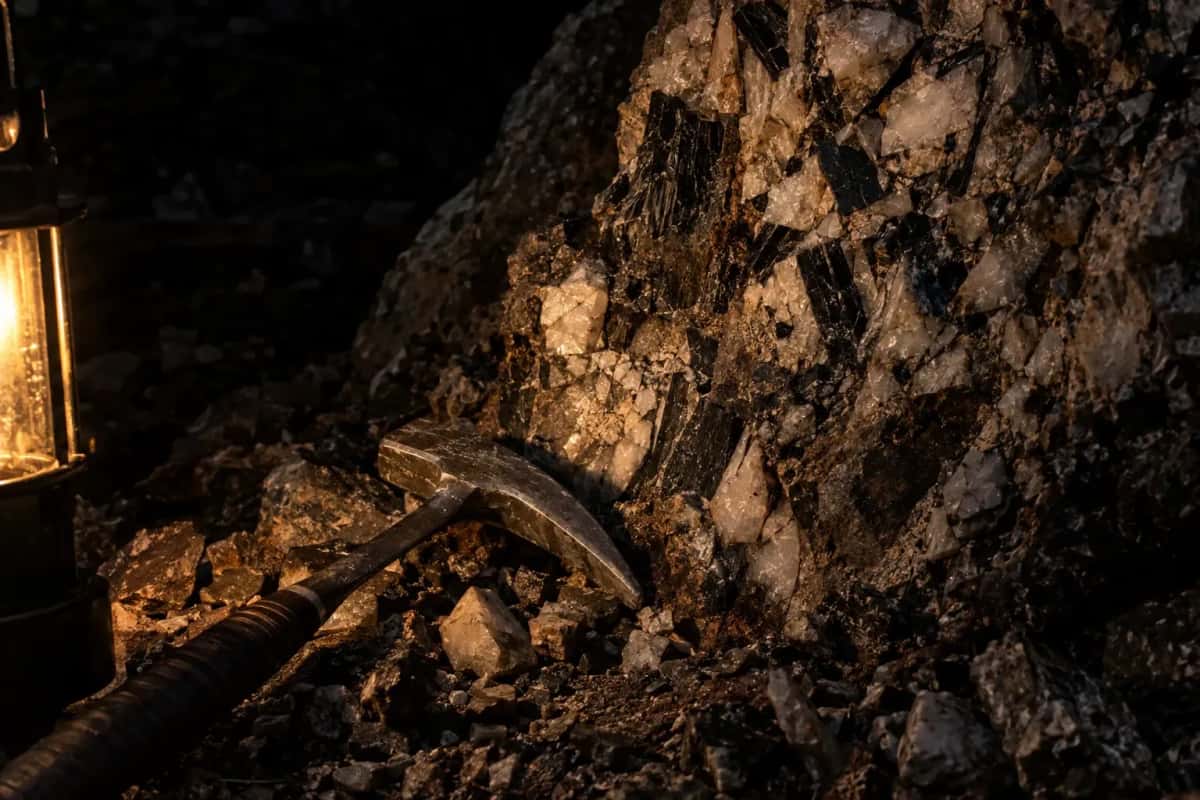
equedia.com
Why it matters: The model could help focus follow-up work, but its interpretation does not independently confirm historic assays or mineral continuity.
63 historic diamond drill holes — about 18,296 metres of drilling included in the reconstruction.
1,626 downhole measurement records — combined with drilling and surface geology data.
About 99% agreement — the breccia interpretation matched historical geological logs at this rate.
More than 70 breccias — identified across the property in earlier exploration.
Pioneer Minerals has completed a preliminary 3D geological model for its San Francisco gold, copper and silver project in Argentina, combining records from 63 historic diamond drill holes, about 18,296 metres of drilling, 1,626 downhole measurement records and surface geology. The company intends to use the model to select historic mineralization for verification and plan future drilling.
Prepared by Andes Exploration after Pioneer’s initial reconnaissance, the model organizes the main breccia and surrounding sedimentary rocks. It separately depicts gold, copper and silver distributions, intrusions, alteration and weathering. The initial field work confirmed access to the main breccia and included an inspection of stored drill core.
Agreement with historic logs does not establish continuity
The model’s interpretation of the breccia agreed with historical geological logs about 99% of the time. For selected tourmaline and quartz alteration groups, agreement exceeded 96%. Those comparisons measure how closely the digital interpretation matches descriptions in existing drill records; they are not independent confirmation of the geology or reported grades.
Pioneer still needs to check the underlying data, geological contacts and whether mineralization continues between drill holes. The model is therefore an organizing and targeting tool, not a new drilling result or a mineral resource estimate.
Historic results from the main structure include an interval of 109 metres grading 4.94 g/t gold, 109 g/t silver and 1.13% copper from 12 metres. Another record reported 72 metres grading 3.47% copper, 100 g/t silver and 0.71 g/t gold from 398 metres. These are previously reported intersections; the current work compiled the records and set out how the company may verify them.
Chief executive Michael Beven said the interpretation provides a clearer view of the breccia, metal distribution and geological and structural controls associated with mineralization. Pioneer also plans to compare the known breccia’s characteristics with other targets on the property.
More than 70 breccias remain to be assessed
Earlier exploration identified more than 70 breccias and more than 130 veins across the property. Drilling has been documented in nine breccias and one vein system. Pioneer intends to use the model to prioritize reviews of historic intersections and guide field work at less-explored prospects, testing whether they share features with the main breccia.
The planned work includes submitting an exploration environmental impact report to the provincial authority and designing airborne magnetic, radiometric and electromagnetic surveys. The company also plans geological mapping and geochemical sampling of rocks and soils to evaluate regional targets.
Pioneer says it expects to prepare staged drilling to verify historic mineralization, test continuity and search for extensions. Before a resource estimate could be considered, the company would still need to verify assays and surveys, complete additional drilling and density measurements, and undertake further geological interpretation.
More in Discoveries
Kookynie gold drilling revives Leonora district, but deposit scale remains unproven
Three explorers are testing old workings and covered ground in a district known for high-grade veins.
Forte secures access to Alto Ruri, but Peru drilling remains unpermitted
The gold system has a 2-by-1.5-kilometre alteration footprint, yet modern surface work has not tested it systematically.
Waratah Minerals hits high-grade gold at Goldenclad as deeper assays remain pending
The first Wollard’s Line test adds a separate target, but assays cover only the upper portions of two deep holes.