
Rock Tech’s Ontario lithium trend reaches 16 km, but continuity is unproven
New Discovery lies about 10 km east of Bounty, but selective outcrop samples cannot establish the pegmatite’s average grade.
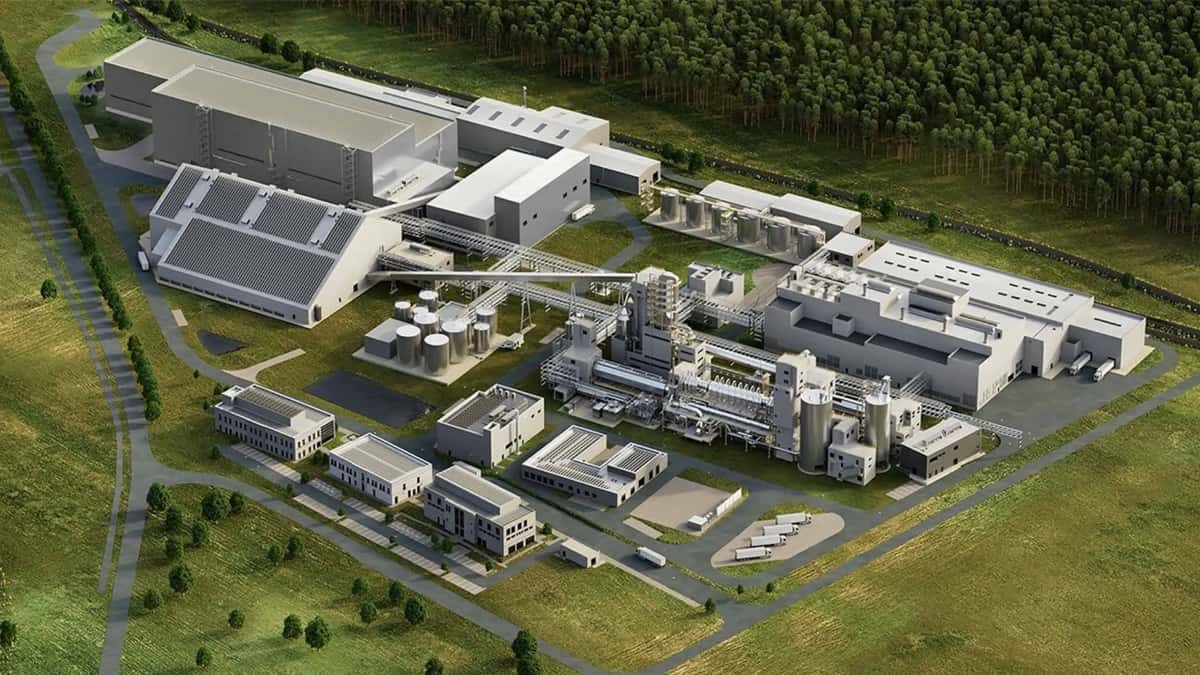
Why it matters: The new occurrence expands Victory’s exploration footprint, but selective surface samples cannot establish an average grade or a continuous lithium-bearing system.
4.63% Li₂O — highest grade among 12 samples from New Discovery
7 of 12 — samples returned more than 2% Li₂O
About 16 km — span between the three known pegmatite occurrences at Victory
Rock Tech Lithium reported assays of up to 4.63% Li₂O from a newly identified spodumene pegmatite at its Victory project in northwestern Ontario. The New Discovery occurrence extends the span of known pegmatite occurrences at the project from about 6 km to roughly 16 km, but the company said the results do not demonstrate continuous mineralization between them.
The occurrence is about 10 km east of Bounty. Its mapped surface exposure measures approximately 150 metres long by 60 metres wide, with lithium-bearing samples collected from its northern, central, eastern and southern areas. Seven of the 12 samples exceeded 2% Li₂O. Individual results included 4.63%, 4.03% and 4.00%; the other five samples were below 2%.
Selective samples do not define average grade
The company completed its first field exploration program at Victory and initially reported New Discovery on November 16, 2026, based on field observations and LIBS readings. Laboratory assays have since confirmed lithium in the samples, but grab samples are selective and may not represent the average grade of the pegmatite. The variation among the 12 results therefore cannot be used to calculate an average grade for the body.
Outcrop dimensions and visual observations also do not establish true thickness or continuity at depth. Rock Tech said the results do not confirm continuous mineralization between the sampled points. The geological relationship between New Discovery and the other known occurrences remains to be assessed.
The samples were analysed by Activation Laboratories in Thunder Bay, Ontario. Preparation included drying and crushing so that 80% passed a 2-millimetre opening, followed by pulverising a 250-gram split until 95% passed 105 microns. The laboratory used sodium peroxide fusion and inductively coupled plasma methods for multielement analysis; lithium was measured by ICP-MS and converted to Li₂O using a factor of 2.153. Rock Tech said it inserted reference standards at a rate of one for every 15 field samples. The technical information was reviewed and approved by Cameron Andrews, the company’s general manager in Canada and a professional engineer qualified under NI 43-101.
Three occurrences mark a wider exploration corridor
Before the field program, the known targets were Last Resort and Bounty, about 6 km apart. Rock Tech cites historical grab-sample results of up to 5.11% Li₂O at Last Resort and 3.48% at Bounty, while cautioning that it has not fully verified the historical Last Resort data. The roughly 16-km span now covers Last Resort, Bounty and New Discovery; it describes the distance between exploration points, not a continuous mineralized zone.
Victory covers 9,875 hectares, about 45 km east of Kenora. Rock Tech obtained an option in June 2026 to acquire 100% of the project. The company is assessing Victory as a potential additional Ontario lithium source for its Red Rock conversion plant project, which is designed to produce about 30,000 tonnes of lithium salts annually. Supply from Victory remains an option under evaluation, not confirmed production.
Rock Tech expects to review additional assays, including results from Last Resort and Bounty, and consolidate laboratory data with mapping and prospecting observations in the coming weeks. It is also considering systematic sampling, geophysics and drilling. An initial drilling program is planned for 2027, subject to geological review, permitting and financing.
More in Discoveries
Prospectiva extends São Francisco copper zone, but continuity remains unproven
The step-out sits about 60 metres northeast of an earlier high-grade hit, while the folded sulphide target may thicken and thin along its structure.
Red Metal’s Pernatty PH1 test faces an access hurdle before 2027 drilling
A historic copper intercept lies near the target, but it does not test the buried-intrusion model Red Metal plans to investigate.
QMines finds copper north of Mt Chalmers, but a 4 km corridor remains untested
The new targets sit in a lightly drilled stretch, leaving their connection to the existing resource unproven.