
Patronus hits copper at Hydrellison, but high-grade continuity remains unproven
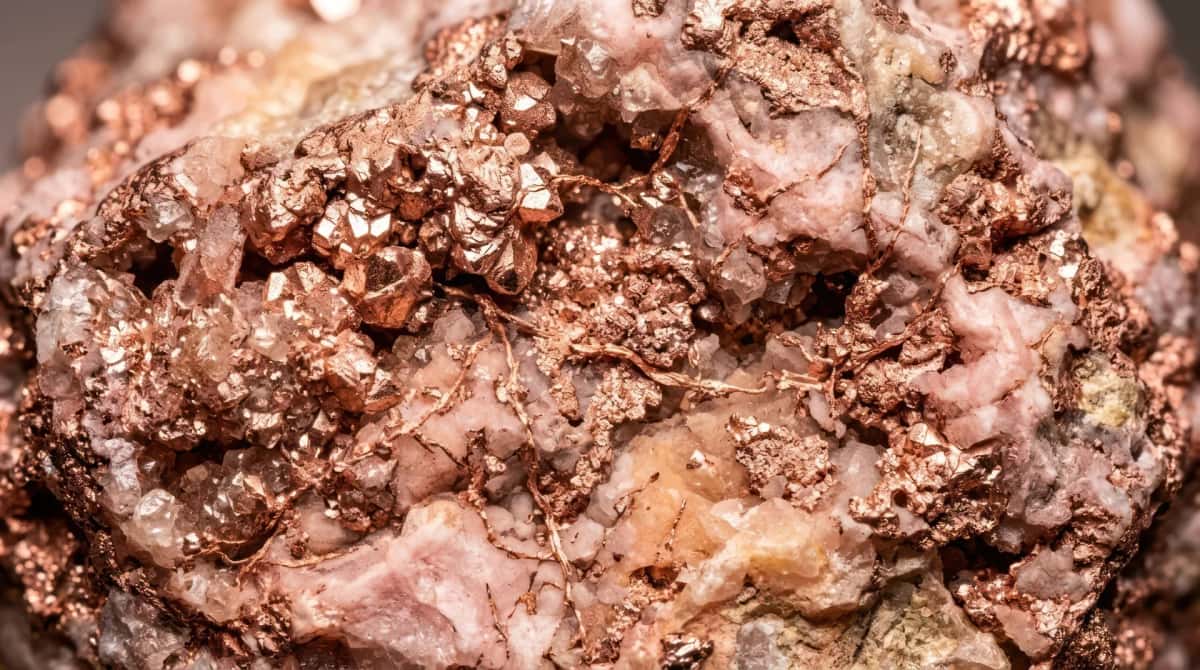
Copper occurs in carbonaceous shale at Pine Creek, leaving the geometry of the strongest intervals as the next test.
resourcesrisingstars.com.au
Why it matters: The first-pass drilling has outlined a copper target, but its value as an exploration prospect depends on whether higher-grade mineralisation can be traced between holes.
9 metres at 2.4% copper — from 91 metres, including 2 metres at 5.5% copper from 96 metres.
Eight of 11 holes — intersected copper in the 2026 Hydrellison RC campaign.
About 800 metres — the interpreted northwest-trending extent of the zone.
4,384 metres in 30 holes — drilled across Hydrellison and nearby Hydra, with four Hydra assays pending.
Patronus Resources intersected copper in eight first-pass reverse-circulation (RC) holes at Hydrellison, part of its Pine Creek project in Australia’s Northern Territory. The best result was 9 metres at 2.4% copper from 91 metres, including 2 metres at 5.5% from 96 metres.
The results identify a follow-up target, but do not establish that the higher-grade intervals connect between holes. Patronus plans further work to determine the controls on mineralisation and test its continuity.
Copper occurs in Koolpin Formation shale
The 11-hole 2026 campaign also returned 4 metres at 1.1% copper from 39 metres, 2 metres at 0.8% from 67 metres and 2 metres at 0.6% from 91 metres.
The intersections lie within an interpreted northwest-trending zone extending about 800 metres along strike from historic copper-bismuth workings at Mt Ellison. That distance describes the prospect interpretation; the reported assays do not demonstrate continuous mineralisation across the full trend.
Mineralisation is associated with carbonaceous shale containing pyrrhotite in the Koolpin Formation. For the main 9-metre interval, a local interpretation assuming a dip of about 45 degrees to the northeast estimates a true width of approximately 6 metres. The 9 metres is the length measured down the hole, while the true-width estimate depends on the interpreted orientation.
Hydra assays remain separate from the copper results
Patronus completed 30 RC holes totalling 4,384 metres across Hydrellison and nearby Hydra. Results have been received for 26 holes, leaving assays from four follow-up holes at Hydra outstanding.
A previous hole at Hydra returned 44 metres at 0.76 grams of gold per tonne from 96 metres. The pending assays are from later holes and will be needed to assess whether that gold interval repeats or extends. They are separate from the copper evaluation at Hydrellison.
Hydrellison is within exploration licence EL33713, in which Patronus holds a 90% interest and Agnico Eagle holds 10%. The wider Pine Creek project covers more than 1,500 square kilometres and includes 282,000 ounces of gold resources at Fountain Head, Tally Ho, Glencoe and Mt Porter, as well as exploration targets including Hydrellison and Hydra.
Structural work will guide a planned 2027 campaign
Patronus managing director John Ingram said the company would focus on defining the mineralisation controls and testing whether higher-grade zones continue between holes. Detailed mapping and structural interpretation at Hydrellison are intended to refine the copper target before a further drilling campaign planned for 2027.
The work must clarify how mineralisation is organised within the Koolpin Formation shale and how far the higher-grade sections extend beyond the drilled intervals. The continuity of those zones remains unconfirmed by the first-pass results.
More in Discoveries
Forte secures access to Alto Ruri, but Peru drilling remains unpermitted
The gold system has a 2-by-1.5-kilometre alteration footprint, yet modern surface work has not tested it systematically.
Waratah Minerals hits high-grade gold at Goldenclad as deeper assays remain pending
The first Wollard’s Line test adds a separate target, but assays cover only the upper portions of two deep holes.
Pioneer Minerals’ San Francisco 3D model maps historic breccia, but needs verification
The main breccia carries the project’s drilling history, while other targets still need field assessment.