
Australian polymetallic drilling adds high-grade zones, but continuity remains unproven
Evergreen’s latest intersections combine precious and base metals, while deeper extensions and links between mineralised zones remain targets.
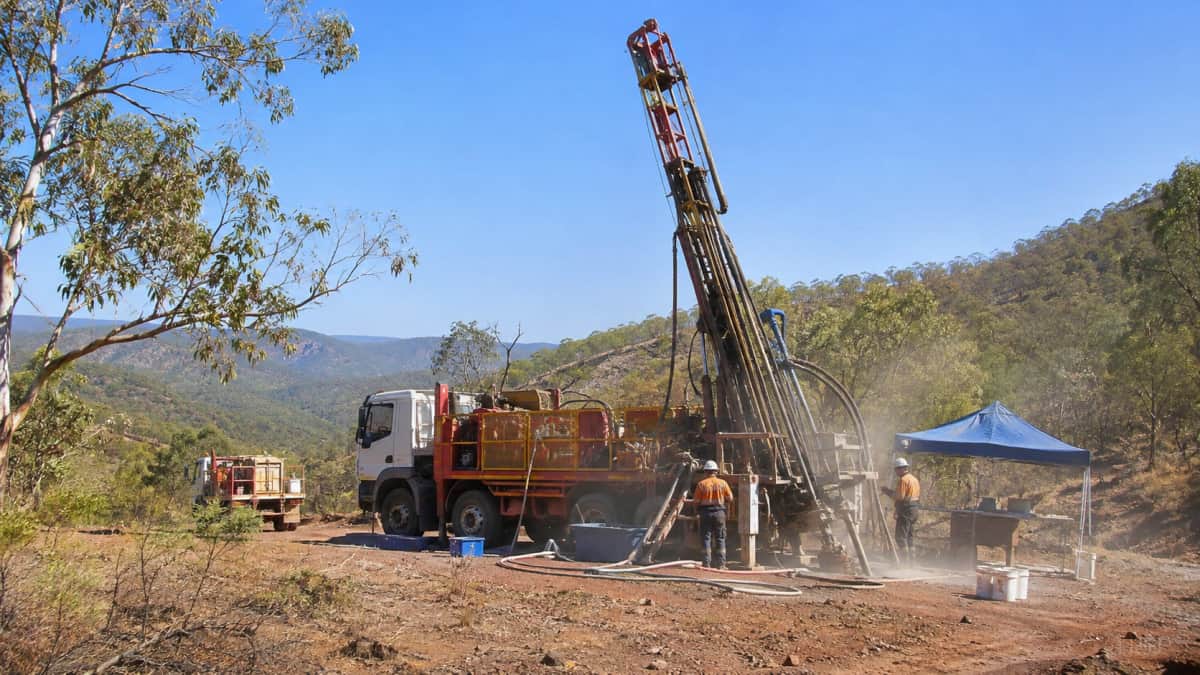
Why it matters: Multiple metals in the same systems could broaden the value of future discoveries, but the reported intersections have not yet established mineable continuity.
6 m — Evergreen interval grading 5.2 g/t gold, 157 g/t silver and 27.9% combined lead and zinc.
45.2 m — Rockley intercept grading 0.55% copper and 1.15% zinc.
16.52 m — Mons Cupri interval grading 1.06% copper equivalent, outside classified resources.
2,500 m — Iltani’s planned initial drilling at Orient.
Australian explorers reported new or extended polymetallic mineralisation during November 2026 at projects in New South Wales, Queensland and Western Australia. Results ranged from gold-silver-copper-lead-zinc intersections at Australian Gold and Copper’s Evergreen project to copper-zinc sulphides at Alkane Resources’ Rockley project and mineralisation outside existing resources at Anax Metals’ Mons Cupri.
The results add targets across several districts, but the reported drill intervals are downhole lengths and do not necessarily represent true widths. At Evergreen, the company said further work will be needed to establish whether mineralisation is continuous enough to support an initial resource estimate.
Evergreen drilling extends South Cobar discovery
Australian Gold and Copper reported that reverse-circulation hole EGRC018 intersected 16 m from 112 m, grading 2.3 g/t gold, 70 g/t silver, 1.4% copper and 12.2% combined lead and zinc. A higher-grade six-metre section returned 5.2 g/t gold, 157 g/t silver, 1% copper and 27.9% combined lead and zinc.
The results complement earlier drilling that included 13 m grading 3.3 g/t gold, 264 g/t silver, 0.8% copper, 4.8% zinc and 5.3% lead. Final results from a 21-hole, 2,593 m campaign at Hillston included EGRC019, which intersected 15 m at 4 g/t gold, 129 g/t silver, 0.5% copper, 5.7% zinc and 4.8% lead.
The company has approvals for up to 33 additional holes at Evergreen. It plans to bring in a more powerful drill rig in early 2027 to test deeper extensions; the continuity of the mineralised zones remains a requirement for assessing a first resource estimate.
Orient and Rockley add targets in Queensland and New South Wales
In north Queensland, Iltani Resources reported assays from the final 21 reverse-circulation holes in its Orient campaign. Drilling extended mineralisation at Orient North, Orient West and Vein 1, including 14 m grading 197 g/t silver equivalent. The project’s indium content is also of interest to electronics and photovoltaic supply chains, although the supplied results do not quantify indium grades.
Iltani plans an initial programme of about 2,500 m across 10 holes to test for mineralised continuity between Orient West and Orient East. The company is targeting a resource estimate update before the end of 2026 and a conceptual economic study in the first months of 2027.
At Belmore East, part of Alkane’s Rockley project in New South Wales, five diamond holes totalling 849 m identified massive and semi-massive sulphides associated with skarn alteration. Hole BEL001 returned 45.2 m at 0.55% copper, 1.15% zinc, 0.05 g/t gold and 4.8 g/t silver, including 6.8 m at 1.59% copper and 3.69% zinc. A second hole about 300 m away also intersected copper and zinc mineralisation. Alkane said the holes may lie on the same mineralised horizon; electromagnetic and drone-based magnetic surveys are planned to help test that interpretation.
New copper-zinc-silver zones at Mt Carrington and Mons Cupri
Legacy Minerals reported previously undrilled polymetallic mineralisation at Mt Carrington. At the Ginnies target, hole EMDD007 intersected 16 m at 2.44% zinc, 0.20% copper and 2.5 g/t silver, including 1 m at 11.05% zinc and 1.18% copper. At Emu, about 760 m east, drilling returned 9 m at 1% copper and 3.9 g/t silver from 32 m downhole.
At Mons Cupri, within Anax Metals’ Whim Creek project in Western Australia, hole 26ANXDD007 intersected 16.52 m at 1.06% copper equivalent from 257.5 m. The interval averaged 2.68% zinc, 1.21% lead and 32.9 g/t silver. It lies outside currently classified resources and could represent a new mineralised body, according to the company.
Anax has started four additional holes to investigate the body’s geometry and continuity. Its 2026 programme comprises about 6,200 m of diamond drilling across 20 holes. As with the other reported targets, follow-up drilling and, where relevant, metallurgical work will be needed to determine the extent and potential recovery of the different metals.
More in Discoveries
Mexico silver drilling finds high grades, but continuity remains the test
Four campaigns across Sinaloa, Querétaro and Durango are testing whether rich intervals belong to wider, economically relevant systems.
Graycliff’s Shakespeare drilling hits 115.25 g/t gold, but continuity remains untested
At Sudbury, the standout interval is one part of a campaign testing whether high grades extend across mineable widths.
Chile’s 2026 copper hits span high grades and long intervals, but continuity is unproven
At Marimaca’s Pampa Medina, sulphide mantos recur across several holes, while other targets range from porphyry extensions to newly identified structures.