
Steenkampskraal tests French rare-earth process before deciding on integration
The non-binding agreement starts with laboratory work; an on-site pilot and feasibility study depend on how the ore performs.
novanews.co.za
Why it matters: The proposed tests could show whether Steenkampskraal can add separation of individual rare earths to its planned South African processing route.
Three stages — laboratory tests, an on-site pilot and a joint feasibility study.
About 14.5% TREO — the deposit grade cited by SMM CEO Enock Mathebula.
2027 — the year SMM has indicated for planned underground mine rehabilitation.
More than €2 million — Remedy Metals’ seed funding closed in June 2026; the company also cited US$2.19 million.
Steenkampskraal Monazite Mine (SMM) has signed a non-binding memorandum of understanding with France-based Remedy Metals to evaluate a rare-earth separation process at its Western Cape operation. The programme is staged: laboratory tests would come first, followed by a site pilot and a joint technical and economic feasibility study to assess possible integration into the mine’s processing circuit.
The agreement does not commit SMM to install the technology. The work is intended to measure separation performance, recovery and product purity using Steenkampskraal material before the companies assess whether the process fits the mine’s development plan.
Testing the process against Steenkampskraal ore
Remedy Metals says its process separates rare-earth elements by exploiting differences in their magnetic susceptibility, producing high-purity rare-earth oxide powders with high recovery rates. The company, founded in 2024, plans to test the process on representative samples from Steenkampskraal.
The proposed site pilot would operate continuously under real operating conditions to generate data beyond the initial laboratory work. Remedy Metals CEO and chief technology officer Peter Dunne cited the ore’s grade and chemistry as reasons for selecting Steenkampskraal for the company’s first industrial test. He said moving from laboratory work to an on-site pilot would help assess whether the magneto-electrochemical separation process can operate at scale.
A separate step after monazite concentrate
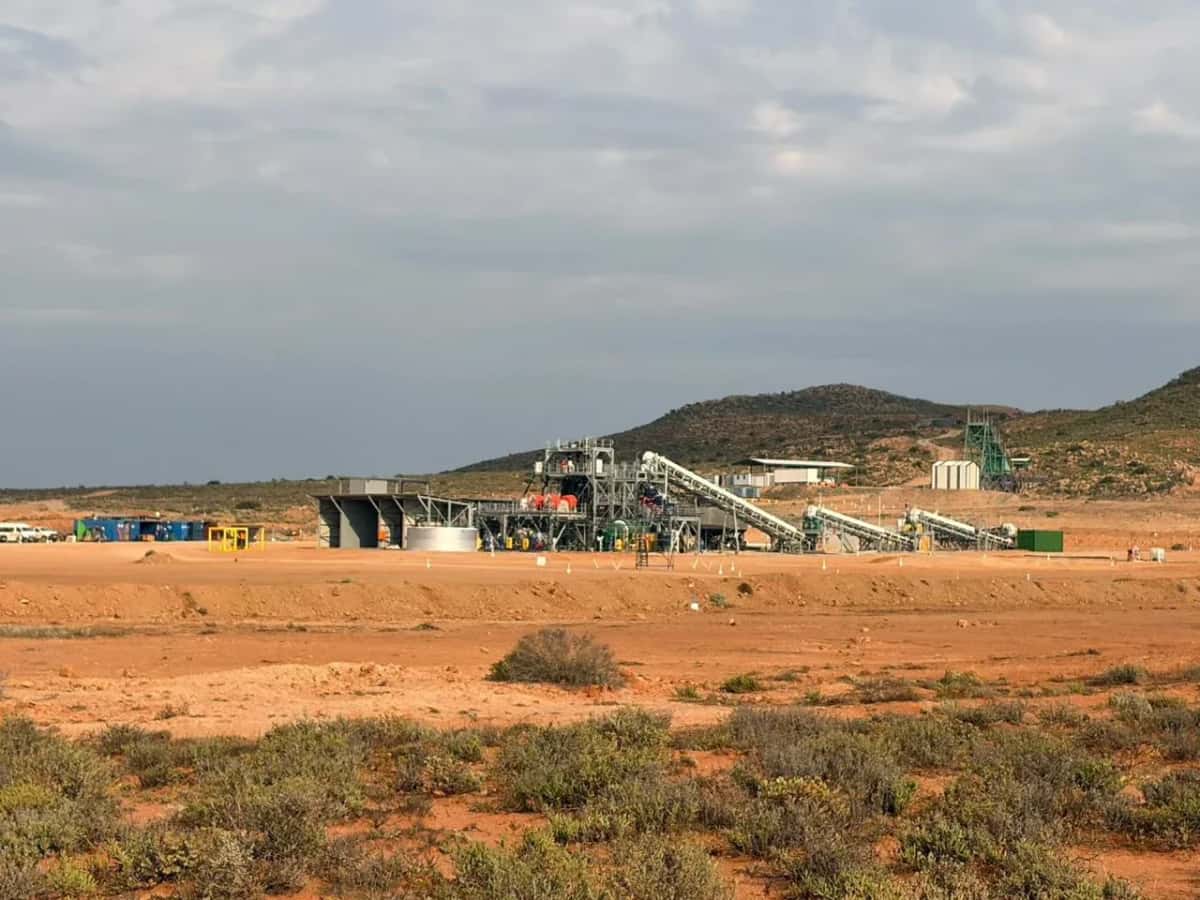
SMM opened its Phase 1 monazite concentrate plant in October. The facility crushes and mills ore, then uses gravity separation and flotation to produce concentrate for export; SMM has secured offtake agreements for that product. Separating individual rare-earth elements would be a later, distinct processing stage.
SMM has said it aims to process ore in South Africa and increase local value creation. Mathebula described Steenkampskraal as the world’s highest-grade rare-earth and thorium deposit and put its grade at about 14.5% total rare-earth oxide (TREO). That characterization is his, and the supplied information does not specify a resource classification.
In June, SMM reported producing high-purity mixed rare-earth products at laboratory facilities operated by Mintek in Johannesburg. That work involved laboratory-produced material; it was not reported as a result of Remedy Metals’ process.
Mine development remains sequential
SMM’s development schedule places commissioning of the first-phase metallurgical plant ahead of rehabilitation of the underground mine, which the company has indicated is planned for 2027. SMM has described downstream separation capacity as part of that phased development. Remedy Metals closed a seed round of more than €2 million (US$2.19 million) in June 2026 to advance validation of its process in industrial and mining settings.
The next defined step under the memorandum is laboratory testing. Any site pilot and feasibility work would follow within the staged programme, with the study intended to examine the process’s technical and economic fit in SMM’s circuit.
More in Critical Minerals
Brazil’s critical-minerals drive faces a bottleneck at mining regulator ANM
The agency would administer mining rights and oversee operations as Brazil develops its critical-minerals policy.

Serbia's Jadar lithium project remains paused as EU keeps strategic link
A new Serbian parliamentary majority inherits scrutiny of mining permits, alleged exploration damage and the country's partnership with Brussels.
Australian miners target US antimony processing, but supply links remain uneven
Idaho, Alaska and Nevada projects span drilling, pilot plants and a purchased refinery, but each is at a different point on the route to metal.