
Japan sets 6,000-metre rare-earth test, but seabed output is not refined supply
A short lift trial reached the surface, but Minamitorishima’s next campaign must test endurance, cost and environmental controls.
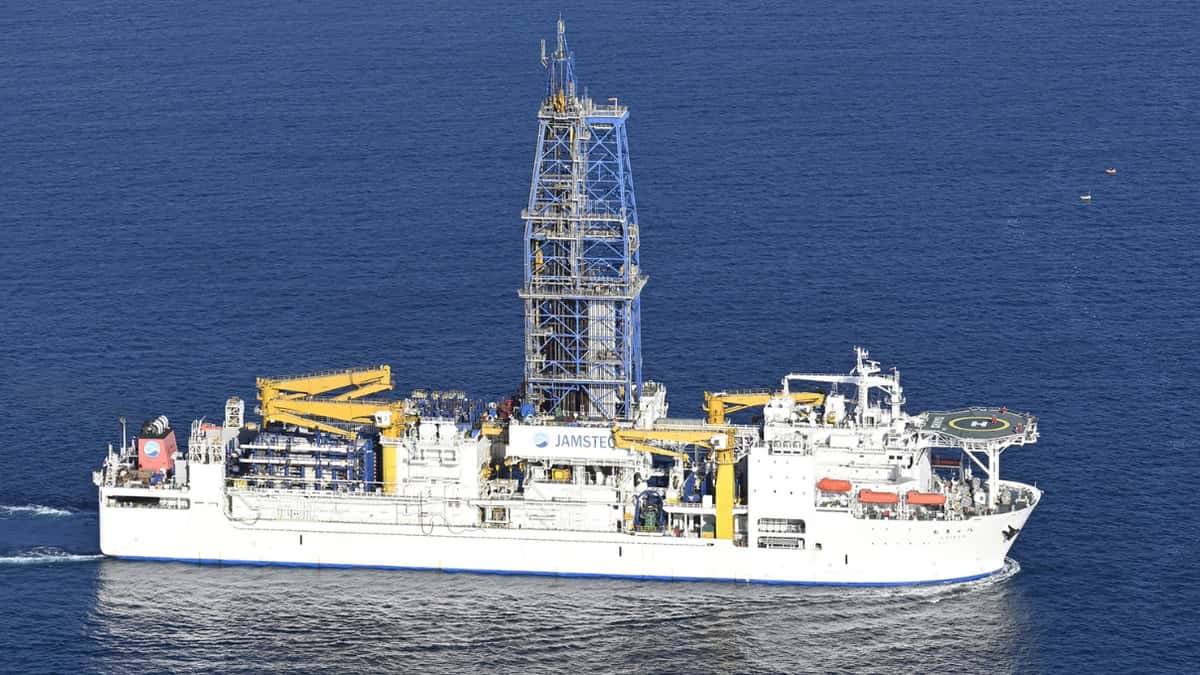
Why it matters: Japan is testing whether a domestic seabed resource can help diversify rare-earth supply, but lifting sediment is only one step toward producing usable material.
6,000 metres — approximate depth of the planned extraction test
50 days — expected duration of the campaign starting February 2, 2027
350 tonnes per day — target for sediment recovery, not refined rare earths
50 tonnes — sediment recovered during the 2026 trial
Japan plans to begin a 50-day test of rare-earth sediment extraction on February 2, 2027, near Minamitorishima in the Pacific, at depths approaching 6,000 metres. The government’s target is to recover about 350 tonnes of sediment a day and use the campaign to assess whether the deposits could become a commercial supply source.
The site lies about 1,900 kilometres southeast of Tokyo, within Japan’s exclusive economic zone. The test is intended to examine the extraction system under more demanding operating conditions and gather information on costs and technical constraints. Japan expects to complete an overall assessment of technical, environmental and economic results by March 2028.
The 2027 target is for sediment, not finished product
The planned campaign follows a test in early 2026, when the research vessel Chikyu, operated by the Japan Agency for Marine-Earth Science and Technology (JAMSTEC), recovered about 50 tonnes of seabed mud from 5,569 metres using a continuous extraction system. Extraction took place over three days. That trial demonstrated that sediment could be transported from the ocean floor to the vessel, but did not establish whether the process could run continuously or economically over a longer period.
The 350-tonne daily goal for the next test refers to the weight of recovered sediment. The amount of marketable rare earths would depend on the material’s mineral content and the efficiency of subsequent processing. Japan plans to remove some water from the recovered mud on Minamitorishima, then transport it to the mainland for separation, purification and refining tests.
JAMSTEC analyses published in July 2026 found that about 54% of the total rare-earth content identified in sediment recovered during that year’s campaign consisted of medium and heavy rare earths, including yttrium, gadolinium and dysprosium. That composition is relevant to technology and manufacturing uses, but does not by itself establish recoverable volumes or project economics.
Supply security meets processing and environmental hurdles
Japan’s interest is tied to its reliance on supply chains dominated by China, particularly for rare-earth separation and refining. Export restrictions imposed by Beijing since 2025 have added impetus to efforts to diversify supply. The Japanese program has received about ¥50 billion in cumulative funding from April 2018 through March 2027, equivalent to about US$314 million at the exchange rate cited in the announcement.
Japan and the United States also announced cooperation on November 12, 2026, covering technical information exchange, supply-chain development and investment related to seabed minerals. The work includes exploration, environmental monitoring and technology development.
The test will have to address equipment performance at depth, transport and processing costs, and potential effects on marine ecosystems. JAMSTEC has developed closed-circulation systems intended to limit particle dispersion and conducted environmental monitoring during the 2026 campaign. Longer-duration testing and further assessment will be needed before Japan can determine whether Minamitorishima’s deposits can support commercial production.
More in Critical Minerals
Chile maps 46 rare earth-rich tailings sites, but recovery remains unproven
Many deposits have only one surface sample, leaving their grade and continuity below ground untested.
U.S. Pacific seabed auction draws US$6 million, but leases face court challenge
A judge found the federal review did not address the possible effects of later exploration and extraction stages.

AusIMM returns to Peru as talent shortages test Australia’s mining partnership
Peru’s deputy mines minister is due at a Lima forum, where bilateral ambitions meet the question of which skills future projects will need.