
Argentina’s new lithium plants begin production, but ramp-up remains the test
Six projects have entered Argentina’s RIGI pipeline, but their production plans span commissioning, proposed expansions and financing conditions.
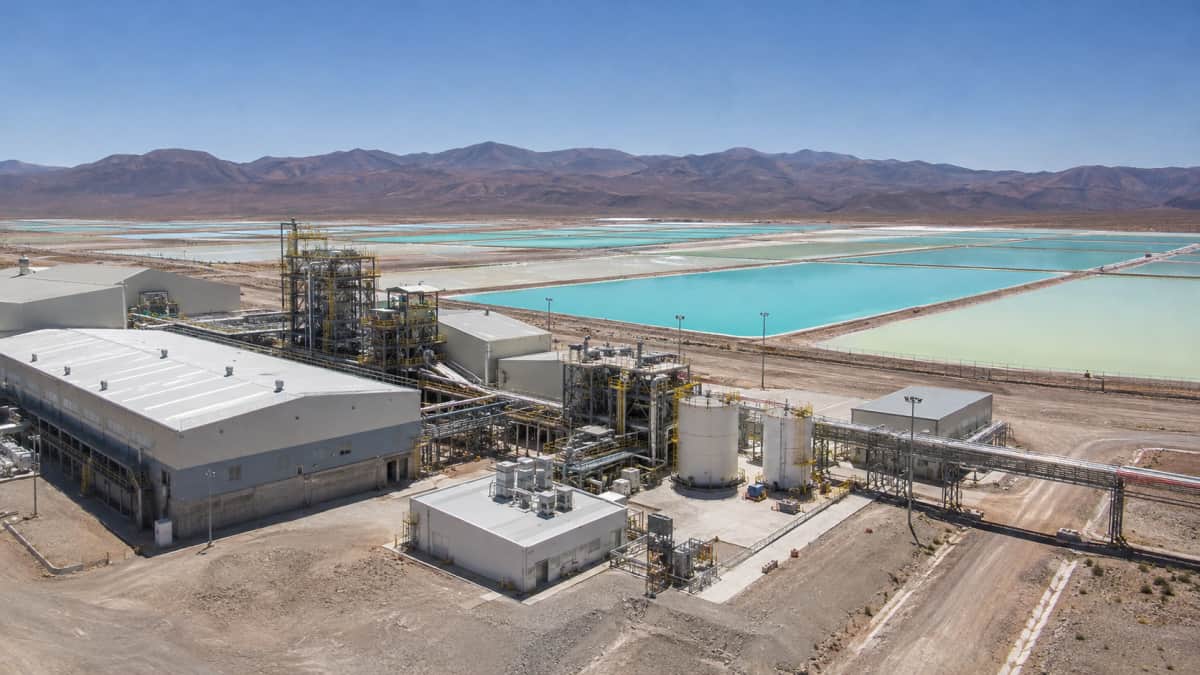
Why it matters: The difference between installed capacity and sustained output will determine how much Argentina’s expanding lithium sector can contribute to battery supply.
US$6.065 billion — approximate investment committed by six lithium projects incorporated into Argentina’s RIGI regime by October 2026.
25,000 tonnes per year — combined design capacity of Rio Tinto’s Fénix 1B expansion and Sal de Vida.
2,000 tonnes — Eramet’s monthly lithium carbonate production at Centenario-Ratones in October.
85,000 tonnes per year — projected total capacity at Cauchari-Olaroz after its proposed expansion.
Argentina’s new lithium plants have started production, but several projects in Salta, Jujuy and Catamarca are still ramping up or depend on further construction, financing and approvals before reaching planned capacity. Six projects had secured inclusion in the country’s Large Investment Incentive Regime (RIGI) by October 2026, committing approximately US$6.065 billion.
The developments mark a shift from exploration toward larger-scale industrial production in the northwest. But the capacities announced for existing and planned facilities are targets, not necessarily output expected in 2026.
Rio Tinto’s Catamarca projects enter ramp-up
Rio Tinto inaugurated the Fénix 1B expansion and Sal de Vida facilities in Catamarca on October 29. The projects represent a combined investment of about US$1.4 billion and began production in the second quarter of 2026. Once they reach design capacity, they are expected to add a combined 25,000 tonnes per year of lithium carbonate equivalent (LCE).
Fénix, at the Salar del Hombre Muerto, is one of Argentina’s longest-running lithium operations. Sal de Vida adds processing facilities in the same district. Rio Tinto is also evaluating a further Fénix expansion and could seek RIGI inclusion for it in 2027, according to the project plans.
In Salta, Rio Tinto approved US$2.5 billion for Rincón, targeting installed capacity of 60,000 tonnes per year of battery-grade lithium carbonate. The project combines an initial 3,000-tonne-per-year plant with a 57,000-tonne expansion. Rio Tinto secured US$1.175 billion in financing in March 2026. The expansion is scheduled to start production in 2028, with a further three years planned to reach full capacity. It will use direct lithium extraction (DLE) technology.
Eramet reports a monthly production milestone
Eramet said on November 6 that Centenario-Ratones, in Salta’s Puna region, produced 2,000 tonnes of lithium carbonate in October, equivalent to an annualized rate of 24,000 tonnes. The company reached that level after 15 months of ramp-up. The operation uses adsorption-based DLE; further operating data will provide evidence on costs, recovery and the technology’s commercial performance.
POSCO inaugurated its second Sal de Oro plant on October 6 at the Salar del Hombre Muerto, spanning Salta and Catamarca. The facility is designed for 23,000 tonnes per year of lithium carbonate, with about US$547 million committed under RIGI. Its production is expected to ramp up during 2027.
Expansion plans remain conditional
At Cauchari-Olaroz in Jujuy, Minera Exar—linked to Ganfeng Lithium, Lithium Argentina and provincial company JEMSE—has outlined a second stage adding 45,000 tonnes per year, taking projected total capacity to 85,000 tonnes. The preliminary study estimates US$1 billion in investment and a 40-year operating life for the expansion. It projects operating costs of US$5,006 per tonne and a 28.5% internal rate of return using a lithium price assumption of US$18,000 per tonne.
The company is pursuing an initial 10,000-tonne-per-year expansion using adsorption-based DLE, with production potentially beginning in 2028. The plan remains subject to regulatory approvals and the availability of technology and financing.
In Catamarca, Galan Lithium was preparing the first phase of Hombre Muerto Oeste for initial sales expected in the fourth quarter of 2026. Earthworks were under way to lift planned capacity from 4,000 to 5,200 tonnes per year of LCE. A permitted expansion to 21,000 tonnes per year remains dependent on financial and market conditions.
More in Critical Minerals
Stanford’s niobium phosphide nanowires challenge copper in smaller chips
At nanometre scales, copper interconnects face rising resistance, while any alternative must still prove it can work in chip manufacturing.
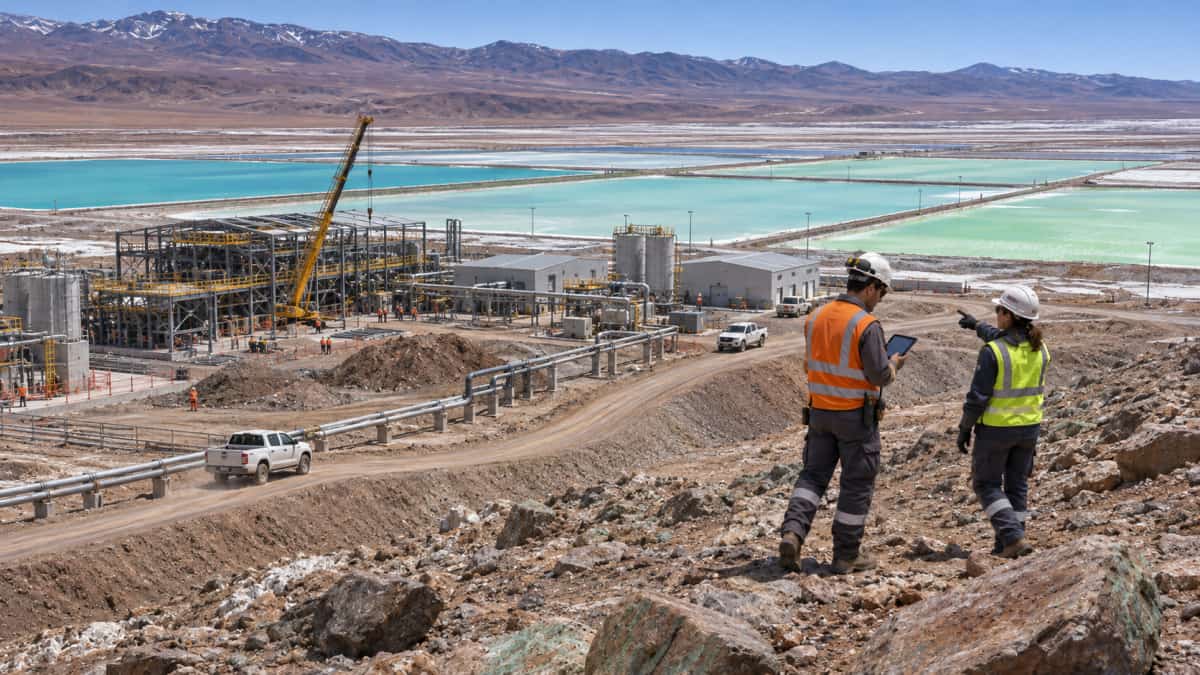
Argentina and Canada expand lithium plans, but each faces a different test
Cauchari-Olaroz is seeking a major capacity increase, while Canada's push extends from mine development to chemical conversion.
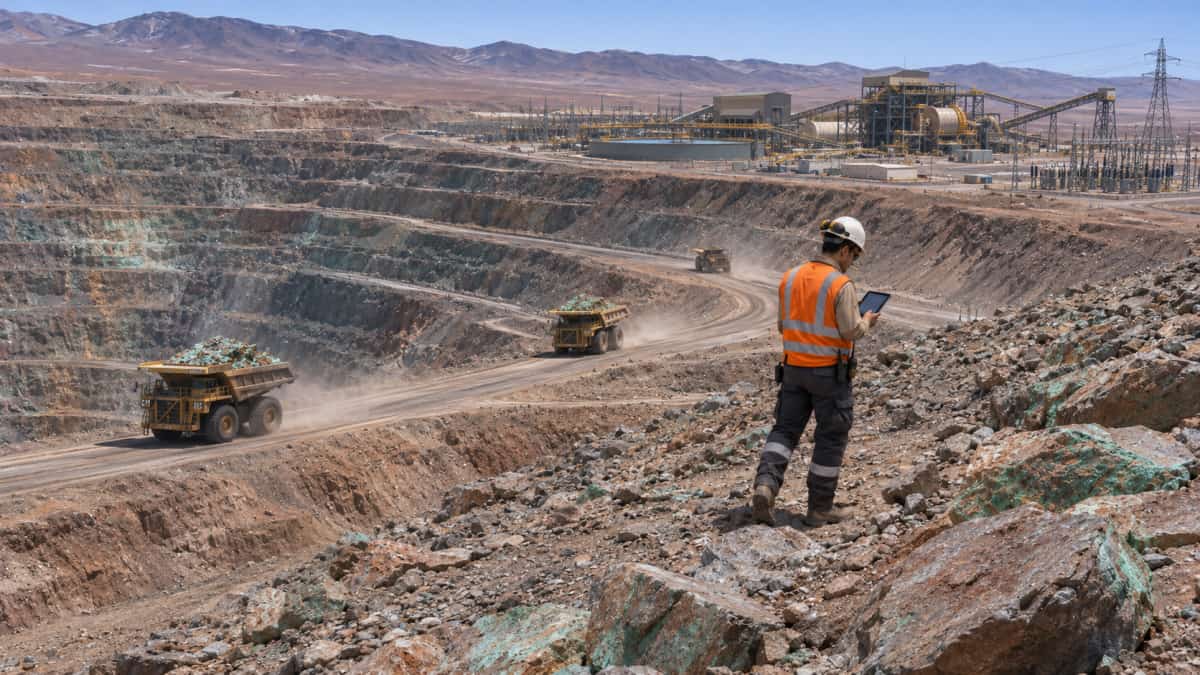
AI data-centre growth puts Chile’s copper and critical-mineral supply chains to the test
Global data-centre power use is projected to nearly double by 2030, while some essential materials rely on concentrated processing chains.