
Argentina's mining megaproject ranking spans billions, but the totals use different bases
The ten-project list mixes initial build capital, expansion costs and RIGI declarations, while developers remain at sharply different stages.
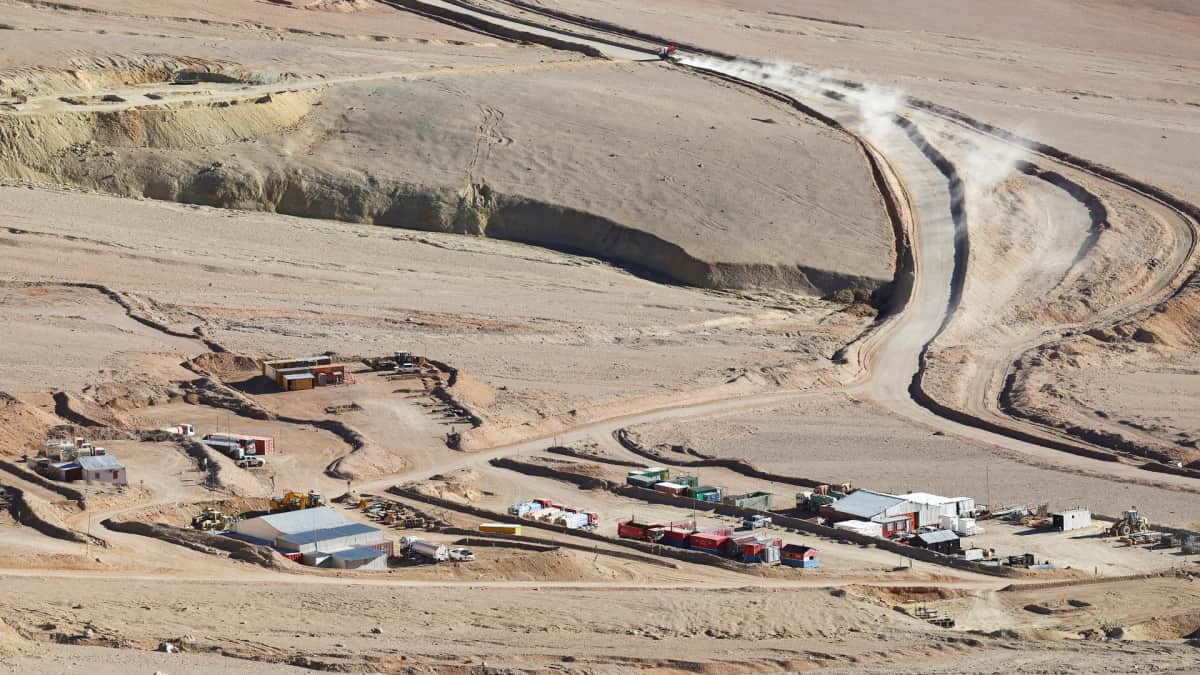
reuters.com
Why it matters: Whether Argentina's copper and lithium pipeline becomes new export capacity depends on projects clearing financing, permitting and construction hurdles.
US$9.737 billion — Vicuña's investment declared under Argentina's RIGI incentive regime
US$9.5 billion — estimated first-phase investment for El Pachón
1.5 million tonnes a year — potential combined copper output from seven advanced projects by 2035, according to the Mining Secretariat
US$2.5 billion — planned investment for Rio Tinto's Rincón lithium project
Argentina's mining investment ranking is led by Vicuña, at US$9.737 billion, followed by El Pachón at US$9.5 billion and MARA at US$6.394 billion, based on figures available in November 2026. The ten-project list spans copper, gold, silver and lithium developments in five provinces, but its figures are not directly comparable: some refer to initial construction capital, others to expansions or total investment declared under the Large Investment Incentive Regime (RIGI).
San Juan projects dominate the top of the ranking
Vicuña, owned by BHP and Lundin Mining, combines the Josemaría and Filo del Sol deposits in San Juan, near the Chilean border. Its 2026 preliminary economic assessment considers a 10-year period with average annual production above 500,000 tonnes of copper, alongside 800,000 ounces of gold and 20 million ounces of silver. The first-stage capital estimate is US$7.1 billion, while the RIGI declaration is US$9.737 billion; later phases could take total district investment to about US$18 billion. Engineering, permits and investment decisions remain ahead.
Glencore's El Pachón, also in San Juan, is estimated to require US$8.5 billion to US$10.5 billion for its first phase. The project has approximately 6 billion tonnes of mineral resources grading an average 0.43% copper, but development would require substantial energy, water, logistics and processing infrastructure, as well as approvals.
The next entries are MARA in Catamarca, Taca Taca in Salta and Los Azules in San Juan. MARA plans to link the Agua Rica deposit with Bajo de la Alumbrera's processing facilities; its RIGI plan targets construction from November 2027 and operations from October 2031. Taca Taca's development estimate of US$5.25 billion includes an expansion, while its initial investment is US$4.232 billion. First Quantum's plan envisages average annual copper production of 291,000 tonnes during the first decade. Los Azules, meanwhile, proposes producing copper cathodes through leaching, solvent extraction and electrowinning rather than a conventional concentrator and tailings facility.
Lithium projects range from expansion to development
The ranking also includes Rio Tinto's Rincón in Salta, with US$2.5 billion of planned investment and a target capacity of 60,000 tonnes a year of lithium carbonate. The company secured a US$1.175 billion financing package in 2026, and the expansion is scheduled to begin production in 2028. Cauchari-Olaroz in Jujuy is already operating; its proposed second stage would add 45,000 tonnes a year of lithium carbonate equivalent (LCE) to the existing 40,000-tonne capacity.
Kachi, in Catamarca, is a less advanced proposal: Lake Resources estimates US$1.38 billion for a 25,000-tonne-a-year direct lithium extraction project and is seeking financing. The remaining copper entries are Aldebaran Resources' Altar, with an initial estimate of US$1.593 billion, and PSJ Cobre Mendocino in Mendoza, whose US$891 million declaration includes a 10-million-tonne-a-year processing plant and a planned 2027 construction start.
Financing and permits will determine what gets built
The project stages vary as much as the investment measures. Rincón has a corporate investment decision and financing package; Vicuña, MARA and Los Azules have approved RIGI applications, while other projects remain in technical studies, permitting or financing processes. An approval or declared investment does not by itself establish that construction is fully funded or under way.
The Mining Secretariat estimates that seven advanced copper projects could reach combined output of up to 1.5 million tonnes a year by 2035—about 28% of Chile's 2025 copper production. That projection depends on projects advancing through further engineering, environmental approvals, energy and water planning, financing and construction; the ranking alone does not establish which developments will meet that threshold.
More in Critical Minerals
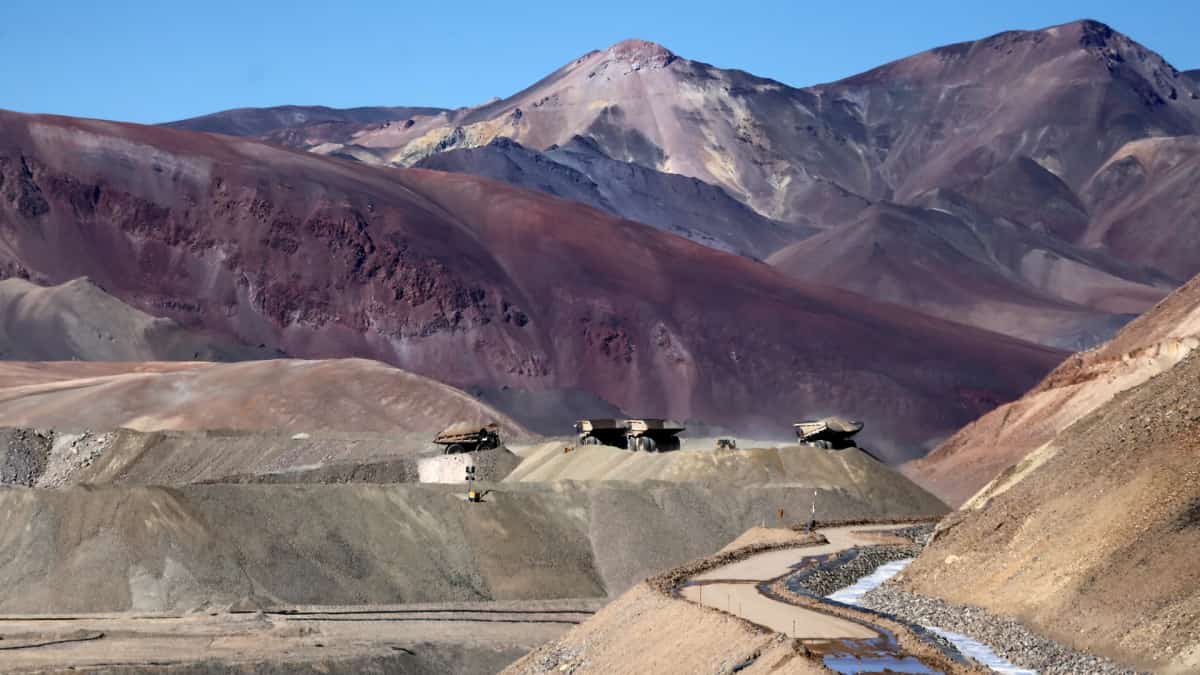
Argentina’s US$57bn mining expansion hinges on copper projects still awaiting decisions
The export forecast rests on a pipeline whose largest developments still need financing, permits and infrastructure.
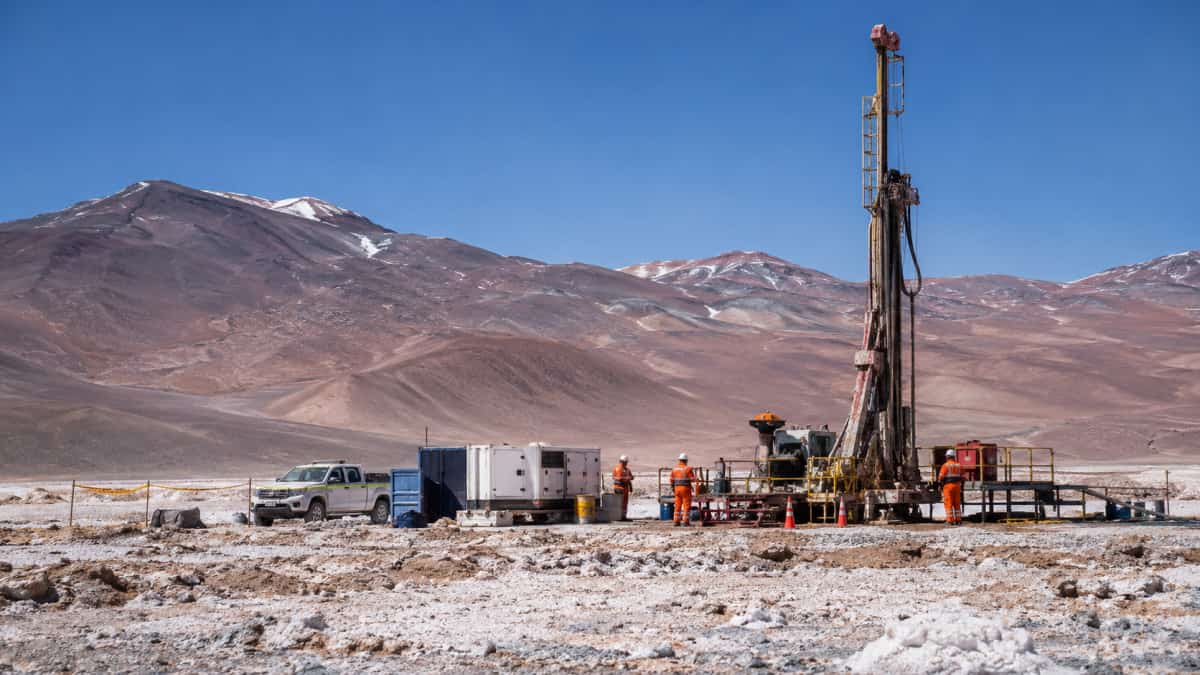
ENAMI and Rio Tinto get more time for Chile lithium deal as China review holds
ENAMI is also moving lithium oversight to its executive vice-president, giving the state miner’s project role a higher-level home.
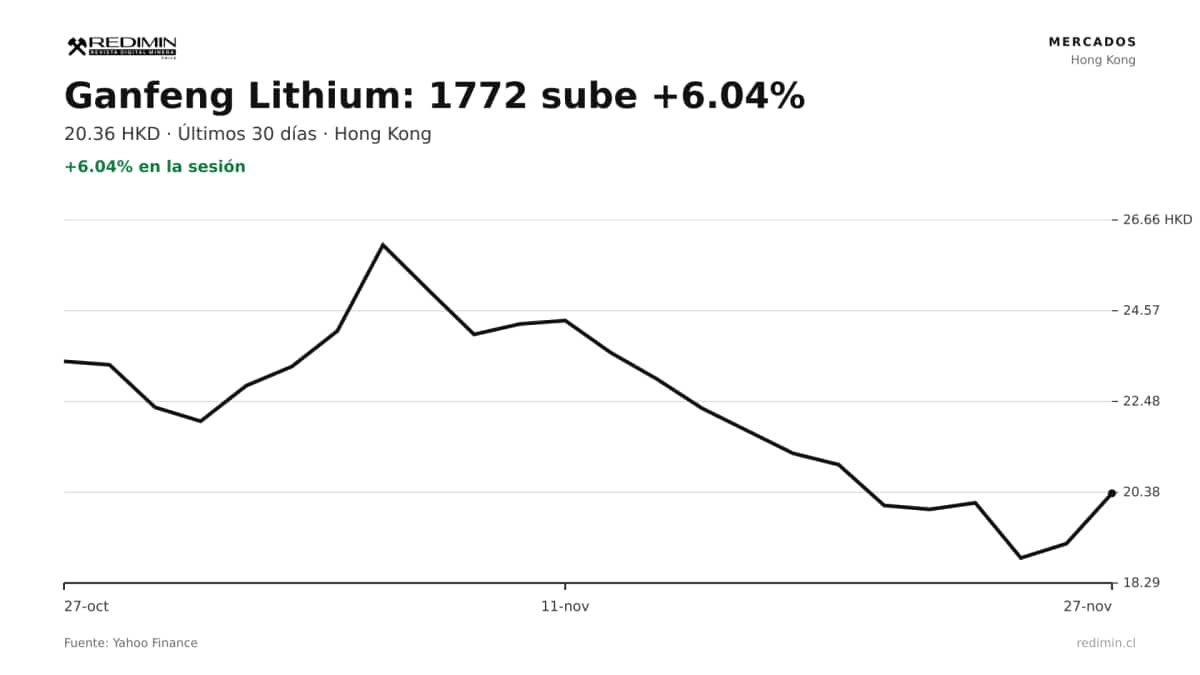
Ganfeng Lithium jumps 6% in Hong Kong but stays near its 52-week low
The quote captures a wide intraday swing, but the available market data do not identify a company announcement behind the move.