
ENAMI and Rio Tinto get more time for Chile lithium deal as China review holds
ENAMI is also moving lithium oversight to its executive vice-president, giving the state miner’s project role a higher-level home.
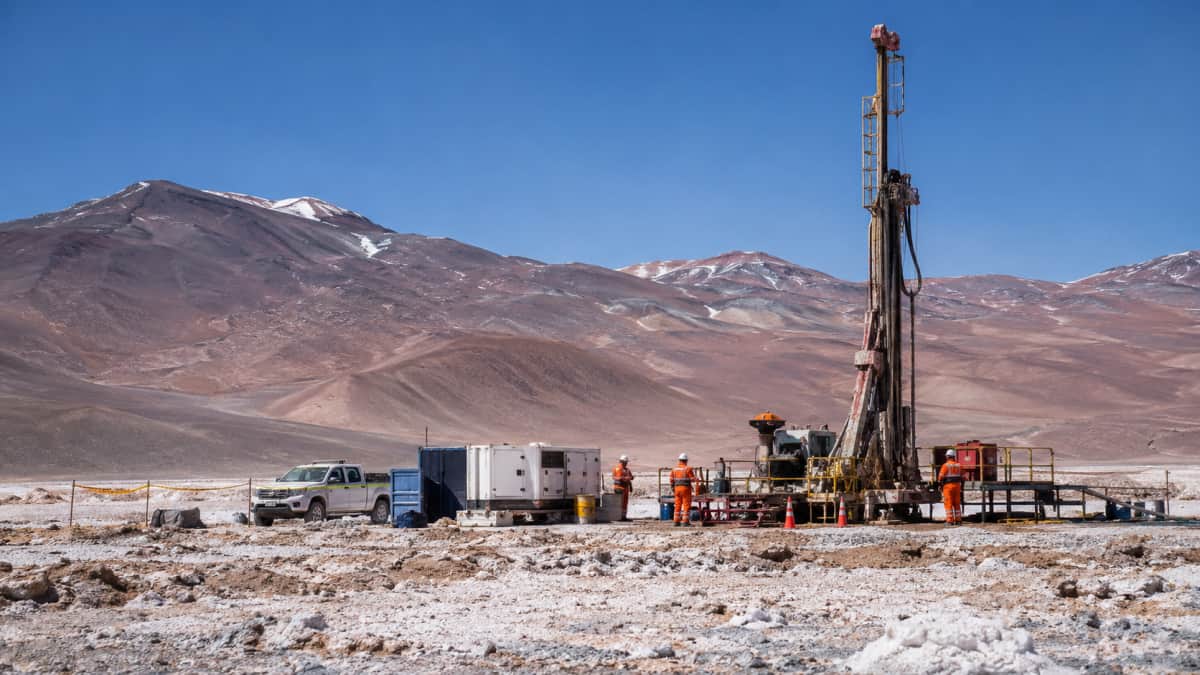
Why it matters: The proposed Atacama venture could add a major new lithium operation in Chile, but regulatory clearance and technical studies still stand between the reported resource and production.
US$3 billion — estimated investment for Salares Altoandinos
US$425 million — Rio Tinto’s committed contributions, up to
4.46 million tonnes — reported contained lithium resources
December 23, 2026 — extended deadline to complete the partnership
ENAMI and Rio Tinto have until December 23, 2026, to satisfy the conditions for their Salares Altoandinos lithium venture in Chile’s Atacama Region. The extension gives the parties another month beyond their original November 23 deadline; approval from China’s State Administration for Market Regulation (SAMR) remains outstanding.
ENAMI’s board approved the extension at an extraordinary meeting on November 13. Chile’s National Economic Prosecutor’s Office (FNE) cleared the proposed association without conditions in July 2026, but that approval does not replace the remaining regulatory process in China. If the conditions are still unmet by the revised deadline, the parties will have to assess the contractual steps available to them.
Rio Tinto would take a 51% stake
The agreement, signed in Copiapó on July 23, 2025, provides for Rio Tinto to control the company developing Salares Altoandinos, with ENAMI initially holding 49%. Rio Tinto has committed up to US$425 million in contributions, including funding for pre-feasibility studies, valued assets and access to direct lithium extraction technology.
The venture’s estimated US$3 billion investment is not a final construction commitment. It remains dependent on technical and economic studies and subsequent investment decisions. The project has a Special Lithium Operation Contract (CEOL) in place through December 31, 2060, but the contract does not replace environmental reviews or sectoral permits for future facilities.
Reported resource still needs technical assessment
Exploration at the La Isla and Aguilar salars identified about 4.46 million tonnes of contained lithium, according to the project information. That figure represents roughly 25% of the lithium resources recognized in Chile. The reported resource is not necessarily an economically mineable reserve: commercial prospects will depend on brine characteristics, recovery rates, operating costs and engineering results.
Direct lithium extraction (DLE) is a central part of the proposed development. Unlike conventional evaporation ponds, DLE processes aim to separate lithium from brine through physicochemical methods. Their performance at Salares Altoandinos will depend on the salars’ hydrogeology and brine chemistry, as well as energy and water requirements. Industrial-scale validation will be important to establishing production costs and longer-term environmental impacts.
ENAMI shifts lithium oversight to its executive office
From December 1, 2026, ENAMI plans to place its lithium area directly under executive vice-president Juan Carlos Sáez. The reorganization also redistributes responsibilities for project development, engineering and construction, alongside changes to the agency’s small- and medium-scale mining support functions.
The administrative change comes as ENAMI balances its traditional role supporting smaller miners with involvement in a large, capital-intensive project. For Salares Altoandinos, the immediate condition is the outstanding Chinese regulatory authorization; studies, permitting and a construction investment decision remain further steps before the project could become a producing operation.
More in Critical Minerals
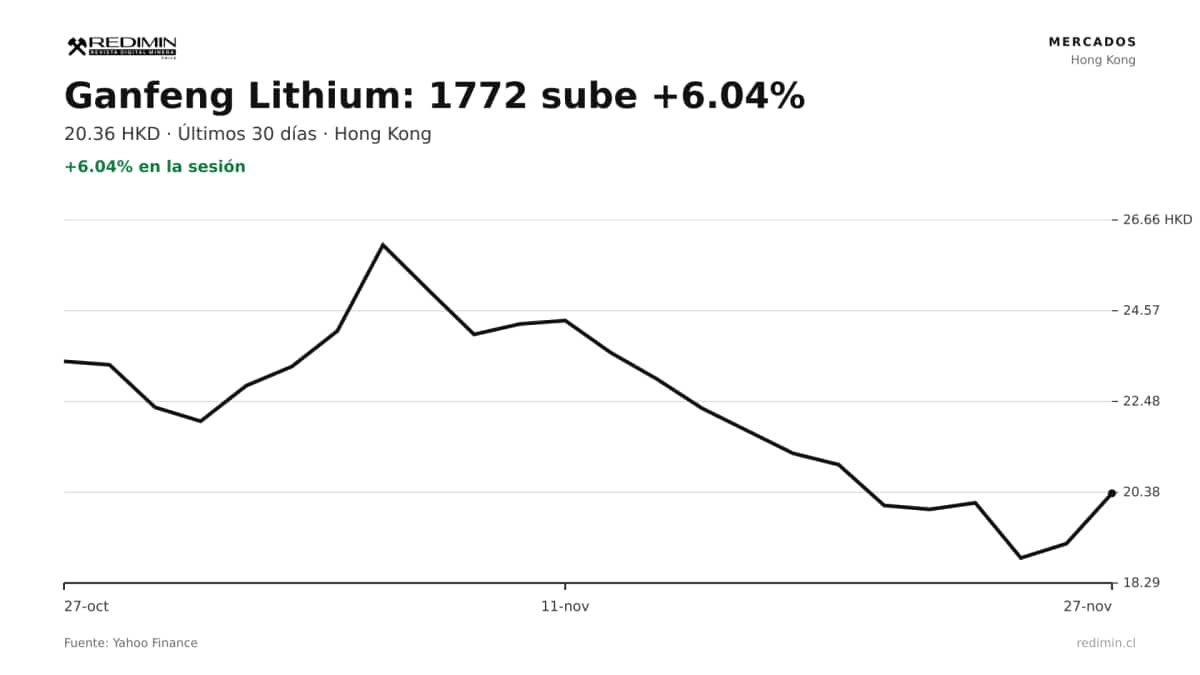
Ganfeng Lithium jumps 6% in Hong Kong but stays near its 52-week low
The quote captures a wide intraday swing, but the available market data do not identify a company announcement behind the move.
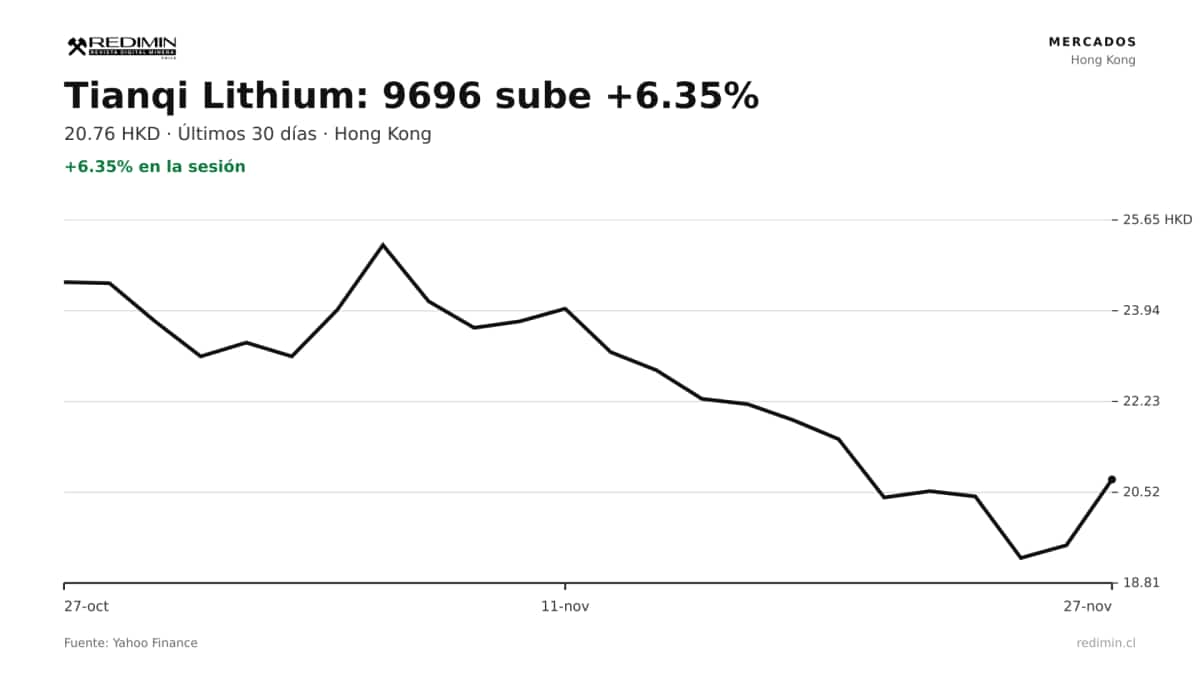
Tianqi Lithium shares jump 6.35% in Hong Kong but remain far below 52-week high
The trading snapshot identifies no corporate announcement behind the move, while the stock remains close to its annual low.
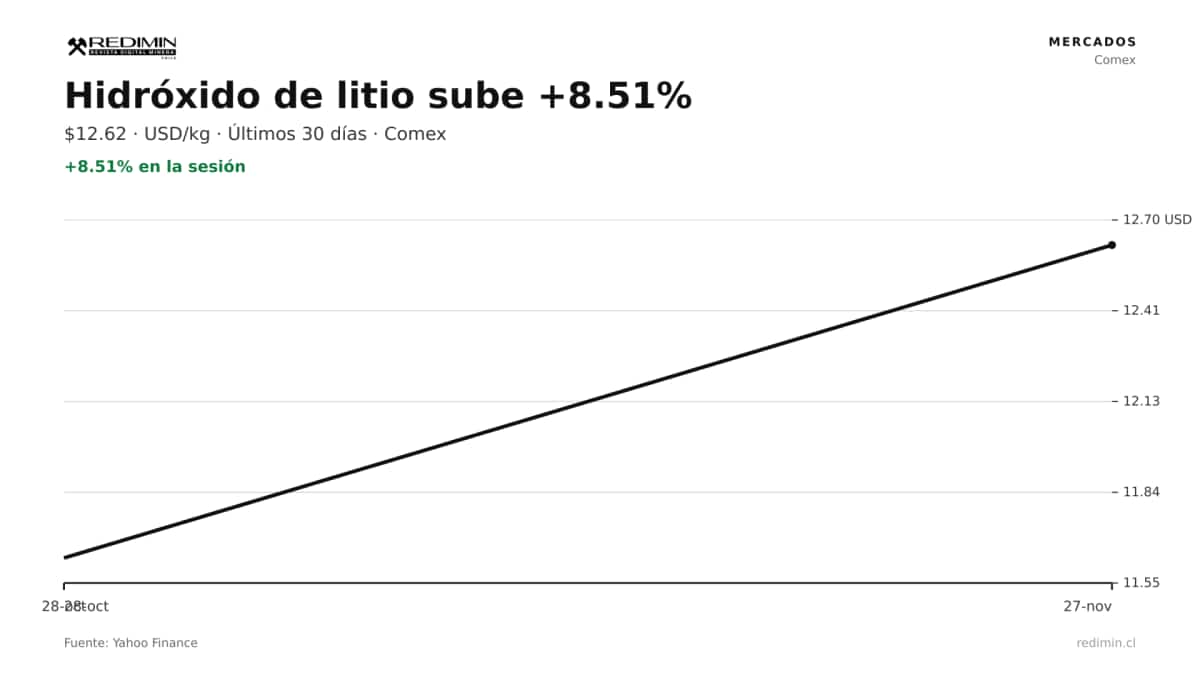
Lithium hydroxide gains 8.51% on Comex, but the reported range is flat
The market sheet offers a prior-close comparison, while its other fields leave the session’s path unclear.