
Harmony’s copper pivot targets 100,000 tonnes as South African gold output falls
CSA and Eva offer a route to diversification, while Harmony’s largest undeveloped copper option still waits on government approvals.
harmony.co.za
Why it matters: Harmony’s copper plans could diversify its production base as deeper, mature South African gold mines face rising operating pressure.
100,000 tonnes a year — Harmony’s target for combined CSA and Eva Copper output toward 2029.
1.3 million–1.4 million ounces — the company’s FY2027 gold production outlook, following a 3.4% decline in FY2026.
US$1.55 billion–US$1.75 billion — Harmony’s estimated investment to develop Eva Copper.
180,000 tonnes of copper and 200,000 ounces of gold a year — initial production estimates for Wafi-Golpu.
Harmony Gold is looking to copper projects in Australia and Papua New Guinea to offset weaker gold production and higher costs in South Africa. Its plan combines the producing CSA mine with the proposed Eva Copper development in Australia, while Wafi-Golpu in Papua New Guinea remains dependent on permits. Chief executive Beyers Nel said CSA and Eva could together produce 100,000 tonnes of copper a year toward 2029.
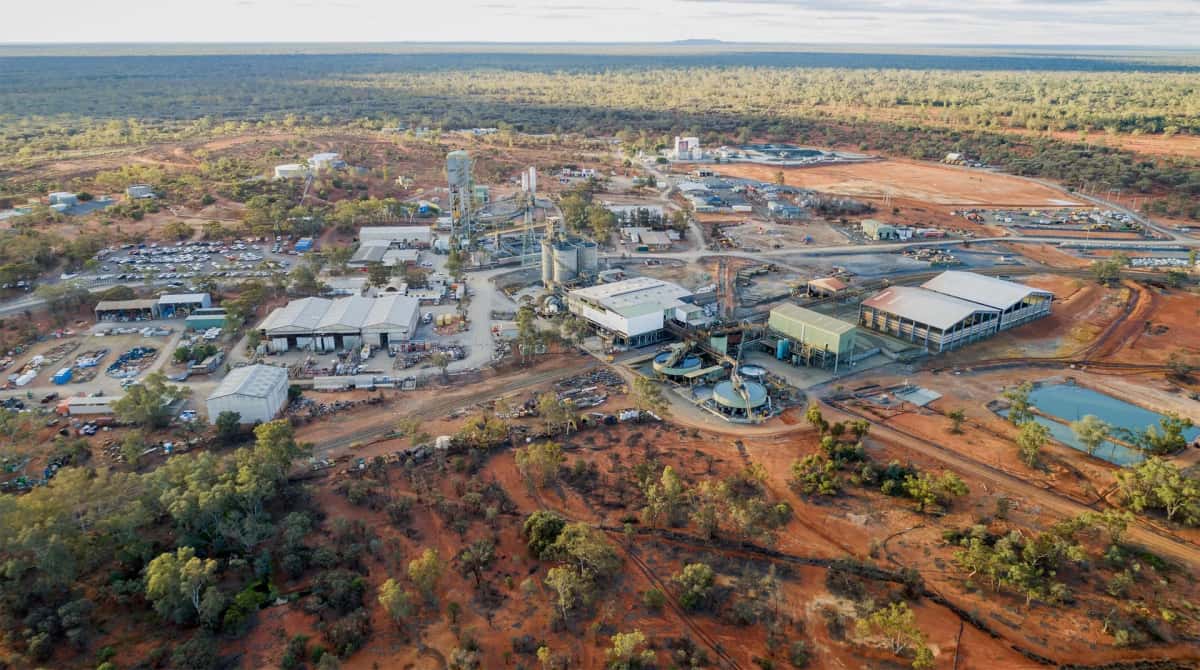
CSA anchors the Australian build-out
CSA is Harmony’s only producing copper mine. The company expects output of 28,000–30,000 tonnes in FY2027 and aims to lift production to 40,000 tonnes a year within three years. Harmony bought the asset for US$1 billion, completing the acquisition on October 24, 2025. Nel said the purchase drew on the company’s experience operating deep underground mines.
Eva Copper would provide the next Australian contribution. Harmony estimates development capital of US$1.55 billion–US$1.75 billion and is targeting production of about 60,000 tonnes of copper a year around 2029. The combined 100,000-tonne goal depends on both mines reaching their planned production levels.
Harmony is also assessing potential Australian acquisitions of mines moving toward underground operations, though it is not actively pursuing purchases. Nel said the company could consider assets other operators are unwilling to take on if Harmony’s underground expertise could add value. The company estimates Australasia will account for about 30% of group production in 2036, compared with roughly 16% currently. Nel said the copper assets are not reflected in the share price; Harmony’s NYSE shares had fallen 30.4% in 2026 through November 25.
Wafi-Golpu’s scale depends on permits
Harmony and Newmont share Wafi-Golpu, where initial estimates point to annual production of about 180,000 tonnes of copper and 200,000 ounces of gold. Under a potential structure in which each partner holds 35%, Harmony’s attributable copper production would be around 60,000 tonnes a year.
Permitting has taken longer than expected. Nel said the partners remain aligned on securing approvals and that certainty for a long-term investment matters more than accelerating development. A 2018 feasibility study put development costs at approximately US$3.8 billion; that figure is from the study and is not an updated estimate.
South African gold remains under pressure
Harmony expects gold production of 1.3 million–1.4 million ounces in FY2027, after output fell 3.4% to 1.43 million ounces in the year ended June 2026. Mature South African mines are working at greater depths, raising costs as economically mineable deposits become scarcer. Nel said there may be only one or two quality assets left in the country, though they may not be for sale.
At Mponeng, the world’s deepest gold mine, Harmony has mined higher grades than expected, but Nel cautioned that the higher-grade ore will not last indefinitely. The company is also considering increased gold recovery from surface tailings and extending the life of Hidden Valley in Papua New Guinea. Together, those initiatives could add 250,000 ounces a year and help keep group production above 1.5 million ounces, according to the company.
Nel also said robotics and mining technology could potentially allow Mponeng to extend beyond depths in the current mine plan. That remains a possibility, not an approved change; Harmony’s immediate copper growth depends on planned production increases at CSA and Eva and progress on Wafi-Golpu permits.
More in Resources
Copper hits an 11-month low as tariff and rate fears spread across metals
US inflation and new tariff news met falling equities, reviving bets on higher rates as investors cut risk exposure.
Ora Banda targets 300,000 ounces at Davyhurst as a new plant takes shape
Riverina and Sand King are supplying the current base, but the next production step rests on mines still being developed.

Arminera 2027 eyes a supplier-meeting record, but leaves its target unquantified
The business round returns across all three days as the Buenos Aires exhibition adds space at La Rural.