
Coquimbo seminar confronts mining’s youth appeal gap as hiring needs rise
Los Pelambres’ plan to cut river-water use put a practical operating challenge before students considering the sector.
bechtel.com
Why it matters: Mining’s ability to recruit future workers is tied to whether young people can see the range of technical and environmental roles the industry needs.
More than 200 — young people attended the Coquimbo seminar.
33% vs. 53% — the share of 18-to-29-year-olds who consider mining very attractive to work in, nationally and in mining regions, respectively.
37,000 — workers large-scale mining is expected to need by 2034, according to a figure presented at the event.
400 litres per second — Los Pelambres’ desalination capacity, which the company is working to double.
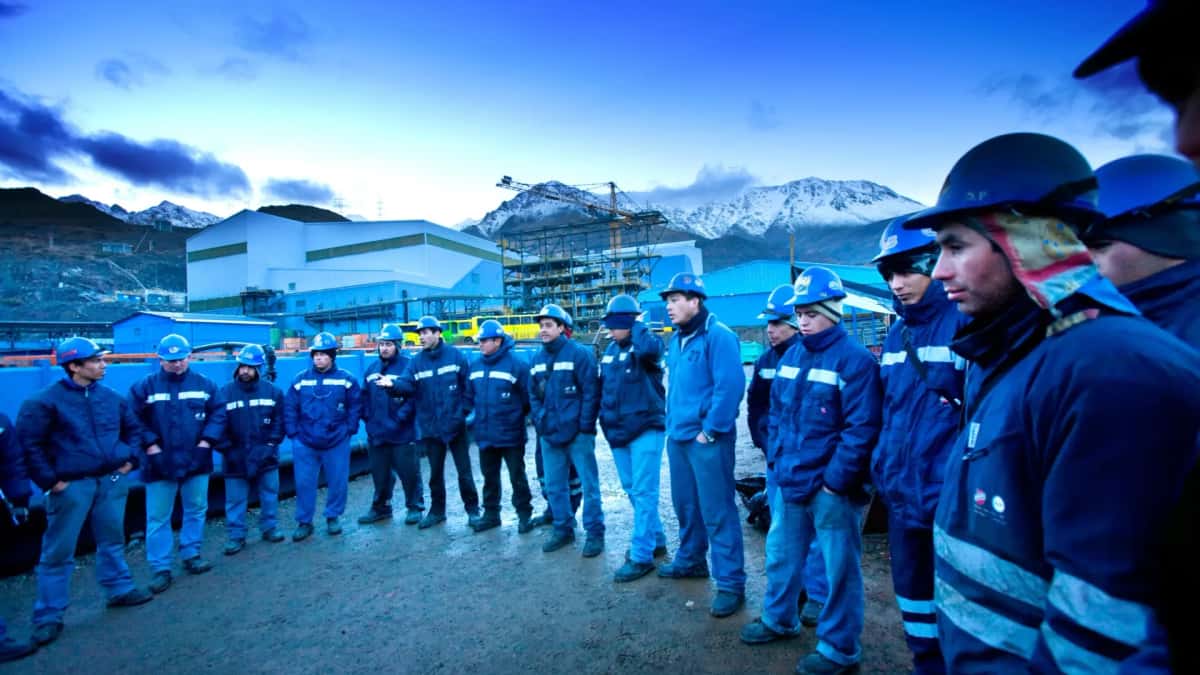
More than 200 young people attended a seminar in Coquimbo focused on water, innovation and renewable energy, where speakers discussed both the industry’s workforce challenge and operational changes at Minera Los Pelambres. Results from the 2026 Mining Perception Study presented at the event showed that mining is considered very attractive to work in by 33% of people aged 18 to 29, compared with 53% in mining regions.
Survey points to a recruitment challenge
Carol Pacheco, executive director of Compromiso Minero, also said 67% of Chileans report knowing little about mining. She said the findings point to an opportunity to introduce younger generations to the sector and the range of professional roles it requires.
The recruitment question carries a longer-term workforce dimension: large-scale mining will need to bring in about 37,000 workers by 2034, according to the figure Pacheco presented. The seminar was organised by Compromiso Minero and Universidad Central de Chile’s Coquimbo regional campus for students considering their education and career options.
Los Pelambres targets lower river-water use
Water management was a central part of the discussion. Alba López, Los Pelambres’ deputy communications manager, and Marco Antonio Salazar, its water resources planning superintendent, outlined measures intended to reduce the operation’s reliance on continental water sources.
The company has desalination capacity of 400 litres per second and recirculates more than 80% of the water it uses. It is advancing projects to double desalination capacity and stop using 400 litres per second from the Choapa River. Salazar linked the measures to a drought in the Choapa area that has lasted more than a decade, and described seawater use and increased recirculation as part of the company’s operational response.
University project examines tailings reuse
Cristian Sánchez, director of civil mining engineering at Universidad Central, presented research into converting mine tailings into construction products, including benches and tables for community spaces. The project has support from the Coquimbo Regional Government.
A panel with the university and Los Pelambres speakers, moderated by Pacheco, also included Ignacio Pinto, manager of the Coquimbo Regional Mining Council (Corminco). Participants discussed skills needed by the sector, including technology, automation, sustainability, environmental management and innovation. Pinto called for stronger links between companies and universities so students can learn about industry needs and contribute from the region. The seminar ended with questions from students to the speakers.
More in Resources
Chile's hypothetical copper mine could lift regional GDP, but exploration lacks public funding
The model starts with a deposit that has not been found, while Chile already distributes copper royalty revenue.
Red Metal’s Farellon lifts ENAMI shipments, but has no resource estimate
Level 9 is driving recent deliveries, but assays and final settlement for November’s lots remain outstanding.
Satellite Miner tracks Argentina’s Hombre Muerto salt flat, but not its land disputes
In Catamarca’s producing lithium basin, open radar data is being adapted for a new kind of territorial monitoring.