
Chile's hypothetical copper mine could lift regional GDP, but exploration lacks public funding
The model starts with a deposit that has not been found, while Chile already distributes copper royalty revenue.
reuters.com
Why it matters: The debate is whether some of Chile’s copper royalty revenue should help fund the early-stage exploration needed to identify future deposits.
60,000 tonnes a year — hypothetical mine’s assumed fine copper production.
US$1.05 billion — approximate initial investment in the model.
4.8% to 5.7% — estimated GDP impact in three northern regions.
US$45 million a year — proposed exploration funding over a 10-year plan.
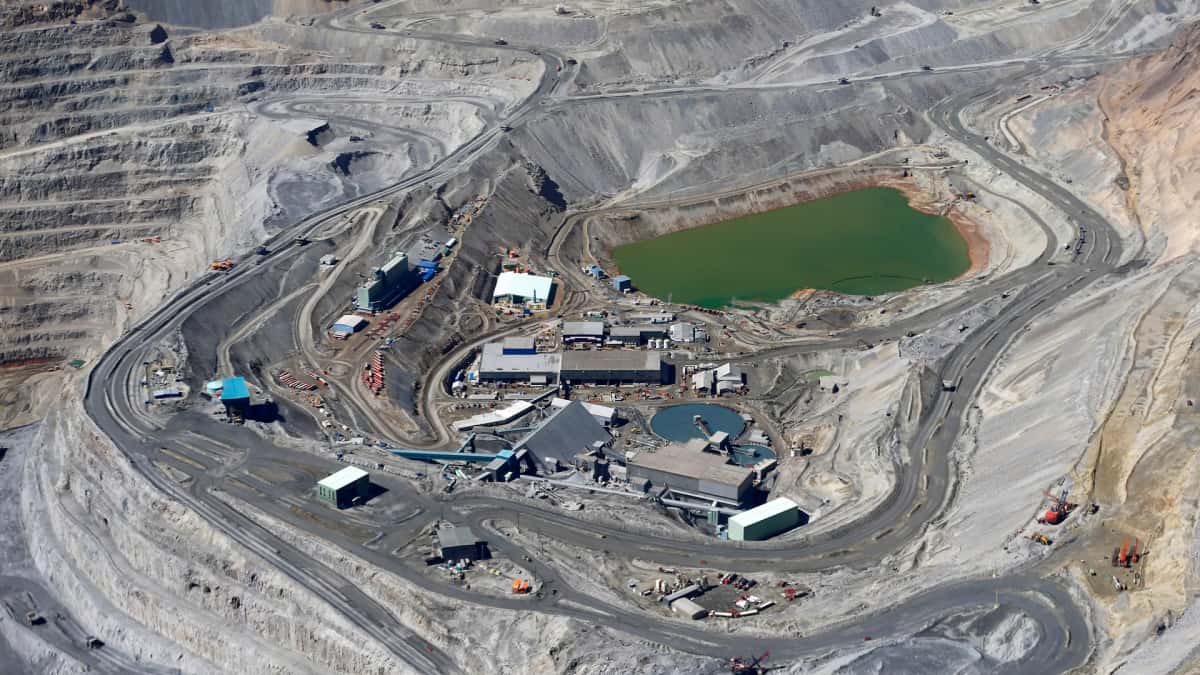
Manuel Viera, president of the Chilean Mining Chamber and CEO of Metaproject, estimates that a hypothetical medium-sized copper mine producing 60,000 tonnes of fine copper a year could raise GDP by 4.8% to 5.7% in some northern regions. His analysis also estimates more than 10,000 jobs during operation. It is a profile-level economic exercise, not a feasibility study or an assessment of an identified deposit; Viera said its assumptions are open to debate.
A model built around a US$5 copper price
The scenario assumes a copper price of US$5 per pound and approximate initial capital of US$1.05 billion, using capital-intensity figures for new projects attributed to Cochilco. It estimates annual exports of about US$660 million over 20 years, or US$13.2 billion in total. Viera compares the assumed price with the 2025 average of US$4.51 per pound and Cochilco’s US$5.95 forecast for 2027.
The model puts the mine’s workforce at about 2,600 employees and contractors. Applying a multiplier of three additional jobs for each direct mining position, which Viera attributes to Cochilco, produces an estimate of more than 10,000 jobs during operations. Construction employment is excluded, and the analysis does not give a breakdown by project stage or the duration of construction work.
Annual direct value added is estimated at US$440 million. Including supplier linkages lifts the modelled figure to US$790 million, or about 0.22% of national GDP. The estimated regional impacts are 5.7% in Tarapacá, 5.3% in Atacama, 4.8% in Coquimbo and 1.4% in Antofagasta. These are scenario results, not official forecasts for a specific mine.
Royalty assumptions drive the regional comparison
Viera’s exercise estimates US$54 million in annual royalty payments and another US$71 million in corporate income tax, for a combined US$125 million a year and about US$2.4 billion over the project’s life. He compares the royalty estimate with 2026 distributions from three royalty-related funds: 16,443 million Chilean pesos for Tarapacá, 28,397 million for Antofagasta, 26,745 million for Atacama and 32,092 million for Coquimbo. Viera estimates the mine’s annual royalty would equate to about 51,000 million Chilean pesos—more than any of those regional allocations.
The analysis also points to a sharp difference between assumed mine sizes: Viera estimates annual royalty of about US$2.5 million for a 40,000-tonne operation, compared with US$54 million at 60,000 tonnes. He attributes the jump to the 50,000-tonne threshold under Law 21,591, but the column does not provide the calculation or a detailed breakdown of tax assumptions.
Viera calls for a national exploration plan
Viera says Chile spent US$875 million on exploration in 2025, with more than half directed to areas near existing mines and less than a quarter to early-stage work. He also cites 1.6 trillion Chilean pesos in royalty revenue collected that year, arguing that none was allocated to exploration.
His proposal is to direct about 3% of royalty revenue to a National Exploration Plan, providing roughly US$45 million annually for 10 years. Suggested uses include airborne geophysics, geochemistry and hyperspectral satellite imagery, with data made public, as well as co-funding drilling on new ground. He also proposes regional geoscience work with Sernageomin, a capital mechanism for junior explorers and a public database of geological information required for reduced mining-patent rates.
The model does not identify a deposit or guarantee a mine. Viera notes that exploration often fails and that copper prices, permitting, water and energy affect project costs. He cites Western Australia’s co-funded drilling programme as generating more than ten dollars in benefits for each public dollar, without detailing the evaluation method. Chile’s Law 21.853, in force since November 2026, reorganises mining claims, reduces fees for holders who demonstrate work and provide geological information, and releases ground; whether such ground is explored would still depend on investment and further technical work.
More in Resources
Red Metal’s Farellon lifts ENAMI shipments, but has no resource estimate
Level 9 is driving recent deliveries, but assays and final settlement for November’s lots remain outstanding.
Satellite Miner tracks Argentina’s Hombre Muerto salt flat, but not its land disputes
In Catamarca’s producing lithium basin, open radar data is being adapted for a new kind of territorial monitoring.
Kolwezi residents sue COMMUS, testing the DRC mining code’s reach
The claim seeks compensation from the operator while also challenging how Congo’s environmental agency handled residents’ complaints.