
Copper falls 3.5% as US cathodes shift to China despite tight Asian supply
The Pacific market is tightening, and a two-week shipping window leaves little room for the cathode flow to be quickly reversed.
source.benchmarkminerals.com
Why it matters: A financial-led selloff is unfolding alongside thin exchange stocks and mounting pressure on copper smelter margins.
US$5.437 per pound — Comex copper’s closing price after a 3.5% decline.
US$500 per tonne — approximate Yangshan premium, up from less than US$100.
10% — share of SX-EW copper production estimated to be loss-making at about US$13,000 per tonne.
1% — decline in global mine production in January–September 2026 compared with a year earlier.
Copper fell 3.5% on Comex to US$5.437 per pound, equivalent to US$11,985 per tonne, as investors sold risk assets and cathodes held in the United States were reportedly redirected to China. The drop came despite signs of tighter physical availability in Asia: exchange-visible inventories cover about two days of consumption, while China’s Yangshan import premium has risen sharply.
The price is 21% below its September peak and down nearly 3% so far this year. Selling in equities linked to artificial intelligence, led by Nvidia, helped drive a wider rotation out of commodities. Expectations of another US Federal Reserve rate increase and uncertainty over possible US tariffs on refined copper added pressure. The market’s price move has therefore diverged from the tighter physical indicators in Asia.
Cathode flows lift China’s import premium
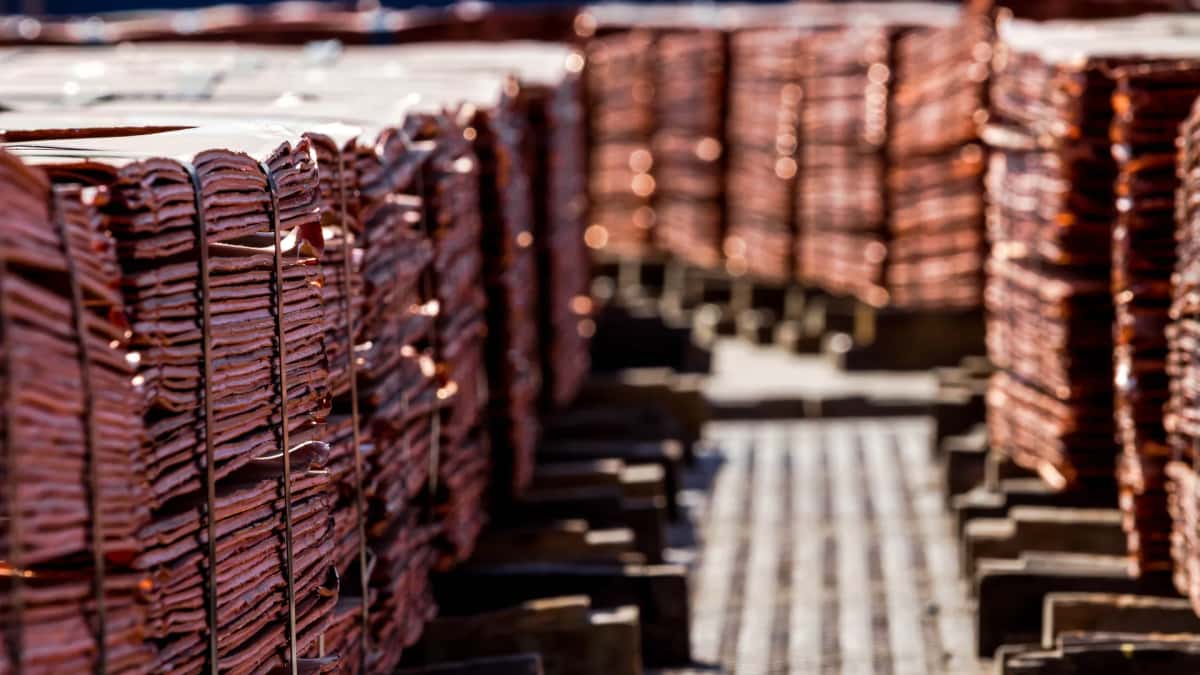
Market participants reportedly reserved between 30,000 and 100,000 tonnes of cathodes held off-warrant on the US West Coast for shipment to China. The voyage takes about two weeks, temporarily reducing metal availability in the Pacific basin as the material is in transit.
The Yangshan premium, a benchmark for copper imported into China, climbed from less than US$100 to about US$500 per tonne. The rise, alongside low visible exchange stocks, signals stronger competition for nearby physical metal. It has not, so far, outweighed selling in financial markets, which has been the dominant force behind the price decline.
Smelter margins face pressure from treatment charges
Negotiations over 2027 treatment charges for copper concentrates remain unresolved. Antofagasta reportedly put forward levels near –US$200 per tonne, while Tongling indicated it could accept about –US$80 per tonne. These are negotiating positions, not a finalized agreement.
BMO estimates that the cash break-even point for some Chinese smelters is near –US$90 per tonne. More negative charges would intensify margin pressure, while falling sulphuric acid prices would reduce revenue credits from that by-product. The combination raises the risk of concentrate-processing cuts, but no closures have been identified as having taken place.
Cost pressure also extends to higher-cost producers. Trafigura’s cost curve places about 10% of SX-EW output in loss-making territory at a reference copper price of roughly US$13,000 per tonne. Those are scenarios, not confirmed closure plans.
Mine output falls as the year-to-date balance stays in surplus
Global mine production declined 1% year on year in the first nine months of 2026. September output fell 15% in Chile and 9% in Peru. Refined copper demand was also down 2% year on year that month. The monthly balance showed a deficit, while the cumulative balance for the year remained in surplus.
BHP’s longer-term plans point to a different time horizon: the company expects to invest up to US$17.4 billion to lift copper production in South Australia to about 650,000 tonnes a year by 2040. In the near term, the outlook remains exposed to tariff decisions, the movement of physical metal and smelter economics; the treatment-charge talks have yet to produce a final 2027 agreement.
More in Resources

Codelco Andina puts remote mine operations on display for Chilean students
The visit puts mining and electrical specialisms alongside the control systems coordinating work in the high Andes.
Candelaria and Caserones put Chile's Mining 5.0 agenda to an operational test
Copiapó's four-day convention will pair digital tools with a question facing mine operators: how do teams turn data into safer, more productive decisions?
Ecuador reaffirms US security ties as reported pause clouds illegal-mining campaign
A review linked to a September operation in Manabí puts joint action against criminal gold networks under scrutiny.