
Congo’s copper exports close on Chile as Codelco faces a 31-year low
Chinese-backed mines are expanding in Congo as Chile’s biggest producer struggles to reverse a prolonged operational decline.
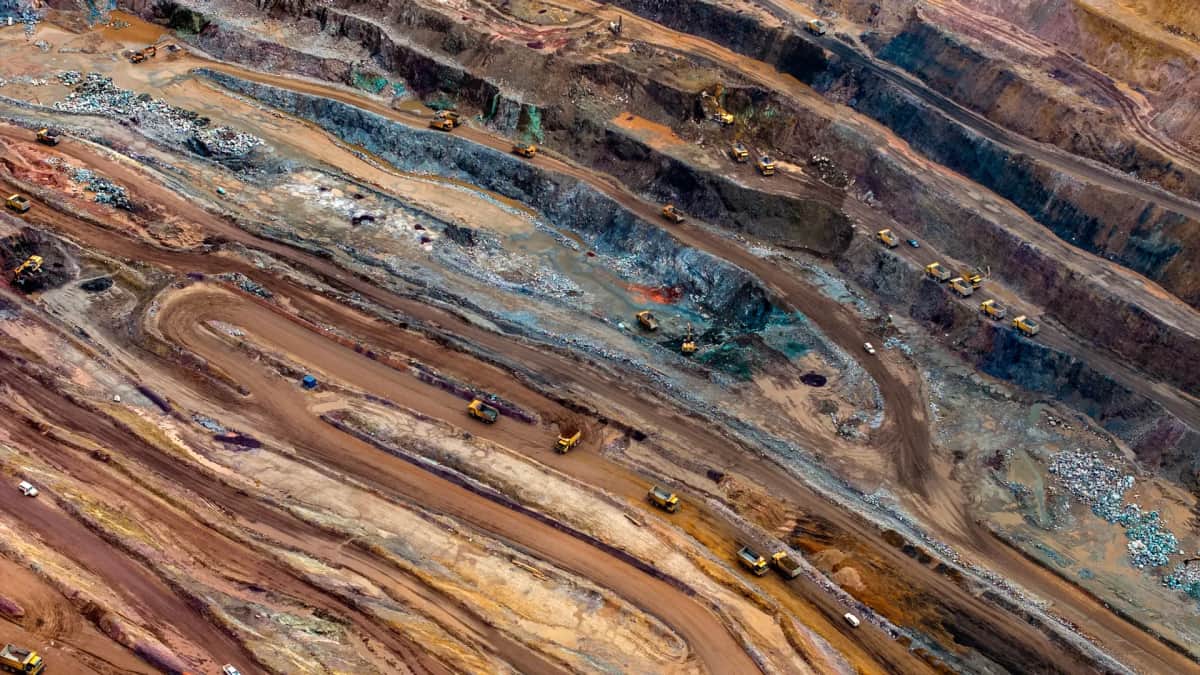
newyorker.com
Why it matters: Congo’s growing copper exports are sharpening competition with Chile as operational problems weigh on the world’s largest producer.
More than 1 million tonnes — Congo’s copper exports in Q3 2026.
1.28 million tonnes — Chile’s exports in the same quarter.
2.7 million tonnes — Congo’s exports from January to September, up 8% year on year.
4.94 million tonnes — Cochilco’s forecast for Chile’s 2026 production of copper fine.
The Democratic Republic of the Congo exported more than 1 million tonnes of copper in the third quarter of 2026, narrowing the gap with Chile, which shipped 1.28 million tonnes in the same period. Government figures put Congo’s exports for the first nine months of the year at 2.7 million tonnes, an 8% increase year on year.
The export comparison comes as Chile’s production contracts. The Chilean Copper Commission, or Cochilco, forecasts national output of 4.94 million tonnes of copper fine in 2026, down 8.4% from the previous year. Congo’s quarterly export advance does not mean the countries have reached comparable annual production levels: Chile remains the world’s largest copper producer.
Chinese-backed operations drive Congo’s expansion
Congo’s mining growth has been supported by high-grade deposits and foreign investment in extraction and processing capacity. Its copper production has more than tripled over the past decade, making it the world’s second-largest producer, according to the figures cited in the report.
CMOC Group accounted for about 550,000 tonnes from two operations during 2026. Glencore and Sicomines each contributed 212,000 tonnes, while Kamoa-Kakula supplied 187,000 tonnes and Brother Mining 112,000 tonnes. Kamoa-Kakula is jointly associated with Canada’s Ivanhoe Mines and China’s Zijin Mining.
The expansion reflects a larger Chinese presence in African copper assets. CMOC and Zijin are among the companies with major investments in the region, where copper is used in power networks, electric vehicles, energy infrastructure and data centres. Congo’s state miner, Gécamines, is also seeking a larger role in international copper marketing through a proposed trading desk in Switzerland.
Chile’s decline centres on major mines and Codelco
Chile produced 3.63 million tonnes of copper in the first nine months of 2026, an 8.5% year-on-year decline. Cochilco identified Escondida, Codelco and Spence as responsible together for 77.3% of the net fall in national output. Lower ore grades, operational difficulties and delays to investment projects have constrained the recovery.
Codelco board chairman Bernardo Fontaine has forecast that the state-owned company will produce about 1.2 million tonnes in 2026. If achieved, that would be its lowest annual output since 1995. Production was 1.734 million tonnes in 2017, making the projected level about 31% lower over nine years. The company is also dealing with challenges in executing structural projects, rising operating costs and efforts to restore productivity across its divisions. Internal investigations are under way into inconsistencies in production records for 2024 and 2025.
The downturn has coincided with a 1.1% year-on-year contraction in Chile’s GDP in the third quarter, with the Central Bank attributing the result mainly to weaker mining activity.
Cochilco sees only a partial rebound in 2027
Cochilco forecasts Chilean production will rise 3% to 5.08 million tonnes of copper fine in 2027. That increase would recover only about one-third of the output lost in 2026. The commission expects Chile and Congo together to account for about 37% of the projected increase in global mine production next year.
Chile’s ability to sustain its lead will depend on operational recovery at major mines, the execution of new projects and investment translating into additional supply. The 2027 forecast offers a near-term benchmark, but it does not resolve the production and project-delivery constraints behind the current decline.
More in Resources
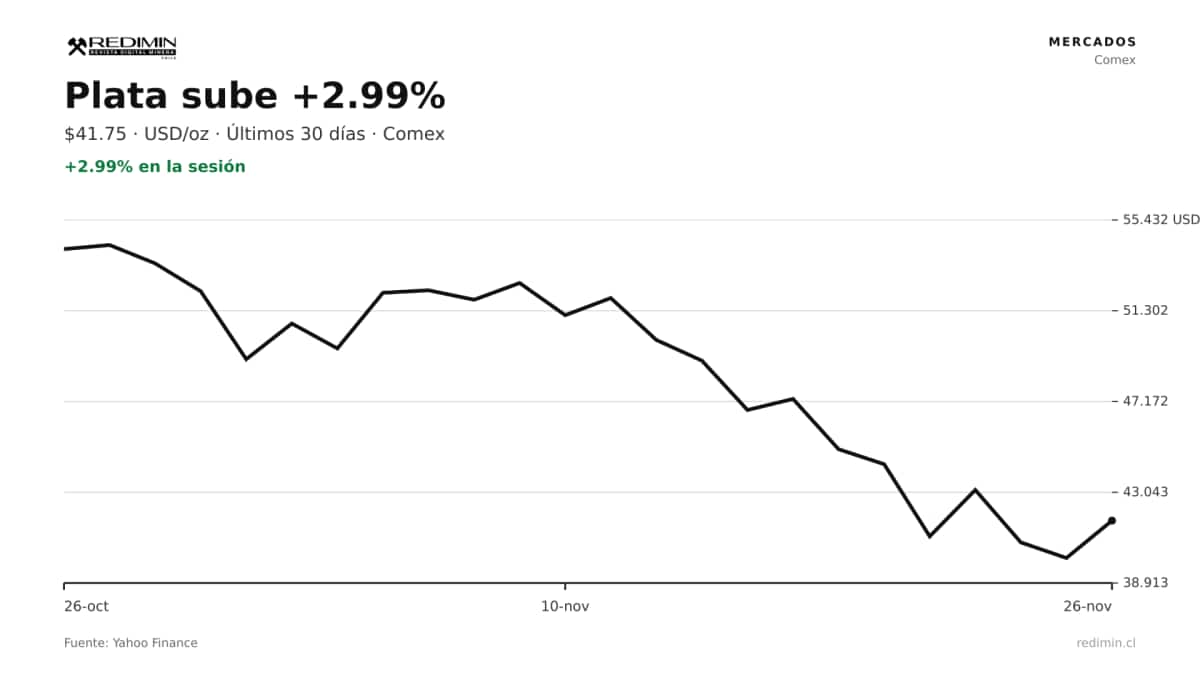
Comex silver gains 2.99% but remains near its 52-week low
The annual trading band is wide, while the available market record does not identify what drove the session’s move.
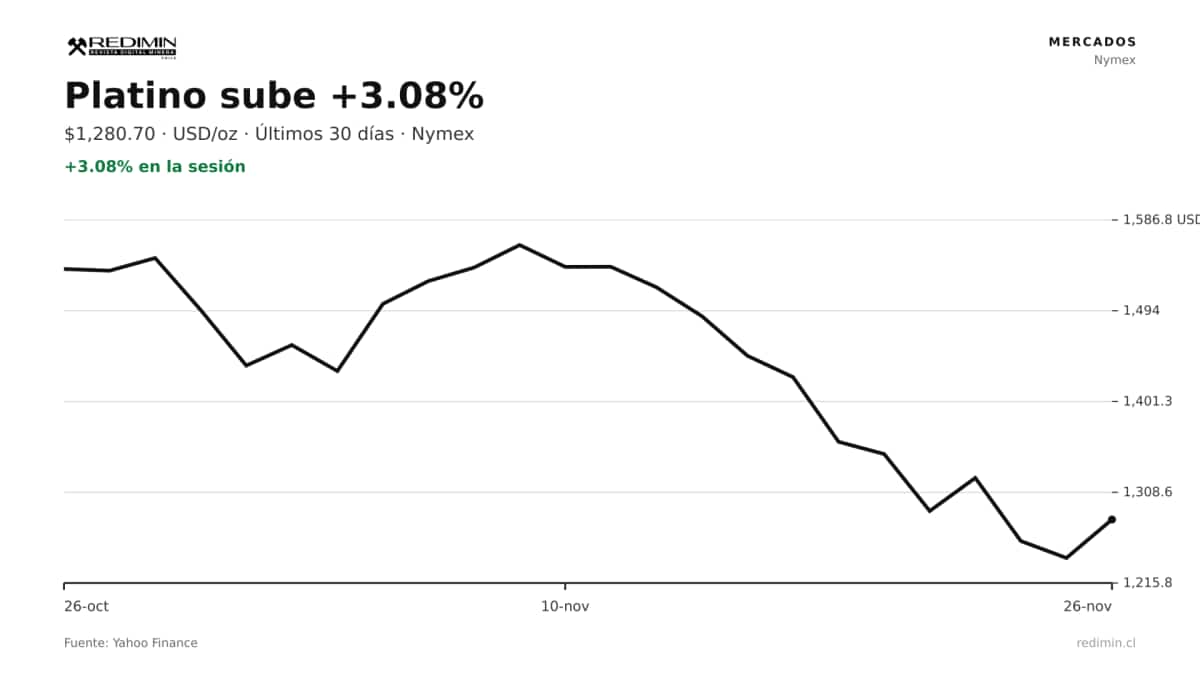
Platinum gains 3.08% on Nymex but remains close to its 52-week low
The annual trading band is wide enough to put one session’s move in a much larger price context.
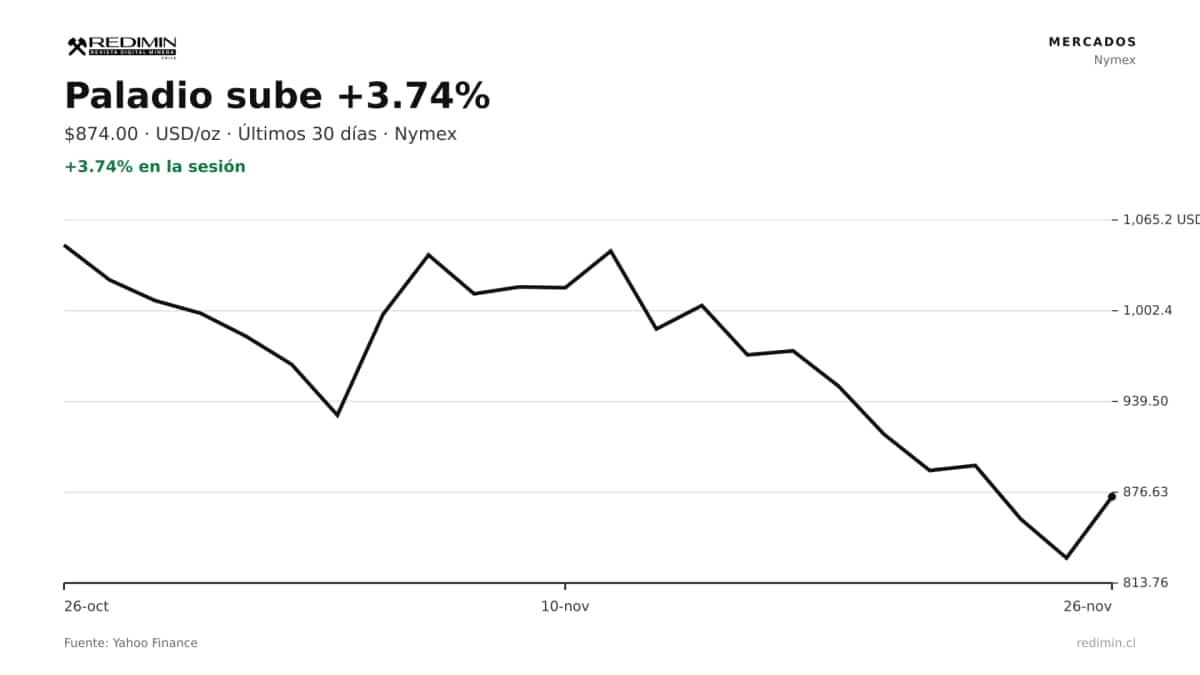
Palladium rises to US$874 on Nymex as tariff dispute remains unresolved
U.S. buyers have resumed purchases of Russian metal, while Sibanye-Stillwater’s challenge keeps the tariff fight in play.