
Chile's fuel-tax relief debate puts trucker costs against a broader levy cut
Freight hauliers already recover part of the diesel levy, complicating the case for extending relief to all fuel buyers.
bloomberg.com
Why it matters: A broad fuel-tax reduction could shift costs from transport operators to public budgets and other taxpayers, while weakening a price signal tied to pollution and congestion.
US$3 billion — annual revenue attributed to the specific fuel tax in the opinion
$100 per litre — proposed reduction for diesel under the price-freeze bill
$108 per litre — diesel tax component cited in the analysis
$434 per litre — gasoline tax component cited in the analysis
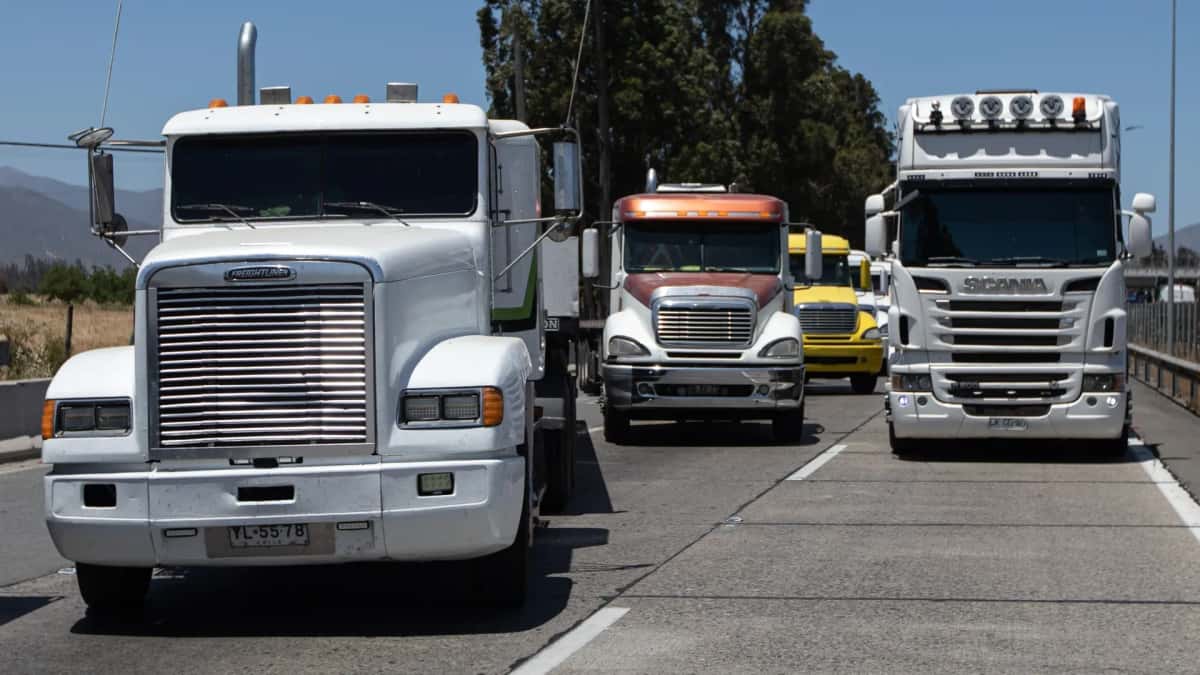
Chile’s Senate Finance Committee approved a bill on November 16, 2026, to freeze fuel prices through April 2027, including a $100-per-litre reduction for diesel and changes to transporters’ tax recovery. The proposal, discussed after a truckers’ strike over rising fuel costs, has renewed debate over whether relief should be broad or focused on operators already entitled to partial refunds.
An opinion dated November 23 argues that cutting the specific fuel tax would not remove the cost but shift it to lower government revenue, other public programmes or taxpayers. It says the levy brings in about US$3 billion a year, with proceeds used to finance social spending. The analysis does not estimate how much households or businesses would save under the proposal.
A broad cut would have unequal effects
The opinion argues that a general reduction would favour people and businesses that consume more fuel, including households with multiple vehicles and higher incomes. It characterises that effect as regressive, but provides no estimate of savings by household or business type.
The tax is also presented as a way to reflect some costs associated with pollution, congestion and road accidents in fuel prices. Reducing it would lower that component, the analysis says, while Chile still has environmental targets to meet.
The proposal also intersects with Mepco, the mechanism that adjusts the variable component of the fuel tax to cushion price changes. The opinion warns that changing the levy could affect the mechanism’s operation and that, amid volatile international oil prices, a tax reduction could be offset by later increases. It gives no price scenario or estimate of how long that effect might last.
Freight operators already have partial relief
Road freight companies can recover part of the specific tax on diesel, and the benefit has been increased for the sector. The opinion also says those companies can claim a substantial portion as an input tax credit against VAT, lowering their effective fuel cost compared with motorists and taxi drivers, who pay the full tax.
The analysis says a broad cut would add a further benefit to one already available to freight operators. It argues that larger companies could gain most from a general measure because they currently recover a smaller percentage. It provides no refund rates or estimates of savings by company size.
As an alternative, the opinion proposes strengthening price stabilisation and targeting support at small and medium-sized transport businesses and public transport, while accounting for the fiscal cost. It also cautions that making a benefit permanent after a strike could tie tax decisions to the pressure different industry groups can exert. The opinion does not quantify the costs or savings of its proposed alternatives.
More in Resources

Epic Gold defines Wilson and Fenton resources, but mine economics remain unproven
Cartier Resources retains royalties on both Quebec properties, while inferred classification and undisclosed terms limit what the figures can establish.

CuFe links Orlando and Gecko, but Tennant Creek’s early-feed option remains unproven
A combined development study is nearing completion, while historic mine dumps could offer an earlier processing route if their material proves suitable.

Gold miners outpace bullion in rebound after metal’s steepest weekly fall since March
The reversal puts the cost structure behind producer shares back in focus, while recent losses show the trade has not been uniform.