
Chile’s copper strategy faces a choice: bigger plants or better deposits
About 80% of the 2025–34 mining investment pipeline is directed at existing operations, while early-stage exploration competes for a smaller share.
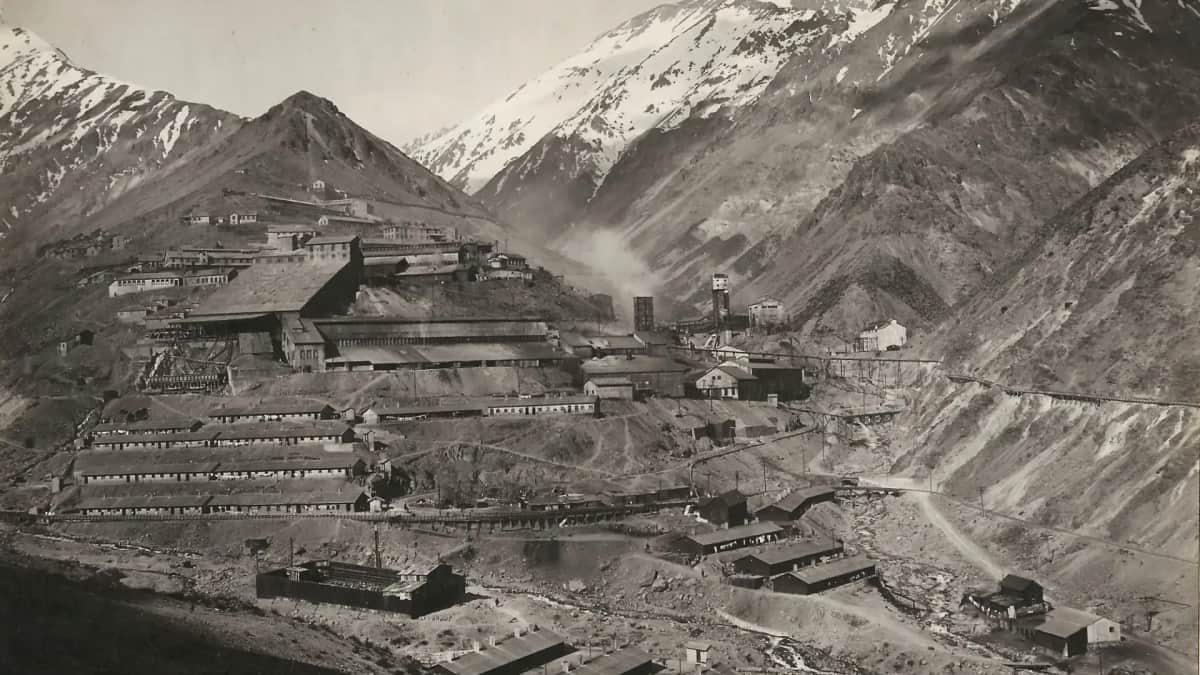
walkaboutbooks.net
Why it matters: Finding higher-grade deposits could lift copper output per unit of energy and water, but requires shifting some attention and capital towards exploration beyond existing mines.
80% — share of Chile’s 2025–34 mining investment pipeline directed at maintaining or expanding existing operations, according to the Central Bank of Chile.
US$874.7 million — Chile’s exploration budget in 2025, with more than half allocated to exploration at existing mines.
US$206.5 million — proposed annual increase to double the 2025 initial-exploration budget; the scenario is illustrative, not approved.
30% — hypothetical share of higher-grade feed that would nearly double copper output at a plant processing a fixed tonnage.
Chile’s mining debate is increasingly about whether investment should continue to focus primarily on sustaining mature operations or give more weight to finding higher-grade deposits. A proposal outlined for the sector argues that exploration, better use of existing infrastructure and resource efficiency could complement continued investment in established mines.
The case comes as the country has spent decades responding to ageing deposits and declining grades with larger concentrators, desalination systems, process optimisation and expanded energy infrastructure. The Central Bank of Chile identified in 2026 that close to 80% of the mining investment pipeline for 2025–34 was aimed at maintaining or expanding current operations. Meanwhile, Cochilco recorded a 27.3% rise in copper mining’s energy consumption between 2015 and 2025.
Early-stage exploration is the proposed gap
Chile’s 2025 exploration budget totalled US$874.7 million. Exploration at existing mines accounted for US$449.3 million, or 51.4%; initial exploration received US$206.5 million, or 23.6%; and advanced exploration and feasibility work received US$218.9 million, or 25%.
The proposal would double initial exploration spending to US$413 million while holding the other two categories at their 2025 levels. That would take the annual total to US$1.0812 billion, requiring an additional US$206.5 million from public and private capital. It is an illustrative scenario, not an approved budget. Chile’s National Mining Policy 2050 already includes an objective to double annual greenfield exploration investment against the five-year average used in its formulation; the challenge is turning that goal into sustained campaigns and economically viable discoveries.
The composition of exploration funding is another consideration. Large mining companies supplied 78.9% of the 2025 budget, while junior explorers accounted for 14.8%. The proposal points to venture capital, co-investment, evaluated tax incentives and competitive drilling programmes as possible ways to support higher-risk exploration. It cites Western Australia’s co-funded exploration programme, which can reimburse up to 50% of eligible drilling costs, as a precedent—not a policy already adopted in Chile.
Existing plants could shape the economics of new deposits
The argument also looks beyond finding copper to how a discovery might be developed. In a hypothetical satellite-mining model, higher-grade ore could be supplied to an existing concentrator through supply agreements, partnerships or third-party processing, rather than requiring every deposit to build a standalone plant.
The example assumes a concentrator processes 10 million tonnes annually, with a 90% recovery rate. At a starting feed grade of 0.6%, annual copper production is estimated at 54,000 tonnes. Replacing 30% of the feed with ore grading 2.5% raises the modelled average feed grade to 1.17% and output to 105,300 tonnes, without increasing throughput. These are illustrative figures, not a forecast for a Chilean operation.
The same fixed-throughput logic underpins a separate example comparing feed grades of 0.6%, 1.2% and 2.4%. With assumed electricity use of 20 kWh per tonne and external water input of 0.5 cubic metres per tonne, the model estimates that higher grades increase copper output while leaving processing energy and water totals unchanged. Actual results would depend on factors including ore hardness, mineralogy, recovery, mining and transport requirements.
Infrastructure and technical fit remain decisive
The proposal calls for geological information to be considered alongside plant capacity, power, water, roads and environmental and social constraints. Sernageomin’s SIGEX database contains information from exploration activity; integrating it with three-dimensional geological models and infrastructure data is presented as a possible next step, subject to confidentiality requirements.
Shared concentrators, water systems, power networks and logistics could also help connect smaller deposits to established mining districts. But satellite supply would depend on ore availability, metallurgical compatibility, transport costs, permits and spare capacity at the receiving plant. Those conditions would need to be assessed for each project before the model could translate into additional production.
More in Resources
Chile's mining investment leans on brownfields as falling grades test future output
Mature operations must process more material to sustain copper output, while new exploration still has to establish what lies beneath untested ground.
Argentina targets new copper mines as Chile spends to sustain mature operations
Seven advanced Argentine projects face a different test from Chile’s brownfield pipeline: turning proposed capacity into operating mines.
Chile's copper output gap could exceed US$11 billion, but not all is exploration
Cochilco's 2026 forecast sits below Chile's 2015 output, while ageing mines and operational disruptions complicate the cause.