
BHP eyes Chilean student-built conveyor scanners, with mine rollout still undefined
The camera systems target rock sizing and uncrushable objects, but industrial validation is still ahead.
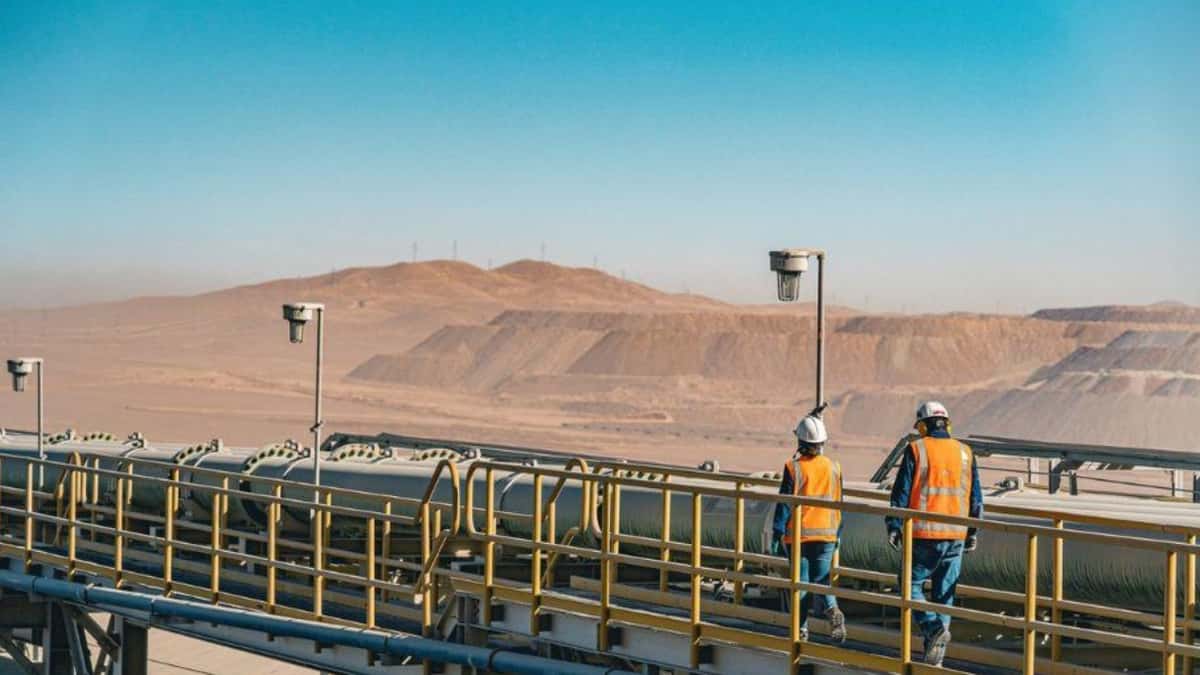
Why it matters: Early detection of material that could jam or damage a crusher may help protect plant availability, but the student systems have yet to demonstrate performance in an operating mine.
176 applications — submitted for Hackamine 2026.
30 students — selected from the Universidad Católica del Norte and Universidad de Antofagasta.
$3 million — prize for the first-place team; the currency was not specified.
36 jobs — generated through eight editions of the programme, according to BHP’s Escondida projects chief.
BHP plans to incorporate camera-based technologies developed by Chilean university students into its mining operations, targeting rock-size measurement and the detection of uncrushable material on conveyor belts. The three winning teams in Hackamine 2026 were recognised for solutions to those challenges, but BHP has not identified the sites that could receive them or set dates for field trials.
The competition was organised by BHP with the HEUMA University Consortium and Fundación Chile’s ChileGlobal Ventures. The Universidad Católica del Norte said the proposals are intended to inspect ore moving on belts and flag material that could obstruct or damage crushing equipment.
Camera systems target sizing and crusher hazards
One intended function is to estimate granulometry: the distribution of particle and rock-fragment sizes in the material. That information can help operators monitor crusher feed and spot variation that may affect downstream processing. The other is to identify inchancables—objects that crushers cannot process effectively and that may cause mechanical damage, blockages or production interruptions. Metal pieces and industrial debris are examples.
The student teams’ proposed inspection approach uses cameras, but technical details have not been disclosed. There is no information on camera models, image-processing methods or whether the systems use artificial intelligence. Nor have the teams published accuracy measures or industrial test results.
Other Chilean mines have pursued visual detection, though those projects are separate from Hackamine. In June 2026, Codelco reported tests at its El Teniente Division of a system combining cameras, artificial intelligence and a remotely operated robotic arm. Minera Zaldívar has also developed high-precision camera detection for metallic objects ahead of its primary crusher.
Hackamine winners face an industrial test
For its eighth edition, Hackamine received 176 applications and selected 30 students from the Universidad Católica del Norte and Universidad de Antofagasta. Participants worked in multidisciplinary teams over three days on mining challenges. All three prize-winning teams addressed granulometry measurement and inchancable detection. The first-place team received $3 million, the second-place team $2 million and the third-place team $1 million; the currency was not specified.
Hackamine also offers six participants the opportunity to continue their professional development through BHP technology partner companies on mining-related projects. Pedro Hidalgo, head of projects at Escondida | BHP, said the programme connects regional talent with industry needs. He said its eight editions had generated 36 jobs, with six more expected this year.
Field conditions and deployment details remain open
Before the systems can be used in a mine, their reliability would need to be assessed under operating conditions, including dust, changing light, belt speed and variation in ore size and characteristics. Operators would also need to establish that detection is dependable without producing excessive false alarms and unnecessary stoppages.
A camera alert would not by itself remove a hazardous object. Any deployment would need to fit with existing control systems and safe procedures for retrieving material. The Universidad Católica del Norte has said the innovations will be implemented by BHP, but no development contracts, investment, installation schedule or operational validation results have been disclosed. The next confirmed step is therefore not a scheduled mine trial, but further development and evaluation of the selected proposals.
More in Resources

Gold falls 34% from January record as its safe-haven role faces a test
The 14-month low arrives amid technology-stock losses, while official purchases continue to run in the opposite direction.
Spartan Metals’ Victorio PEA sets US$683m initial cost, but estimates remain preliminary
A block-caving design underpins the New Mexico plan, while resource classification and metallurgy still need further testing.

Chile's peso comes under pressure as dollar reaches highest level since 2025
Miners may gain on peso-denominated costs, but the currency move coincides with weaker copper revenue.