
Patagonia Gold agrees to buy Don Sixto as Mendoza law keeps development uncertain
The gold-silver project has been idle since 2007, and its historic resource estimate cannot yet serve as a current development basis.
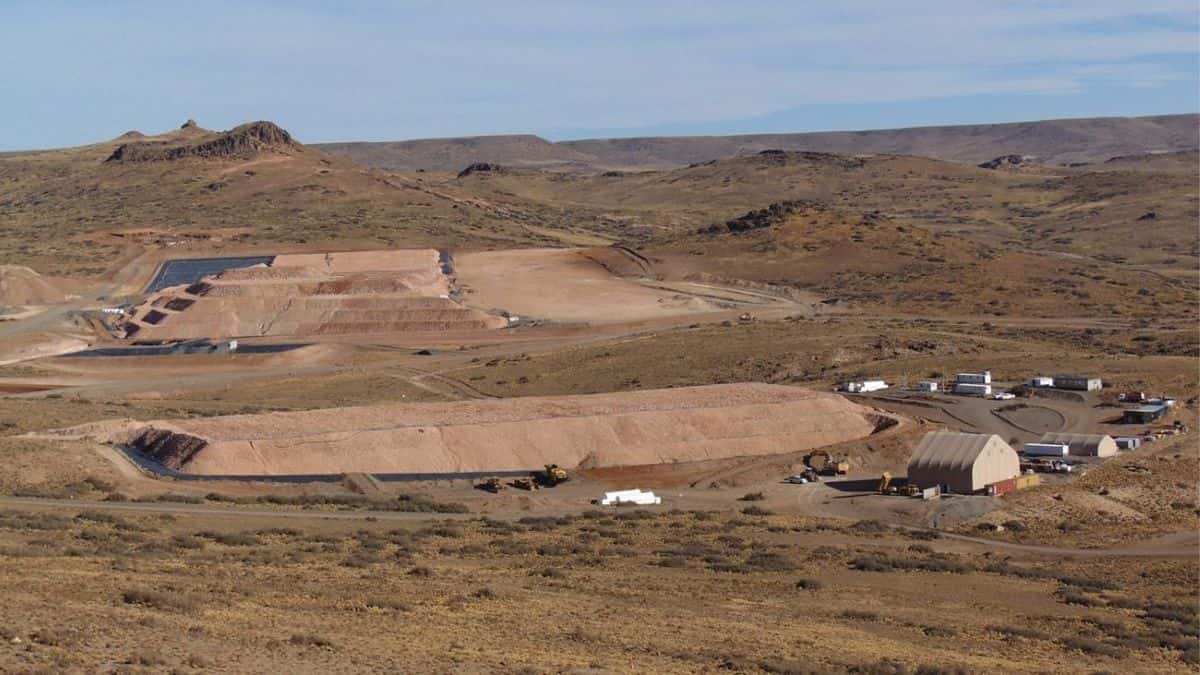
Why it matters: The deal adds a gold-silver asset to Patagonia Gold’s portfolio, but its development case depends on provincial law as well as technical revalidation.
US$14.5 million — cash consideration split across three installments.
2.25% — net smelter return royalty on future production from Don Sixto’s concessions.
1.258 million ounces — combined historical estimate, not a current mineral resource.
Patagonia Gold has signed a definitive agreement to acquire Don Sixto, a gold-silver project in Malargüe, Mendoza, for US$14.5 million in cash and a 2.25% net smelter return royalty on future production. The project has remained undeveloped since 2007, and any development plan will depend on provincial regulations, technical and environmental studies, permits and financing.
The company’s subsidiary Patagonia Gold Six Inc. will acquire all shares of Cognito Limited, which holds the project and associated surface lands through its Argentine branch. The cash consideration is divided among a payment at closing, a deferred installment and a contingent installment. The agreement does not disclose the individual amounts or the condition that would trigger the contingent payment. Closing remains subject to customary conditions and execution of additional transaction documents.
Don Sixto’s historical estimate needs revalidation
The project lies in the Agua Escondida district of the San Rafael Massif, about 350 kilometres by road south of Mendoza city and roughly 125 kilometres in a straight line from Malargüe.
A 2007 technical report prepared for Exeter Resource Corporation reported measured and indicated resources of 20.46 million tonnes grading 1.40 grams of gold per tonne, for 924,000 ounces, using a 0.5 g/t cut-off. It also reported inferred resources of 9.29 million tonnes grading 1.12 g/t, or 334,000 ounces. Together, the categories total 1.258 million ounces.
Patagonia Gold has cautioned that the figures are historical and that a qualified person must complete the work needed to classify them as current resources. Their reliability is also limited by the report’s age and the technical and economic assumptions used at the time. They do not establish current project economics or operating conditions.
Mendoza’s Law 7,722 remains a development constraint
Exeter suspended exploration in 2007 after Mendoza enacted Law 7,722, which restricts cyanide and other chemicals used in conventional gold and silver processing. The project has remained on hold pending changes to the regulatory framework.
Cognito and mining-rights holder Martín Antonio Carotti challenged provisions covering restrictions on cyanide, mercury and sulphuric acid, adjustments to existing concessions and legislative ratification of environmental impact statements. Mendoza’s Second Chamber of the Supreme Court rejected the challenge on April 18, 2017, in line with a full-court ruling that upheld the law’s constitutionality.
Patagonia Gold says it plans to assess the asset, engage with relevant stakeholders and examine development alternatives. The company has also said it believes the provincial government is willing to work with it on the project. It cited its experience at Calcatreu, its gold-silver project in Río Negro, which it bought from Pan American Silver for US$15 million in January 2018. Patagonia Gold reported starting leaching there in March 2026 and partially resuming operations in August after a labour agreement. Don Sixto’s next steps remain subject to the provincial legal framework and the studies and permits required for the project.
More in Mining Stocks
Newmont and Kinross pursue growth, but rising costs complicate the gold-stock comparison
The pullback from January’s gold peak is testing two expansion pipelines as production trends and earnings revisions move in opposite directions.
ACG Metals’ NOK 2bn Nussir bid faces Norway security and ownership scrutiny
A Cayman Islands fund holds about a third of the company as lawmakers press for a state role in the northern copper project.
Mining shares lift South Africa’s JSE as African markets diverge
Resource stocks led Johannesburg as oil and metal prices sent mixed signals for producers and their cost base.