
Mining shares lift South Africa’s JSE as African markets diverge
Resource stocks led Johannesburg as oil and metal prices sent mixed signals for producers and their cost base.
reuters.com
Why it matters: The session shows how resource-sector weight can steer South African equities while commodity moves affect both mine revenues and operating costs.
106,428 points — Johannesburg’s All Share index, up about 1.71%.
2.30% — the Resource 10’s gain, ahead of other major Johannesburg sectors.
4.6% — the African Development Bank’s forecast for continental growth in 2026.
US$88.96 a barrel — Brent’s approximate price in early Tuesday trading.
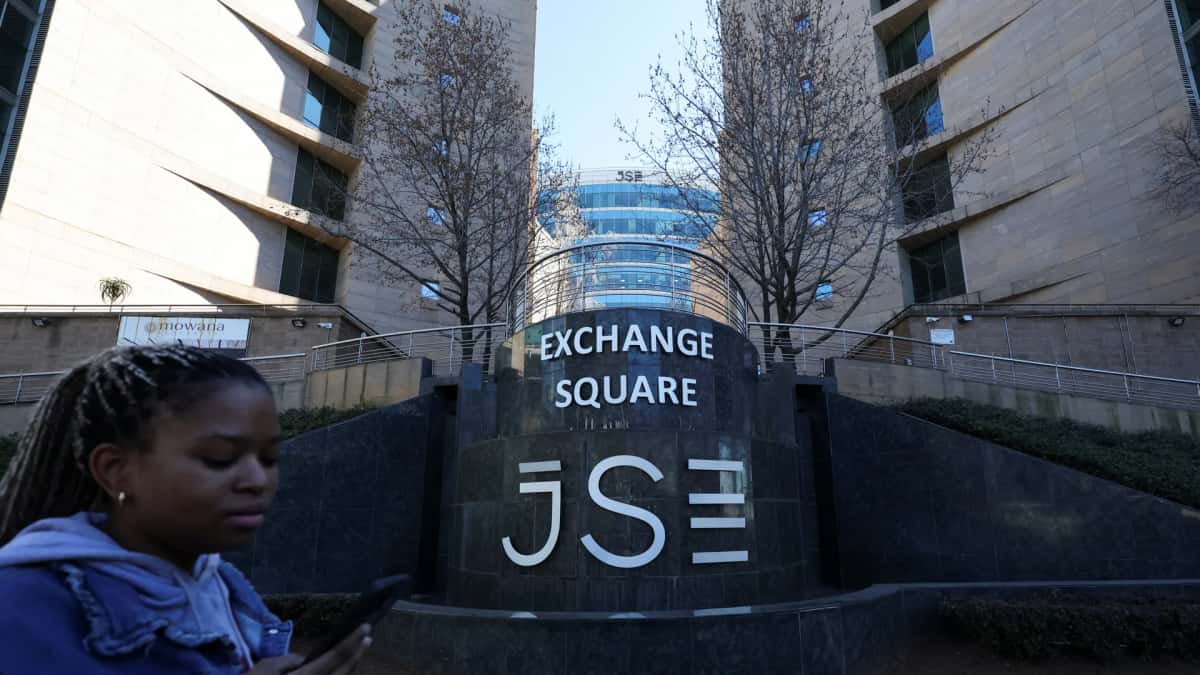
Mining shares helped lift South Africa’s Johannesburg Stock Exchange at the start of the week, while benchmarks elsewhere on the continent posted mixed results. The All Share index closed at 106,428 points, up about 1.71%, with the Resource 10 gaining 2.30%. Financial 15 rose 2.05% and listed property advanced 1.08%.
Resource stocks lead Johannesburg’s advance
Mining, banking and technology shares contributed to the South African market’s recovery, according to the market summary. The Resource 10’s gain exceeded the advances in financials and listed property, making resource stocks the strongest of the three reported sector measures.
The broader African picture was uneven. Zimbabwe’s All Share index climbed 2.75% to 515.23 points. Ghana’s composite index rose 0.22% to 13,855.29, while Dar es Salaam’s benchmark added 0.13% to 4,414.11.
Several markets finished lower. Nigeria’s index declined 0.48% to 246,478.90 points and Nairobi’s fell 0.54% to 236.58. Algeria’s DZAIRINDEX slipped 0.04%, Zambia’s LASI lost 0.17%, and Casablanca’s latest reported MASI reading was 16,882.60, down 0.54%. Egypt’s EGX30 stood near 50,712 points, with no percentage move reported. Ethiopia’s indicative benchmark rose 0.07%.
Commodity prices send mixed signals
Early Tuesday reference prices showed different directions across key commodities. Brent traded near US$88.96 a barrel and West Texas Intermediate around US$79.97. Copper was near US$5.63 a pound, while platinum eased to US$1,305 an ounce and gold stood near US$3,649 an ounce after recovering.
For producers, commodity prices influence sales revenue, while oil prices feed into fuel expenses and broader inflation. The week’s market direction could also be affected by the US dollar, US inflation data, interest-rate expectations and risks to oil supply, according to the market outlook.
The African Development Bank projects continental growth of 4.6% in 2026 and 4.5% in 2027. Its chief economist, Kevin Urama, said the region had withstood previous shocks and had capacity to recover. World Bank chief economist for Africa Andrew Dabalen described activity as resilient but said growth needed to translate into jobs. Former International Monetary Fund African Department director Abebe Aemro Selassie said the region entered 2026 with its strongest economic momentum in a decade.
Mineral endowment puts processing in focus
Economic exposure varies across the continent: South Africa combines mining with finance, manufacturing, tourism and agriculture, while Ghana has substantial exposure to gold, cocoa and services. Morocco’s industries include phosphates and fertilisers, and Algeria and Angola export oil and gas.
The African Development Bank estimates that the continent holds about 30% of the world’s mineral resources. Economists have called for more local refining and production of batteries and fertilisers, alongside investment in electricity, railways, ports, irrigation, digital infrastructure and skills. Those priorities sit against a week in which commodity benchmarks offered no uniform signal for miners’ revenues and costs.
More in Mining Stocks
ACG Metals’ NOK 2bn Nussir bid faces Norway security and ownership scrutiny
A Cayman Islands fund holds about a third of the company as lawmakers press for a state role in the northern copper project.
CMFC enters Tanzania’s Lupa goldfield, but Matundasi’s funding terms remain unclear
Matundasi says it has completed early-stage work, while the next phase spans exploration and corporate restructuring.
Amman Mineral's commissioner exit leaves a board vacancy amid nickel probe
The allegations concern M. Teguh Pamuji's earlier role at Indonesia's energy ministry, before he joined the copper-and-gold producer.