
Orvana EBITDA nearly quadruples, but Spain gold output is set to fall in 2027
Bolivia’s oxide circuit is still ramping up as EMIPA’s remaining bondholders weigh options ahead of a February maturity.
juniorminingnetwork.com
Why it matters: Orvana’s stronger earnings came as its Spanish mine faces a lower-output year, while Don Mario’s ramp-up and EMIPA’s bond obligations add execution and financing tests.
US$84.4 million — fiscal 2026 EBITDA, nearly four times the prior year
37,775 ounces — gold produced at Orovalle in Spain in 2026
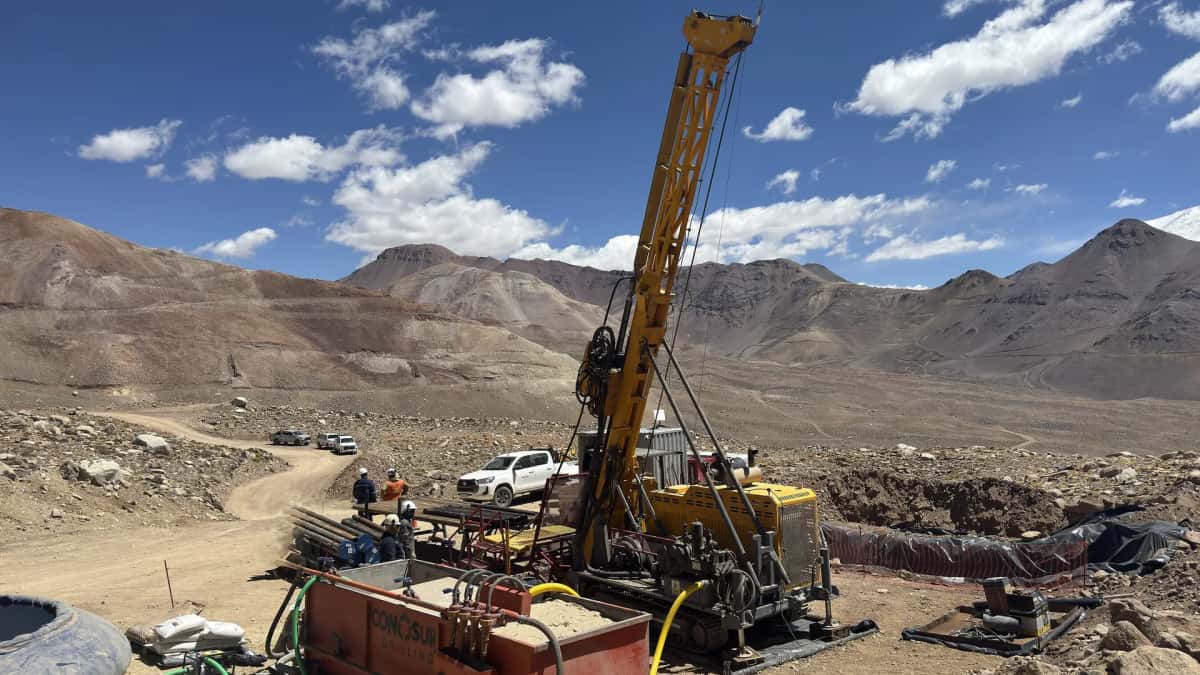
19,500 metres — planned 2027 drilling at Argentina’s Taguas project
Orvana Minerals reported fiscal 2026 EBITDA of US$84.4 million, nearly four times the previous year, as revenue rose to US$182.0 million from US$98.9 million. But the company expects gold output at its Orovalle operation in Spain to decline in 2027, with production forecast at 27,000–31,000 ounces after reaching 37,775 ounces in the year ended September 30, 2026.
The company also reported US$49.3 million in profit before tax, compared with a US$7.8 million loss a year earlier. Cash flow from operations was US$57.1 million, and year-end cash stood at US$42.0 million. All financial figures are in US dollars.
Orovalle prioritises development as gold guidance falls
Orovalle’s 2026 gold production exceeded the top of its 34,000–37,000-ounce guidance range and was 29% higher year on year. Orvana attributed the increase mainly to a 16% rise in tonnes processed and a 12% increase in grade. Copper production was 2.9 million pounds, within guidance but 20% below 2025, reflecting lower grade and recovery rates.
For 2027, Orovalle is forecast to process 475,000 tonnes, down from 519,000 tonnes. Orvana said reduced availability of skarn ore at Boinás is not expected to be offset by higher skarn production at Carlés, where the company plans to prioritise development to reach deeper levels. It expects Carlés’ mined tonnage to remain roughly in line with 2026 while jumbo development work prepares access to areas intended to support mineral availability in 2028.
The company plans more drift-and-fill development at Boinás to open new oxidised ore faces. It said the Carlés work could contribute to extending mine life, but did not provide a revised estimate. Orovalle’s 2027 copper guidance is 2.1–2.3 million pounds.
Costs are also forecast to rise. Orovalle’s 2026 by-product cash operating cost was US$1,843 per ounce and all-in sustaining cost was US$2,229 per ounce, both below guidance. For 2027, Orvana expects cash costs of US$2,500–US$2,900 per ounce and AISC of US$3,300–US$3,800 per ounce, using assumed copper and silver prices of US$6 per pound and US$55 per ounce, respectively, and an exchange rate of US$1.15 per euro. The company cautioned that COC and AISC are non-IFRS measures and may not be comparable with other issuers’ figures.
Don Mario ramps up while EMIPA works through bond covenants
In Bolivia, EMIPA began processing oxide stockpile material at the expanded Don Mario plant during the fourth quarter of fiscal 2026, following first-half processing and commissioning work on sulphide ore. The required circuits were operating and throughput was about 1,300 tonnes per day at the time of the update. Orvana said it was targeting approximately 1,700 tonnes per day by the end of December, with metallurgical performance generally in line with design assumptions.
EMIPA produced 1,597 ounces of gold, 14,680 ounces of silver and 411,274 pounds of copper in 2026. Its 2027 guidance calls for 22,000–26,000 ounces of gold and 14–16 million pounds of copper.
The subsidiary’s financing position remains unresolved. EMIPA paid its Series I bonds, which matured on November 7, and is completing steps to release security over certain fixed assets. However, financial covenant ratios for the bonds were outside required thresholds at June 30 and September 30. The cure period runs to December 8 and may be extended with bondholder approval. Following repayment of Series I, the cure period applies only to Series II bonds, due in February 2027 and classified as a current liability at year-end. Bondholders were scheduled to meet November 30 to consider possible amendments, waivers or an extension; any action requires their approval.
Taguas drilling plan spans oxide infill and deeper targets
In Argentina, Orvana expanded Taguas to 7,289 hectares after acquiring the adjacent Evelina property for US$1.2 million in June 2026. Work during the year included geological model updates, geophysical surveys and two deep holes totalling 2,173.7 metres. The company said the programme is intended to test sulphide mineralisation and a possible deeper porphyry copper-gold system, but this update did not establish a deep resource or provide new resource estimates.
Orvana plans about 19,500 metres of drilling in 2027: 10,000 metres of infill drilling on the near-surface oxide gold-silver resource and 9,500 metres of deep exploration. The preliminary budget is about US$15 million, with fieldwork planned from December 2026 to May 2027, subject to weather and site conditions.
More in Mining Stocks
Latin American mining valuations fall in November, but parent stakes blur the ranking
The November snapshot spans several commodities, but two parent companies also own listed miners counted separately.
Silverco completes first full operating quarter as La Negra and Cusi target 2027
La Negra is producing in Mexico, while Cusi’s restart depends on commissioning work still under way.

Kinross lawsuit challenges 2-million-ounce gold target as investor deadline nears
Investors who bought during the stated period can seek a lead role, while potential class membership remains a separate question.