
Colbún turns 40 in Maule as its original dams take on a dual role
A new visitor centre marks the anniversary, but infrastructure built for the company’s first years still shapes water use in the region.
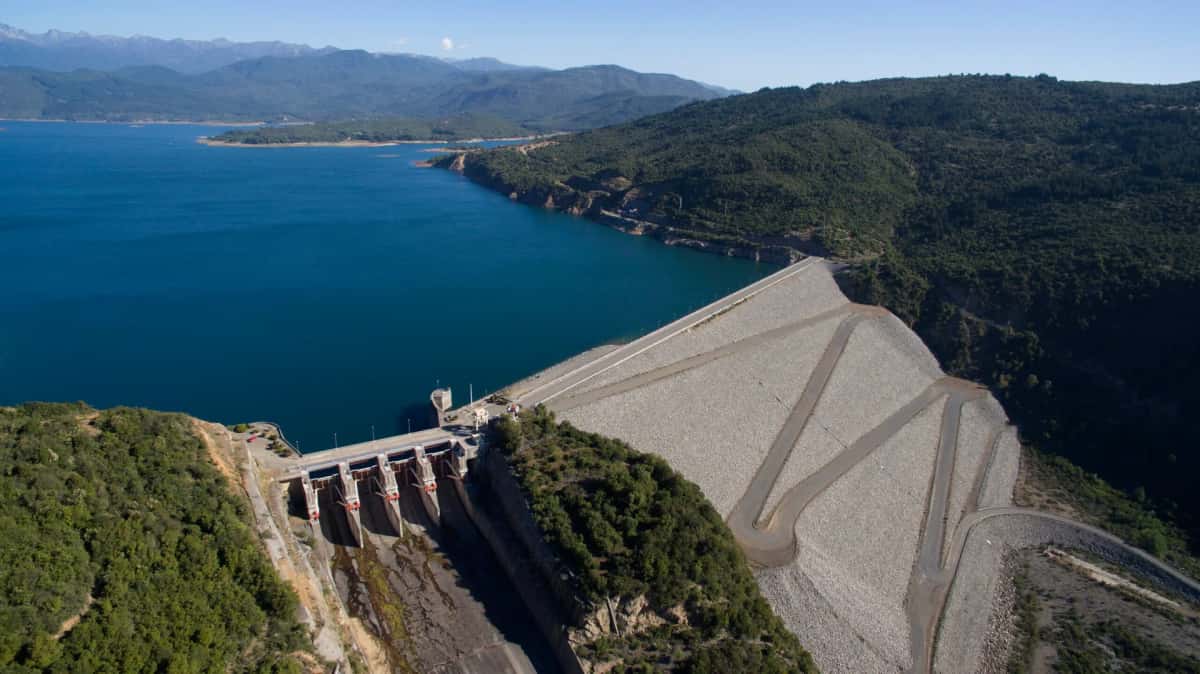
diariotalca.cl
Why it matters: Colbún’s founding hydroelectric complex links flexible power generation with water storage that supports agriculture across the Maule region.
More than 9,000 people attended the anniversary festival in Colbún.
About 200,000 hectares of farmland benefit from a water-storage agreement with local irrigators.
13,540 GWh — Colbún’s reported generation in 2025, with 70% from renewable sources.
March 2027 — the planned start of visits to the new Casa de la Energía.
Colbún marked 40 years of activity in the Maule commune of the same name with the opening of a new visitor centre and a festival attended by more than 9,000 people. The anniversary brought attention to the Colbún and Machicura hydroelectric plants, the company’s first facilities, and the reservoirs’ roles in electricity generation and agricultural water supply.
The reservoirs balance generation and water storage
Built in the early 1980s, the Colbún and Machicura plants involved more than 3,000 people. The works included a dam about as tall as a 30-storey building and the excavation of what were then the country’s two largest tunnels. The resulting Colbún reservoir has a capacity equivalent to 600,000 Olympic-sized swimming pools.
Stored water allows the company to adjust hydroelectric output as system needs change. Chief executive José Ignacio Escobar described the reservoirs as “a battery”, saying they can hold water for weeks or months and increase or reduce generation quickly. He also said they can help restore supply after a major failure.
Colbún cites the response to the magnitude 8.8 earthquake in February 2010 as an example: the company says its Colbún plant was the first in Chile to return to operation and helped restore supply in the Metropolitan Region.
Water storage also supports irrigation. Under an agreement in place since 2013, Colbún and Maule irrigators store water during periods of abundance for use in the dry season. The company says the arrangement benefits about 200,000 hectares of agricultural land.
Five hydro plants anchor the complex
The Colbún Complex comprises five hydroelectric plants—Colbún, Machicura, San Ignacio, Chiburgo and San Clemente—and the Machicura Solar photovoltaic plant. Company figures show that, between 1996 and 2025, the five hydro plants supplied an average of 12% of Chile’s hydroelectric generation. Their share reached a reported peak of 19% in 2001.
Colbún operates 29 plants and has more than 5,000 MW of capacity and about 1,300 employees. It generated 13,540 GWh in 2025, of which 70% came from renewable sources. The company describes itself as Chile’s second-largest electricity generator.
Visitor programme is scheduled for 2027
The new Casa de la Energía is inside the Colbún plant and includes interactive exhibits, including bicycles, touch-screen games and an immersive room. Visits for students, local residents and tourists are due to begin in March 2027. The previous centre operated from 2011 to 2019 and received more than 30,000 visitors.
The anniversary festival featured performances by Los Vásquez, Juanito Ayala, La Puro Cuento and Sudakas, which performed a tribute to Los Prisioneros. The event also included a drone show and a market featuring 14 local businesses. The visitor programme is the next scheduled public-facing step at the site.
More in Mining Stocks
Harmony Gold passes AGM resolutions, but two director re-elections draw less support
A cash-share authority sat alongside board renewals, while Harmony’s next use of that mandate remains undecided.

Latin American mining valuations fall in November, but parent stakes blur the ranking
The November snapshot spans several commodities, but two parent companies also own listed miners counted separately.
Silverco completes first full operating quarter as La Negra and Cusi target 2027
La Negra is producing in Mexico, while Cusi’s restart depends on commissioning work still under way.