
Oregon State grows potatoes in lunar soil simulant, with metals still a hurdle
NASA-backed trials tested five lunar-soil simulants, but a closed nutrient system remains essential for any lunar farm.
Why it matters: Growing food from local materials could reduce the supplies future lunar crews must bring from Earth, but the trial still relied on added nutrients.
70% simulant — lunar-regolith-like material in the most successful mix
30% vermicompost — organic amendment used to support growth
Five simulants — materials representing different lunar regions were tested
Oregon State University researchers grew potatoes in lunar-soil simulant using organic matter, with plants in the best-performing mix producing tubers comparable to those grown in terrestrial soil. The NASA-funded study, published on November 19, 2026, in npj Microgravity, also found comparable nutritional characteristics in the harvested potatoes, while identifying metal uptake and nutrient supply as unresolved issues.
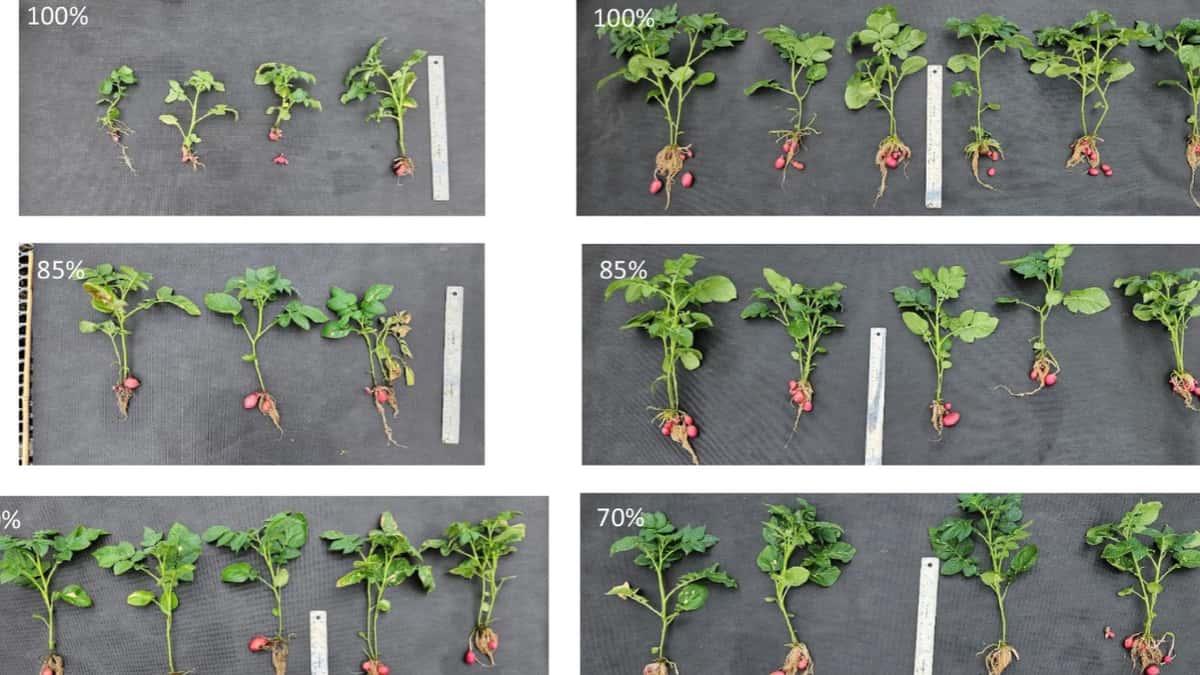
The strongest results came from a mix containing 70% lunar-regolith simulant and 30% vermicompost, an organic fertiliser produced through the decomposition of organic matter by worms. The plants completed their growth cycle and produced tubers at levels similar to the terrestrial-soil reference crop under controlled conditions.
Organic matter helped overcome poor growth
Lunar regolith—the layer of rock fragments and dust covering much of the Moon—is unlike agricultural soil on Earth. It contains almost no organic matter and lacks the nitrogen needed to sustain plant growth. Its mineral composition can also create toxicity risks and hinder root development.
In an initial set of tests, plants grown without organic matter showed severely limited growth and poorly developed roots. Smaller additions of vermicompost produced partial improvements, while the 30% mix restored plant development and tuber production. The researchers also used slow-release fertiliser, meaning the results do not demonstrate a fully self-sufficient farming system.
The team then tested five simulants designed to represent material from different lunar regions, including broad plains and highland areas. Plant responses varied with the simulant, indicating that mineral composition affects both growth and crop stress. These differences could matter when selecting or conditioning material for future cultivation.
Metal uptake remains a food-safety question
The researchers found that growing plants in untreated simulant could lead to excessive copper accumulation in plant tissues, with roots particularly affected. They said organic matter may reduce the availability of some metals and lessen their harmful effects on plants.
Tests of the harvested potatoes found no statistically significant increase in the main glycoalkaloids, natural compounds that can be toxic at high concentrations. Some treatments did show moderate increases in copper, zinc and aluminium. The team said further assessment of element accumulation is needed before such crops could be considered for human consumption.
Greenhouse results do not yet establish lunar farming
The work is relevant to NASA’s Artemis programme and plans for a longer-term human presence on the Moon, where producing food locally could reduce reliance on supplies shipped from Earth. Potatoes are of interest because they provide energy and nutrition and can produce substantial food on relatively small growing areas.
The researchers suggest that plant waste and food scraps from future installations could be composted to recycle nutrients. That approach could reduce the materials brought from Earth, but it remains a proposed part of a future system. The team is also studying different potato varieties to identify those that may adapt better to extraterrestrial growing conditions.
The experiments took place in small pots in terrestrial greenhouses, using materials that mimic lunar regolith rather than samples collected on the Moon. Controlled temperature and lighting did not reproduce lunar gravity or space radiation. Further work on metal accumulation and potato varieties is therefore needed to assess whether the approach could translate beyond Earth-based trials.
More in Frontier Mining
KP gold mining probe tests whether suspended contracts stopped extraction
The contract suspensions did not end the allegations—and names beyond the mining operators have surfaced.

Guinea jails 22 Siguiri officials over gold damage but clears corruption
Prosecutors sought a decade for each administrator, but the defence said the alleged mining predated their appointments.
Siguiri gold mining: 22 former officials jailed for two years
The ruling reaches beyond expelled miners, putting the local officials meant to police the trade under scrutiny.