
AiMinr targets faster mine studies, but engineers retain technical sign-off
Changes to metal prices, cut-off grades or geotechnical assumptions can send teams back through disconnected models.
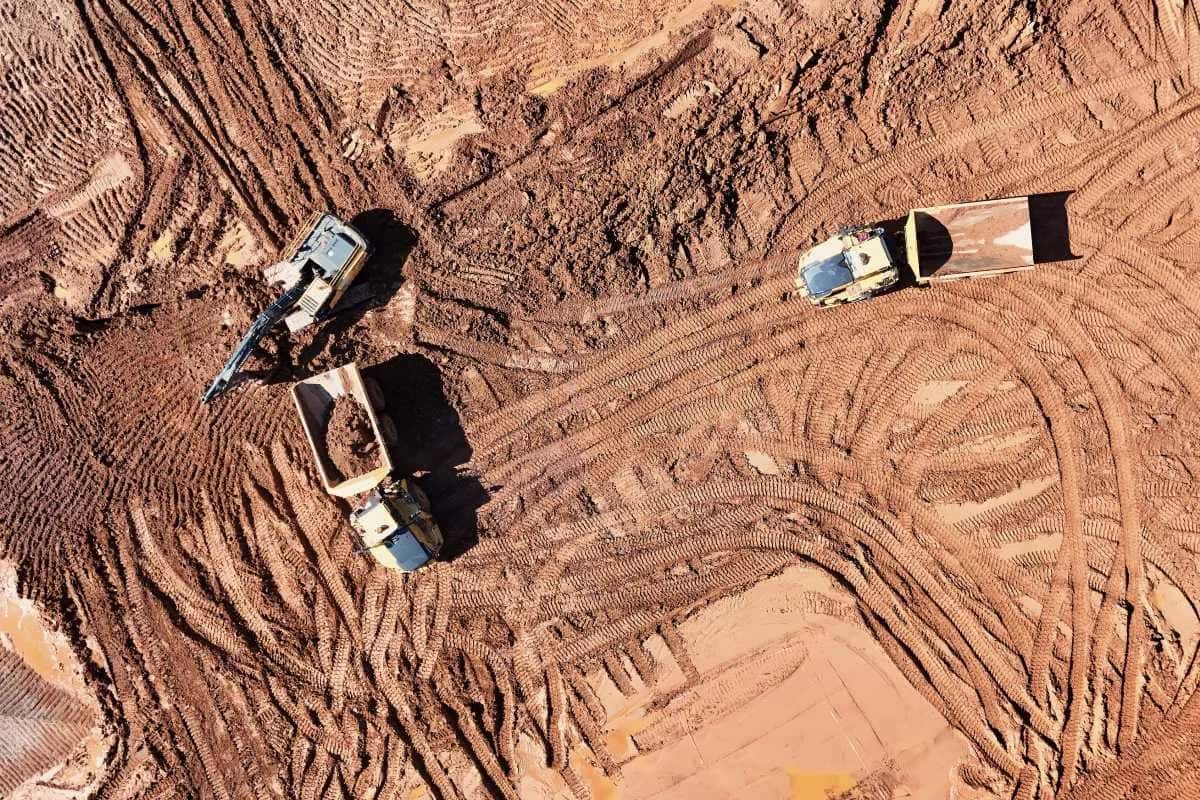
geomechanics.io
Why it matters: Faster, traceable study work could let project teams test more mine designs before committing capital, though technical accountability remains with qualified professionals.
30%–40% — share of mine development time that AiMinr’s founder attributes to studies from scoping through feasibility.
Eight months to eight weeks — the company’s estimate for reducing the mining component of pre-feasibility work.
More than US$190 million — discrepancies AiMinr says it identified in one project cost audit.
AiMinr says its cloud platform connects mine design, planning, processing and economic evaluation to shorten parts of pre-feasibility work from months to weeks. The system automates calculations and links outputs across disciplines, but the company says material assumptions and decisions must still be reviewed by engineers before results enter technical reports.
A linked workflow built around deterministic calculations
The company says studies account for 30% to 40% of the period from discovery to commercial production, a development timeline that averages 16 to 18 years globally and approaches 30 years in the United States, according to founder and chief executive Ari Rostami. AiMinr’s platform is aimed at the scoping, pre-feasibility and feasibility work within that development process.
AiMinr offers the software as a cloud service with 12 modules, deployed in isolated client environments with SOC 2 security controls, according to the company. Its architecture uses 52 specialised agents, with 30% of the system devoted to agent orchestration and 70% to deterministic calculations. The company says the agents were trained on about 120,000 public technical reports, mainly NI 43-101 and JORC documents, and refined through work with clients and project data in their own environments.
Rather than asking generative AI to produce figures, AiMinr says its agents select calculations to run, including physics, 3D CAD geometry, mass balance and cash flow. A mine-design agent can pass geometry to scheduling, ventilation and finance modules. If operating or economic targets are missed, later modules can return the design for adjustment.
The company says its workflow is compatible with JORC 2012 and NI 43-101 requirements. Those standards require competent or qualified people to review and sign relevant reports. AiMinr says users can inspect estimation formulas and the source cells behind data, with human validation points built into the process. The software prepares and connects analyses; it does not take professional responsibility for approving them.
Company estimates pre-feasibility work could take eight weeks
For existing projects, AiMinr says the process can begin with block models and CAD or DXF files showing built conditions. After design criteria and production targets are set, the platform can produce a scheduled 3D mine plan in 35 to 40 minutes, including features such as stopes, sublevels, ramps or shafts, ventilation and construction stages. These are company-reported times, with no independent comparison provided.
For complex open-pit-to-underground transitions or variable deposits, AiMinr says the system can assess mining methods against factors including dip, thickness, orientation and local grade. It can also run 100 to 200 deterministic scenarios across options such as pit shells, crown-pillar limits and process flowsheets. The company contrasts that with one or two plans that it says are typically considered when alternatives are developed manually over several months.
AiMinr estimates that its platform could reduce the mining component of a pre-feasibility study from about eight months to eight weeks. It has not provided an independent measurement or project-specific conditions for that estimate.
Cost audit identified discrepancies in a greenfield project
AiMinr also describes an audit of a greenfield project with more than US$1 billion in investment, multiple owner and EPCM contractor spreadsheets, and tens of thousands of capital and operating cost line items. The company says its agents reviewed cost structures, fleet schedules and regional assumptions in less than a day, identifying more than US$190 million in discrepancies, including nearly US$40 million in unassigned items.
AiMinr says approved cost factors were linked to net present value, internal rate of return and all-in sustaining cost models. It has not identified the project or provided details that would establish whether the finding is representative of other audits. Rostami says future studies could be updated as new drilling, metallurgical tests, tariffs or commodity prices become available, but the company has not reported measured results from continuous updates. The stated time savings and audit findings remain company claims rather than independently verified performance.
More in Frontier Mining
CiDi unveils cabless mine truck as fleet-wide autonomy faces a test
The first unit is bound for a Xinjiang mine, while CiDi’s software pitch depends on linking trucks, drills and workers across different systems.
Boonray and Vale Indonesia move Sulawesi battery trucks toward implementation
Charging infrastructure and remote-operation systems are included, but the companies have not disclosed the fleet size or launch schedule.
Emerson and Databricks target industrial AI, but deployment details remain unclear
AspenTech’s software is intended to connect operational data with business decisions, but the companies have not outlined how customer rollouts will work.