
Richmond Hill hits 54.2 g/t gold at Sakoose, but vein continuity remains untested
Sakoose’s historic output predates modern drilling records, leaving Richmond Hill to test whether quartz veins extend beyond the old workings.
Why it matters: The high-grade hit adds a modern data point at a historic Ontario mine, but the geometry and continuity needed to assess its potential are not yet established.
54.2 g/t gold over 0.67 metres — SAK-26-001, measured along the drill hole.
1,292 metres drilled — completed by 22 November in a planned 1,400-metre, eight-hole program.
3,669 ounces of historical production — recorded at Sakoose from 8,009 tonnes of ore.
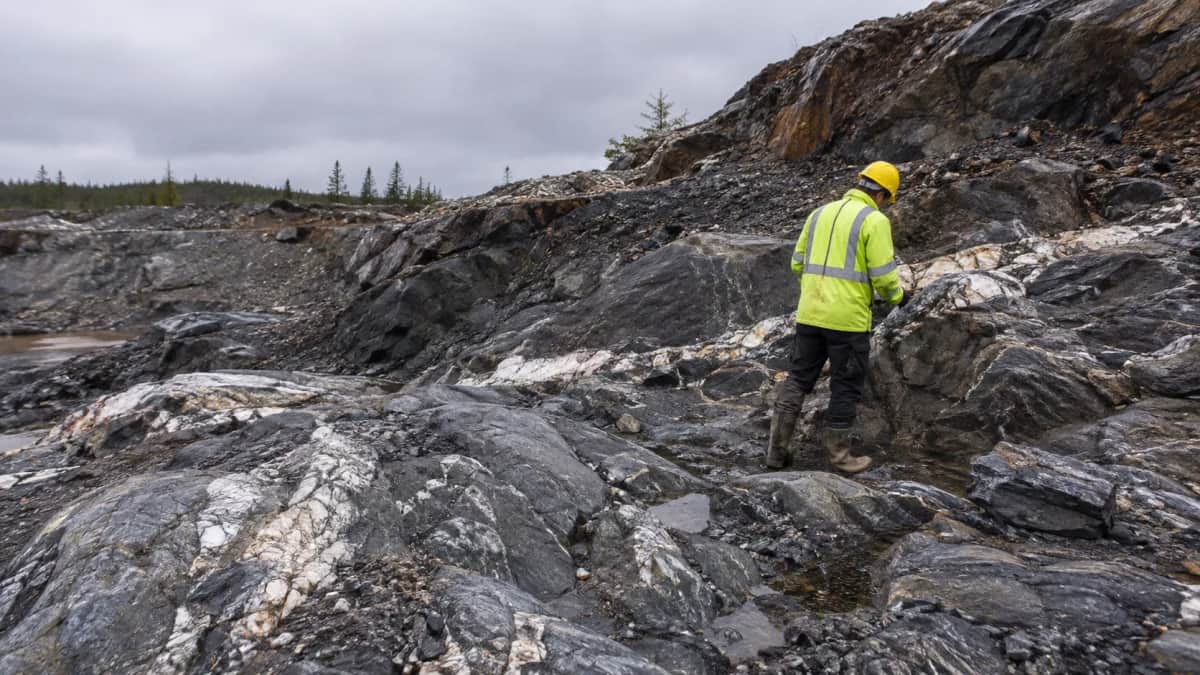
Richmond Hill Resources reported its first diamond-drilling results from the Sakoose mine in northwestern Ontario, including 0.67 metres grading 54.2 g/t gold in hole SAK-26-001. The interval was intersected from 146.53 metres down the hole at the Martello Gold project, about 45 kilometres southeast of Dryden. The reported length is a drill interval; true width has not been determined.
The results are an early test of a property with historic production but limited modern geological information. Richmond Hill said the initial assays came from 41 samples selected for priority analysis. Assays for the remainder of the program are pending.
First assays cover only part of the Sakoose drilling
The company’s eight-hole program is designed to cover about 1,400 metres. By 22 November, 1,292 metres had been drilled. Alongside the high-grade interval in SAK-26-001, hole SAK-26-003 returned several reported intervals: 5.84 metres at 1.16 g/t gold, 3.70 metres at 0.59 g/t, 1.23 metres at 3.61 g/t and 0.47 metres at 4.28 g/t.
Those lengths also represent intervals down the hole, rather than established true widths. The available results do not determine how the mineralized veins extend between holes or whether the high-grade section has continuity along strike or at depth.
Martello Gold covers about 6,750 hectares across 202 mining claims and includes the former Sakoose operation and other gold prospects. Historical records indicate that Sakoose produced about 3,669 ounces of gold from 8,009 tonnes of ore, at a reported recovered average grade of 14.25 g/t. Mining took place mainly from 1897 to 1902, with a second period from 1944 to 1947. That production history is not a current mineral resource or reserve estimate and has not been validated to contemporary technical standards.
Other Canadian programs report vein and surface results
In Quebec, Canadian Gold Resources reported drilling results from the Baker and Mersereau quartz-vein systems at Lac Arsenault, on the Gaspé Peninsula. Highlighted intervals included 0.40 metres at 15.00 g/t gold, 0.40 metres at 13.25 g/t and 0.60 metres at 11.75 g/t. The company said it had completed geological logging and sampling of 81 holes, with another 10 awaiting logging; laboratories analysed 2,712 samples. Its next work is intended to improve the three-dimensional interpretation of the structures and inform the orientation of future drilling.
In New Brunswick, Puma Exploration reported three selective surface samples grading 16.38, 7.17 and 3.86 g/t gold from a newly identified zone at McKenzie, about 450 metres south of the RIM target. The company has not established a geological connection between the new structures and the previously identified RIM veins. Drilling at RIM in July 2026 returned 7.75 metres at 1.64 g/t, including 0.25 metres at 42.60 g/t. Surface samples do not establish average grade or mineralized volume.
Continuity remains the key technical test
The Sakoose result is an assay from a narrow interval, not evidence on its own of a mineable body. Vein thickness, continuity, geometry, metallurgical recovery and extraction costs would all affect any future assessment. The immediate technical step is to incorporate the pending assays and completed drilling into an interpretation of the structures; the true widths of the reported intervals remain undetermined.
More in Discoveries

Refined Energy wins Golden Goose survey approval, but target selection still lies ahead
Historic work will be combined with new geophysics at Beaver Brook, though the company has not identified which results will guide follow-up.
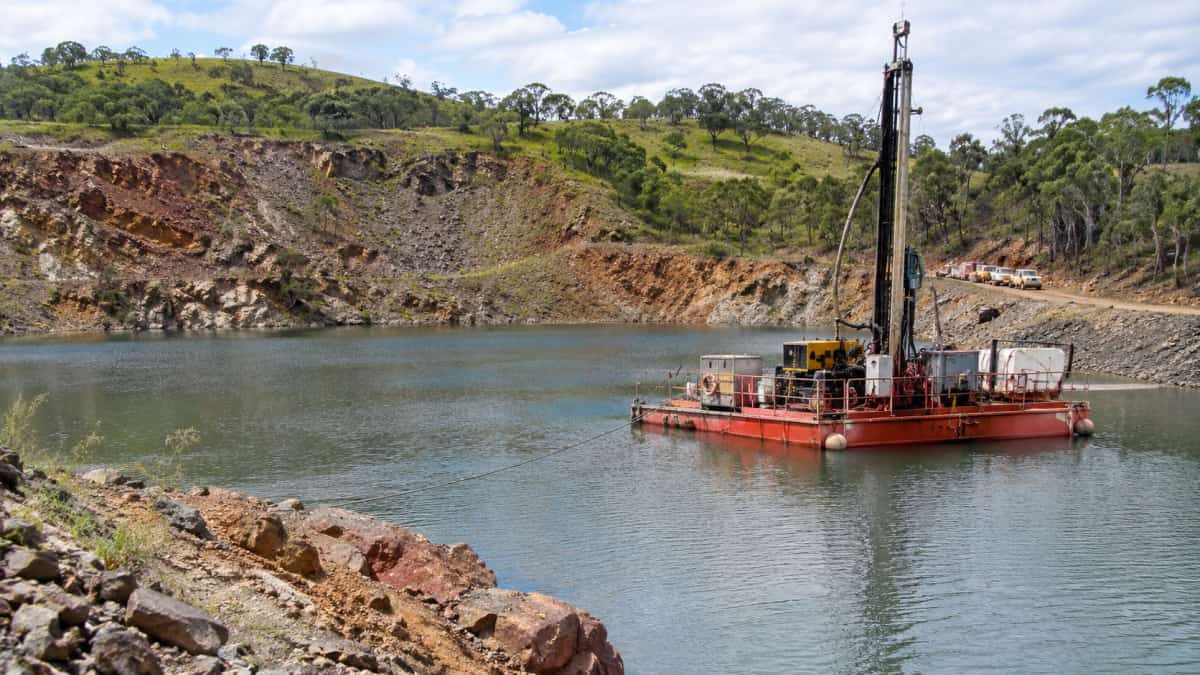
Austral and BOA target resource extensions at Enterprise and Neds Creek
At Enterprise, the central test is whether new intercepts extend mineralisation beyond the currently defined resource.
Crossroads Gold secures Club Terrace licence, but 34km corridor remains untested
Four historic gold districts lie within the licence area, but none has been tested with modern gold drilling.