
Osisko finds high-grade gold beyond Lowhee resource, but scale remains unknown
The holes tested deep and southeast extensions at Barkerville Mountain, where few vein corridors have been modelled.
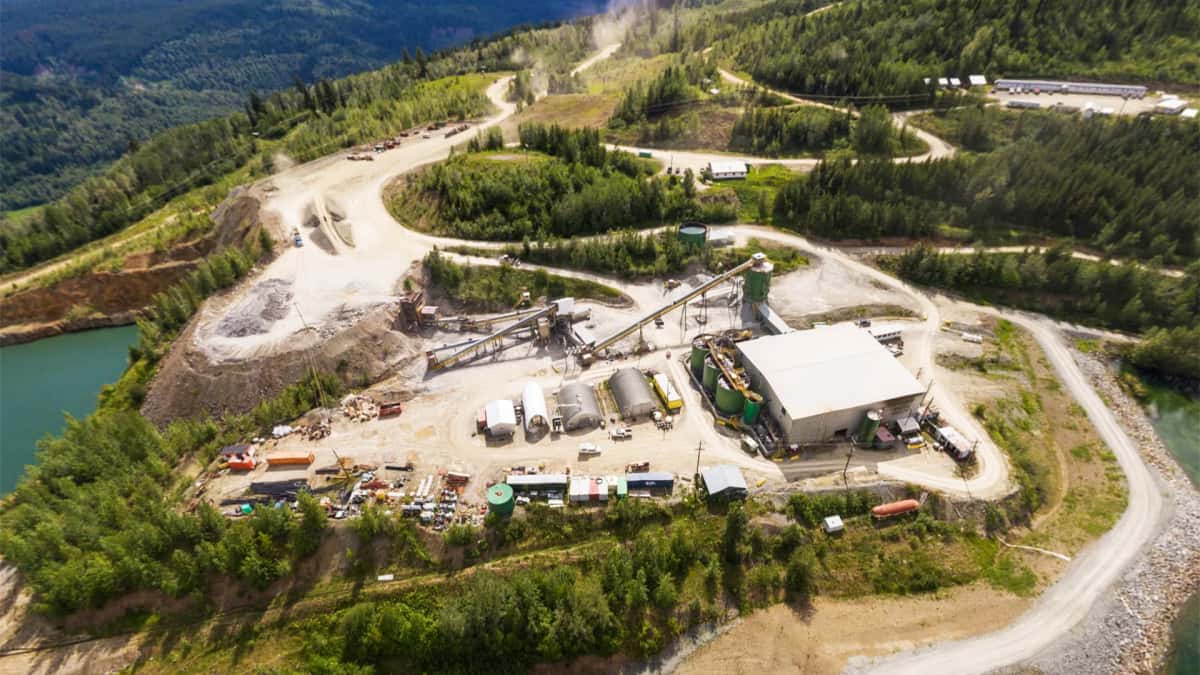
mining.com
Why it matters: Drilling below an area under development could support resource growth, but the intercepts are not yet a quantified addition to Cariboo Gold’s inventory.
104.14 g/t gold over 1.50 m — BM-26-002, at about 600 m vertical depth.
11,059 m across 37 holes — the campaign tested Lowhee Deep and Lowhee SE.
About 500 m of lateral extent — Osisko said the intercepts reach roughly 600 m vertically.
Osisko Gold reported high-grade gold intercepts outside the current mineral resource at the Lowhee zone of its Cariboo Gold project in central British Columbia. The results came from 11,059 m of drilling in 37 holes targeting extensions below and southeast of the known zone.
The highest reported grade was 104.14 g/t gold over 1.50 m in hole BM-26-002, at an approximate vertical depth of 600 m. A 0.50 m sample within that interval returned 312 g/t. The intercept is more than 250 m below the modelled mineral resource, according to the company.
Underground and surface holes tested two extensions
The programme targeted Lowhee Deep, the down-dip extension, and Lowhee SE, a lateral extension to the southeast. Drilling began from the underground 1260 level and from surface on Barkerville Mountain. Cariboo Gold is wholly owned by Osisko and is under construction.
Underground drilling accounted for 6,620 m across 29 holes directed southeast. Eight surface holes totalled 4,439 m and were directed northwest from different locations in the Lowhee SE extension area. Hole lengths ranged from 57.2 m to 897 m, depending on their origin and location.
Other reported intercepts outside the current resource included 16.08 g/t over 4.55 m in BMU-26-057, at about 325 m vertical depth. The same hole returned 17.53 g/t over 4.15 m at about 344 m. Hole BMU-26-085 returned 11.07 g/t over 6.35 m at about 244 m, including a 0.50 m sample grading 85.20 g/t.
Osisko said the intersections span about 500 m laterally and extend to approximately 600 m vertical depth. Chief executive Chris Lodder linked the results to potential resource growth near the mine and continued exploration in areas where, he said, few vein corridors have been modelled. On October 5, 2026, the company reported a separate Lowhee intercept of 7.28 g/t over 16.15 m, including 173.66 g/t over 0.60 m, from underground drilling.
Intercept lengths do not establish resource additions
The reported grades are assays from drill-core samples. The stated lengths are downhole intervals and should not automatically be read as true widths; Osisko provides true-width estimates in its results tables. The company calculated approximate vertical depths from the modelled topographic surface to each interval’s midpoint.
In BM-26-002, the 104.14 g/t result covers the interval from 826.15 m to 827.65 m down the hole. The included 312 g/t assay represents a separate 0.50 m core sample within that interval, not an additional intercept to be added to the wider result.
Osisko said it applied no caps to high grades and assigned zero grade to unrecovered core intervals. The results are exploration intercepts: the company has not established a new resource volume or quantified how much material the extensions could add to the current estimate.
More in Discoveries
Global Uranium narrows Astro target near McArthur River, but no drill site is set
A 2026 seismic model outlines a low-velocity zone above the basement conductor, but its geological cause remains untested.
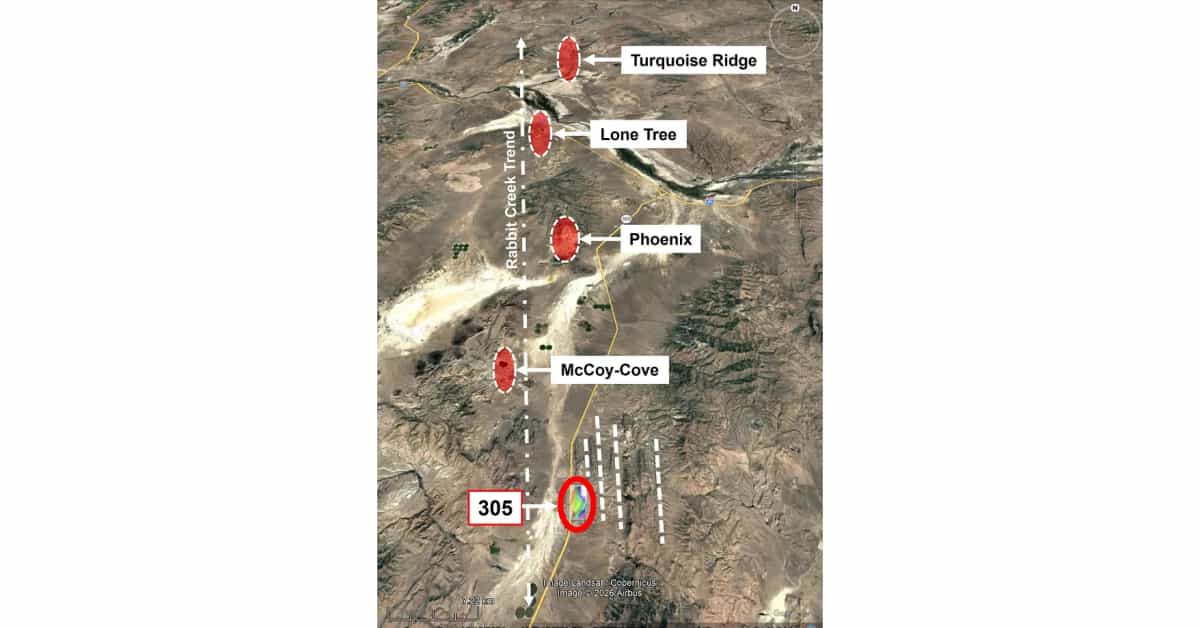
Black Mammoth maps two St. Elmo targets, but neither proves mineable gold
The southern target lies beneath historic workings and overlaps a magnetic feature identified in an earlier survey.
Stallion starts Moonlite surveys as Coyote gamma readings leave grade unproven
Borehole EM and drone magnetics are being added to live Phase II drilling to guide where Coyote is tested next.