
Corazon Mining identifies three gold targets at Chalice, but drilling has yet to test them
The soil program was built for lithium, so the gold case now depends on pathfinder chemistry and follow-up work.
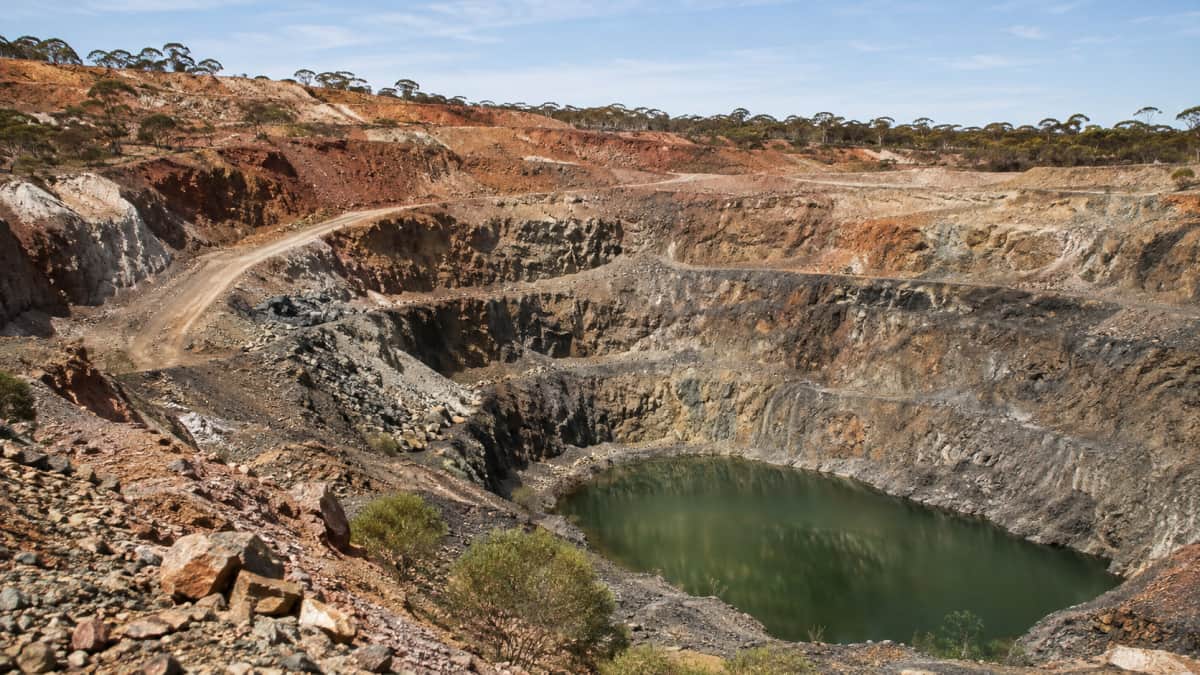
Why it matters: The targets could extend exploration beyond Chalice’s defined gold inventory, but their significance depends on confirmation by sampling and drilling.
377 soil samples — originally collected for lithium exploration and later reinterpreted for gold pathfinders.
191,000 ounces — Chalice’s existing JORC 2012 mineral resource.
600,000–830,000 ounces — the company’s conceptual exploration target, including existing resources.
645,000 ounces — historical gold production from Chalice at an average grade of 5.4 g/t.
Corazon Mining has identified three gold exploration targets at its Chalice project in the Higginsville district of Western Australia by reinterpreting results from 377 soil samples collected originally for lithium exploration. The company plans further gold analyses and reverse-circulation (RC) drilling to test whether the anomalies represent extensions of known mineralisation.
The results, presented on November 26, 2026, point to areas north and east of the main deposit. They do not confirm gold discoveries, establish grades or demonstrate mineable tonnage.
Pathfinder elements point to three areas
The targets lie within mining lease M15/786 and were defined by associations of elements including tungsten, bismuth, molybdenum, arsenic and copper. These can help identify settings favourable for gold mineralisation, but are indirect indicators rather than proof of gold.
The Northern Target, also called Target A, is an anomaly measuring about 600 by 800 metres north of the main deposit. It coincides with an earlier structural interpretation that proposed a possible extension of the Chalice gold system. El Paso is a structural zone about 600 metres east of the former Chalice open pit. The Eastern Corridor is a geochemical trend with arsenic, tungsten, bismuth and molybdenum anomalies.
Corazon plans to conduct additional gold analyses and expand soil sampling, with RC drilling proposed at the northern target. At El Paso, further work is intended to assess whether the anomalies reflect natural mineralisation or effects associated with historic mining. The company also plans to investigate the distribution of pathfinder elements in the Eastern Corridor, including a sample with zinc, lead, cadmium and silver.
Existing resources and exploration target
Chalice has a JORC 2012 mineral resource, effective April 11, 2026, of 2.181 million tonnes at 2.74 g/t gold for 191,000 ounces, using a 1.3 g/t cut-off. This comprises 406,000 tonnes at 3.19 g/t for 42,000 ounces in the Measured category; 1.12 million tonnes at 2.60 g/t for 94,000 ounces Indicated; and 655,000 tonnes at 2.64 g/t for 55,000 ounces Inferred.
In September 2026, Corazon outlined a conceptual exploration target of 9.7 million to 12.3 million tonnes grading 1.9–2.1 g/t gold, for 600,000–830,000 ounces including the existing resource. The company cautions that the range is conceptual, not additional confirmed resources or economically mineable reserves. Systematic drilling would be needed to establish continuity, geometry and grade distribution.
Wider Higginsville position and development plans
Corazon acquired Chalice from Westgold Resources in July 2026 and later agreed with Dynamic Metals to add tenements and gold rights covering about 170 square kilometres north and south of the former mine. Its position now spans more than 40 kilometres of the Higginsville greenstone belt. Much historic exploration in the area focused on nickel and lithium, leaving some ground less tested for gold.
Chalice has a production history of about 645,000 ounces at an average grade of 5.4 g/t. Corazon is investigating mineralisation around historic workings and structures not included in earlier mine plans, including near-surface opportunities that could potentially support open-pit mining. The company is also evaluating modular processing options under a memorandum of understanding with Modular Gold Solutions and the possibility of using regional processing facilities.
Corazon has stated an aspiration to begin gold production between late 2027 and early 2028. That timing remains subject to exploration results, technical studies, financing and approvals; the processing options are not a final investment decision. The immediate test is whether follow-up sampling and RC drilling can turn the new surface anomalies into verified gold intersections.
More in Discoveries
Crossroads Gold secures Club Terrace licence, but 34km corridor remains untested
Four historic gold districts lie within the licence area, but none has been tested with modern gold drilling.
Athena Gold completes Forester survey, but Ontario’s next drill targets remain open
The geophysical work covers a 14,930-hectare property, while Laird Lake’s high-grade Scooby zone poses a separate test of continuity.
BCM adds second rig at Utah copper project to test buried southern target
The target lies beneath sediment, and its porphyry-skarn interpretation remains unconfirmed until drilling reaches bedrock.