
Axel REE starts Woolrich drilling, but Brazil’s first ISR test site remains open
The field programme will test whether magnesium-sulphate solution can move through the regolith and be recovered.
axelreelimited.com.au
Why it matters: A field test will determine whether Woolrich’s rare earth resource can support controlled solution circulation and recovery—questions laboratory work cannot settle.
2 hectares — area designated for infill auger drilling at Woolrich.
264.6 million tonnes at 1,101 ppm TREO — Woolrich’s estimated resource.
110.1 million tonnes at 1,073 ppm TREO — the portion classified as Indicated.
54.4% TREO — grade of the mixed rare earth carbonate produced from laboratory column-leach solutions in October.
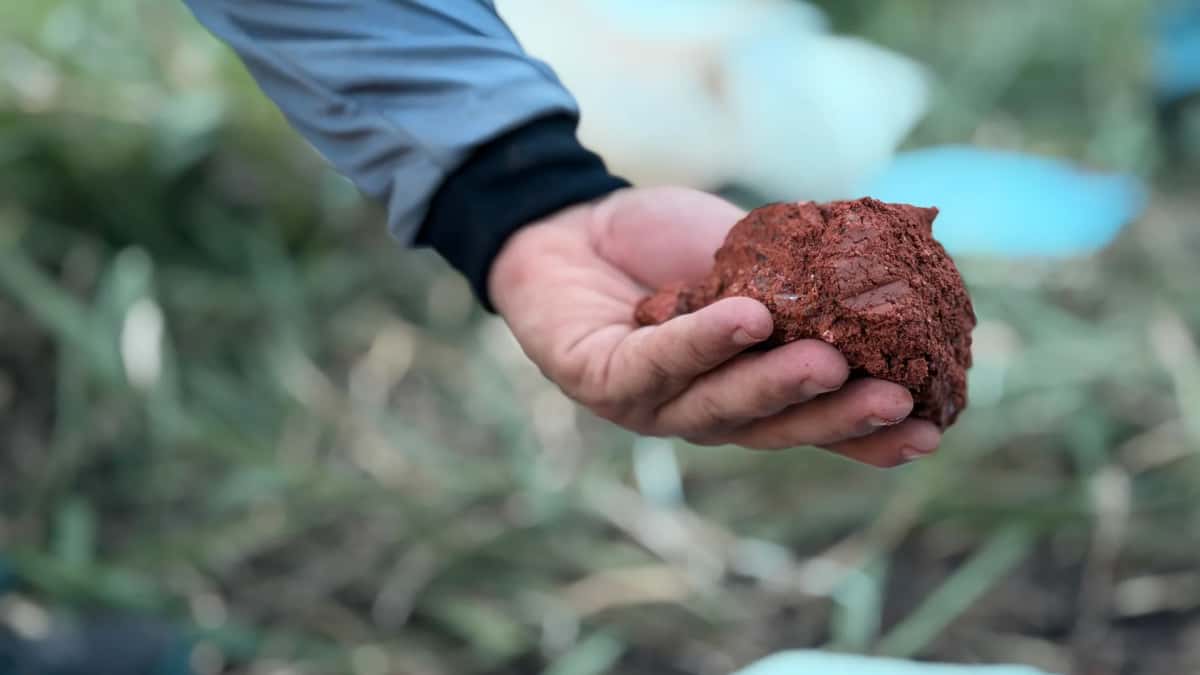
Axel REE has started infill auger drilling at its Woolrich rare earth deposit in Minas Gerais, Brazil, as it prepares for its first controlled in-situ recovery (ISR) field programme. The company has appointed WSP Australia to lead the programme’s studies, design and execution, but it has not yet selected the test site. That decision will follow a review of the drilling data alongside leach tests being conducted by SGS.
The field work is intended to assess how magnesium-sulphate leaching performs in Woolrich’s mineralised material. Results to date come from laboratory tests; Axel REE said those results alone cannot establish how the process will perform under field conditions.
Drilling and laboratory work will guide site selection
The auger holes are being drilled within the designated two-hectare study area. They are intended both to refine the geological and mineralisation model and to provide samples for SGS’s magnesium-sulphate leach tests. Axel REE will use the combined drilling and laboratory results to choose the test location and determine the field programme’s design.
The company has not disclosed the planned number of holes or when the campaign is expected to finish. WSP’s work includes programme planning and technical delivery, hydrogeological investigations and possible geotechnical studies. Axel REE said WSP has experience with ISR test programmes for ionic-clay-hosted rare earth projects in Brazil, as well as groundwater characterisation and modelling.
The controlled test is intended to examine three practical questions: how leach solutions move through the mineralised regolith, whether hydraulic containment can be maintained, and how a solution carrying dissolved rare earths can be recovered. It is an evaluation of the process in the field, not a demonstration of commercial recovery.
Woolrich is the priority deposit at Caladão
Woolrich is the deposit Axel REE has prioritised for ISR development. Its estimated resource is 264.6 million tonnes at 1,101 parts per million (ppm) total rare earth oxides (TREO), including 110.1 million tonnes at 1,073 ppm TREO in the Indicated category.
The deposit is part of the Caladão project, which comprises four defined deposits and a total resource of 708.6 million tonnes at 1,443 ppm TREO. These estimates describe the project’s mineral inventory; they do not establish the recovery rate achievable through ISR. Assessing that performance in the field is a central purpose of the planned programme.
In October, Axel REE produced a mixed rare earth carbonate grading 54.4% TREO from solutions generated through laboratory column leaching. The result showed that rare earths could be precipitated into a product under the tested conditions, but did not demonstrate field recovery or commercial-scale performance. Managing director Patience Mpofu linked the drilling start and WSP’s appointment to the company’s move towards a first controlled test. Site selection and programme design remain dependent on the drilling and SGS test results.
More in Critical Minerals
China extends critical-mineral export pause as US chip curbs test trade truce
Washington’s advanced-chip rules sharpen a separate technology dispute just days before the minerals pause was due to expire.
South Africa’s Transalloys plans job cuts as Eskom tariff approval stalls
The plant has been idle since July, but Transalloys has retained staff while a regulator weighs the power deal needed to restart it.
IMC Rare Earths lists in New York, but Itarantim still has no reserves
At Brazil’s Itarantim project, expanding drilling and laboratory work are testing whether in-situ recovery can advance beyond a concept.