
Sonoro Gold advances Cerro Caliche engineering as heap-leach ground risks are tested
The proposed heap-leach pad is central to the Sonora project, but construction planning still depends on subsurface work and permitting.
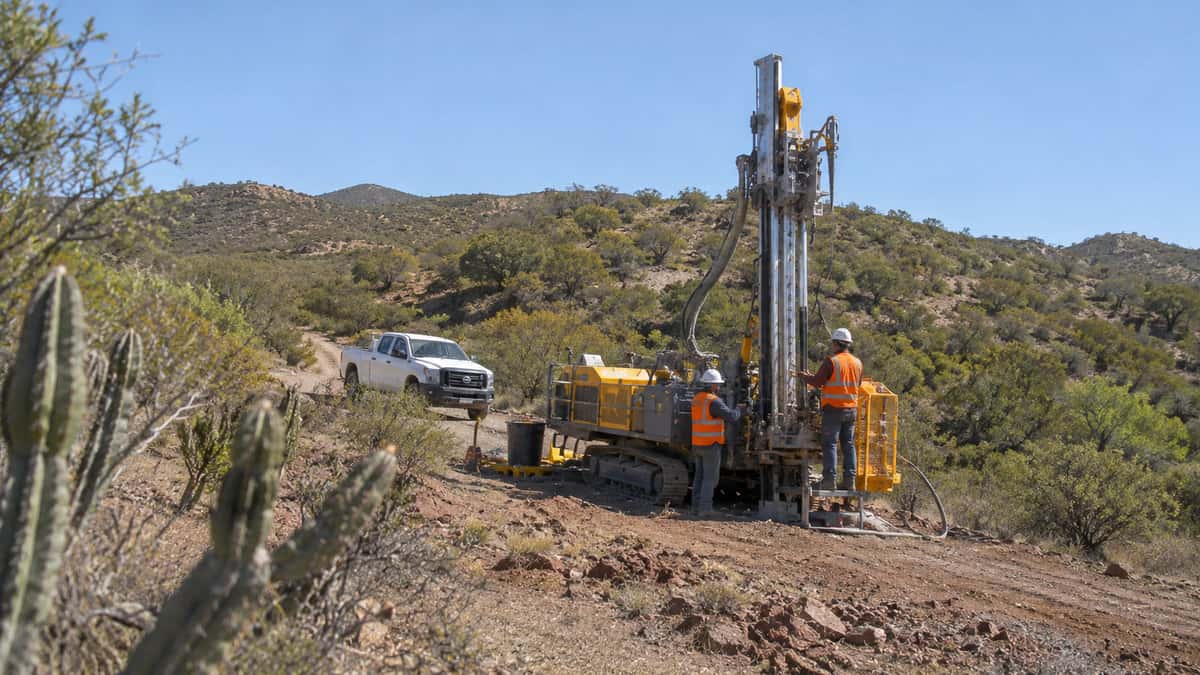
Why it matters: Ground conditions will shape the design and construction requirements of Cerro Caliche’s proposed heap-leach facilities, a key step in assessing whether the project can move beyond its preliminary study.
8 geotechnical holes — completed alongside 16 test pits at the proposed infrastructure sites.
US$83 million — initial capital estimate in the project’s preliminary economic assessment.
10 years — projected mine life in the PEA.
Q1 2027 — target for completing the heap-leach pad design.
Sonoro Gold has completed geotechnical investigations and begun advanced engineering for its proposed Cerro Caliche open-pit gold project in Sonora, Mexico. The work is intended to inform the design of the heap-leach pad and related facilities, with that design scheduled for completion in the first quarter of 2027.
The investigation covered eight HQ-diameter geotechnical holes, 16 test pits, geophysical surveys and laboratory testing. BBA Consultants International coordinated the ground investigations, while Ausenco México is leading the next stage of engineering. The work supports a project that the company’s preliminary economic assessment estimates would require US$83 million in initial capital.
Ground investigations feed into heap-leach design
The geotechnical program focused on areas proposed for the leach pad, solution ponds, crushing facilities, waste-rock storage and auxiliary infrastructure. Test pits ranged from 1.40 to 5.80 metres deep. The work also included standard penetration tests, permeability testing, geophysical surveys and piezometer installations.
These investigations are intended to characterize subsurface strength, stability and permeability. For a heap-leach operation, those conditions inform foundation design, drainage and containment systems, as well as water-balance planning. Sonoro said the results will be incorporated into the pad’s final design, including its lining and surface-water controls.
Ausenco’s engineering work will integrate the geotechnical findings with previous environmental and engineering studies. The scope includes defining infrastructure requirements, operating criteria, construction needs and processing-facility planning. The scheduled completion of the pad design is a technical milestone, not a construction approval: regulatory steps and investment decisions remain outstanding, and the company has not confirmed a construction or commercial-production date.
PEA outlines a 10-year operation
An updated 2026 preliminary economic assessment prepared under NI 43-101 standards envisages open-pit mining and heap-leach processing over a projected 10-year mine life. Planned throughput is 12,000 tonnes per day in the first year, increasing to 16,000 tonnes per day thereafter.
The study estimates average annual production of 46,000 ounces of gold equivalent and total production of 459,000 ounces. It projects an after-tax net present value of US$224 million at an 8% discount rate, an after-tax internal rate of return of 50% and all-in sustaining costs of US$1,902 per ounce of gold equivalent. Its reference prices are US$3,500 per ounce for gold and US$48 per ounce for silver.
Those figures are preliminary estimates, not confirmed operating results. The assessment also includes inferred mineral resources, which carry greater geological uncertainty and cannot be treated as proven economic reserves.
Exploration targets lie beyond the current mine plan
Alongside engineering, Sonoro is conducting a 50,000-metre exploration program. By November 9, 2026, it had completed 104 reverse-circulation holes totalling 21,345 metres, with recent work focused on the Diana and El Batamote concessions, acquired in 2026.
At Diana, hole SCR-404 intersected 50.30 metres grading 0.823 grams of gold per tonne, including 1.52 metres at 9.372 g/t gold. At El Batamote, hole SCR-406 returned 19.81 metres at 1.127 g/t gold and 15.1 g/t silver. The company said further work is needed to establish the extent and geometry of the mineralized zones.
Diana and El Batamote are about two kilometres north of the operation assessed in the current PEA, and their mineralization is not included in that mine plan. Any future addition would depend on further resource estimates and technical studies. In the near term, Cerro Caliche’s engineering and permitting work continues while Sonoro targets completion of the heap-leach pad design in the first quarter of 2027.
More in Resources

Oil faces third weekly loss as Gulf supply recovers despite Hormuz strike
A tanker strike north of Oman puts shipping risk against a rapid return of Gulf exports.

Chile’s peso faces a copper-led test as the dollar breaks through $1,020
A sharp drop in copper coincided with renewed bets on U.S. rate hikes and doubts over the returns from data-centre investment.
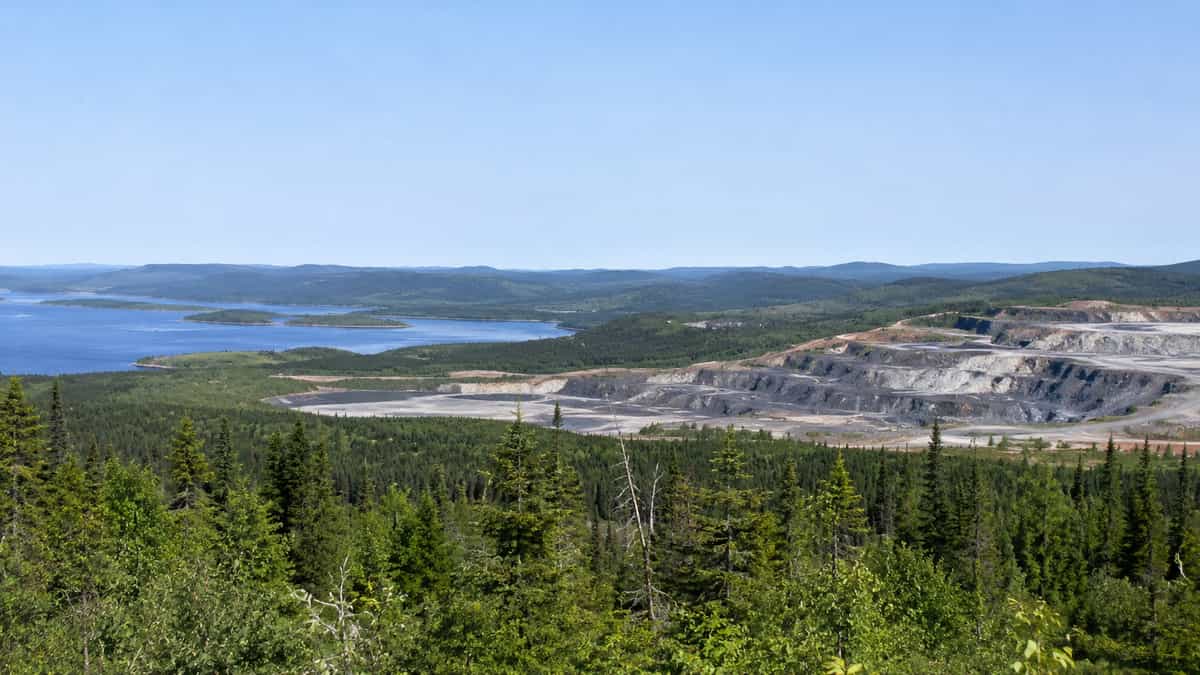
Collective Metals targets Quebec’s Lac Tio West, but its titanium potential is unproven
The 3,062-hectare option lies beside a major ilmenite operation, but the neighbouring mine is only a starting point for exploration.