
Barrick’s US$35 million El Alto plan faces a legal test in Atacama
The proposed 62-hole campaign lies on ground linked to Pascua Lama, where closure obligations remain contested.
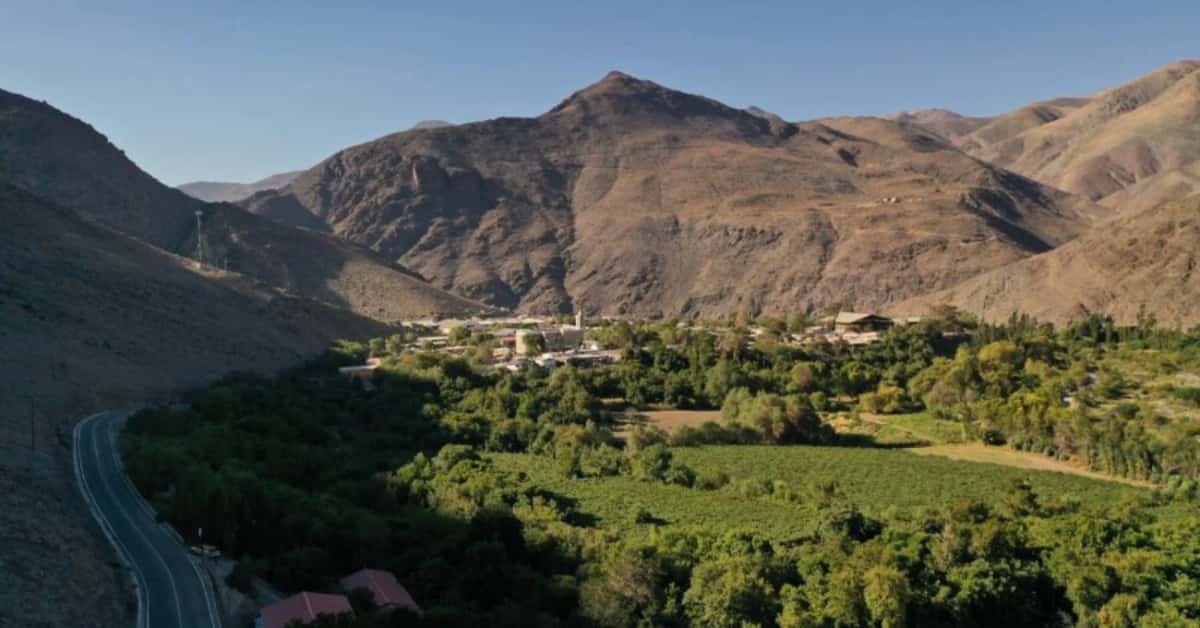
Why it matters: The ruling temporarily blocks exploration work while the court examines whether El Alto can proceed independently of Pascua Lama’s closure obligations.
US$35 million — estimated investment for the prospecting programme
62 sondajes — planned across 43 drilling platforms
320 metres — distance to the nearest glacier, according to Barrick
1.56 litres per second — maximum projected water use from the Potrerillos River, according to the company
Barrick’s El Alto prospecting project in Alto del Carmen, Chile’s Atacama Region, cannot begin drilling after the Second Environmental Court temporarily suspended its environmental approval. The measure, issued on November 9, blocks the planned work while the court considers challenges to the authorization; it does not rule definitively on the permit’s legality.
The suspension applies for up to 30 consecutive days and can be extended for equal periods, either by the court or at a party’s request. The environmental approval, known as an RCA, was granted by Atacama’s Environmental Evaluation Commission on January 30, 2026. Barrick says it has technical and legal grounds to seek reconsideration.
El Alto’s two-season programme remains on hold
Compañía Minera Nevada SpA, a Barrick subsidiary, plans to carry out 62 sondajes from 43 platforms over two summer seasons. The programme would use up to three drilling rigs at a time and is expected by the company to create about 75 jobs per campaign, with local workers given priority. Work was initially scheduled to start in 2026, but its timing now depends on the court’s decisions and the pending proceedings.
The prospecting is intended to update geological and metallurgical information through new samples, assess processing alternatives and evaluate the deposit’s development potential. Barrick says some of the available data comes from campaigns conducted about two decades ago and requires fresh analysis. The project is an exploration stage: it does not include construction of a mine or commercial mineral production.
Pascua Lama’s closure is central to the dispute
The court acted on precautionary applications associated with claims by communities and organizations in Alto del Carmen. Among the issues before it are the platforms’ location on land associated with the former Pascua Lama project, the conditions governing that project’s closure, and the presence of glaciers and permafrost in the high-altitude area.
In granting interim protection, the court said a preventive measure does not require scientific certainty that environmental damage will occur; a sufficiently supported suspicion may justify action to avoid potentially irreversible risks. The suspension is therefore intended to prevent work while the claims proceed, rather than settle the underlying dispute.
The claimants question whether new drilling is compatible with restrictions tied to Pascua Lama’s closure, which was definitively confirmed by the courts. Barrick argues that El Alto is a separate project and will not interfere with its closure obligations.
Barrick points to separate infrastructure and water plans
Barrick says El Alto has its own camp facilities and water supply and does not use Pascua Lama infrastructure. The company also says it will continue to meet its obligations for the former operation’s closure. An environmental assessment of changes to Pascua Lama’s water-management system remains pending.
On the exploration site, Barrick says drilling platforms will not be located directly on ice bodies and that the nearest glacier is 320 metres from the work areas. The company has projected maximum water use of 1.56 litres per second from the Potrerillos River, which it says is about 0.3% of the river’s average flow. These are company statements submitted in support of its position; the area’s environmental conditions and the projects’ relationship remain contested.
The court separately rejected a request to suspend Indigenous consultation for the environmental impact study covering changes to Pascua Lama’s closure. It found that consultation to be a distinct process outside the scope of the claims before it. El Alto’s drilling remains barred for as long as the precautionary suspension is in force.
More in Resources

JPMorgan sees El Niño keeping food prices under pressure into 2027
The climate pattern is forecast to ease after an intense start to 2027, while crop cycles and water systems may respond on a different timetable.

Copernicus flags record global heat anomaly as El Niño raises 2027 stakes
A particularly intense Pacific episode is adding a short-term climate swing to a warming trend that has already lifted monthly readings.

Chile's peso rebounds as copper slips, but the dollar stays above 1,000
Three sessions of dollar gains had pushed Chile's exchange rate above 1,020 pesos, setting a high bar for any retreat.