
Venezuela mining deals advance as major miners hold back on long-term capital
A 30-year gold contract at Chocó is moving through a market where U.S. permissions still determine which work can proceed.
mining.com
Why it matters: The gap between trading permissions and authority to extract minerals will determine whether Venezuela’s deals translate into new production or remain commercial agreements.
Up to US$1 billion — initial investment contemplated for the Chocó gold mine agreement
30 years — term of the Chocó contract with the Venezuelan mining corporation
350,000 tonnes — Carbozulia’s annual coal production in 2024, down from 8.7 million tonnes in 2000
97.1% — share of reported January–November 2026 oil-mining revenue accounted for by oil
Mercuria, Trafigura, Glencore and Heeney Capital are pursuing agreements involving Venezuelan gold, aluminium and coal, while major producers remain cautious about committing large amounts of long-term capital. The distinction is central: traders can finance shipments or arrange future purchases in stages, but developing mines requires larger investments and confidence in the rights and rules governing assets over decades.
Venezuela’s new mining law permits private concessions, but U.S. sanctions licences still limit which activities companies can undertake. That leaves a number of commercial agreements dependent on regulatory approvals before they can support extraction or a broader production recovery.
U.S. licences separate gold trading from extraction
The Organic Mining Law, approved on April 16, retains state ownership of mineral deposits while allowing private concessions of up to 30 years, with possible extensions. It also reverses restrictions imposed under former president Hugo Chávez. Nationalisation-era policies led to more than a dozen international arbitration claims that remain pending.
The law does not itself clear the way for operations. The U.S. Treasury’s Office of Foreign Assets Control (OFAC) licence 51D allows trade and refining of Venezuelan gold, but not its extraction. Licence 55A allows contractual negotiations subject to approval from Washington. Plusmining has cautioned that signing an agreement does not mean the investment is authorised.
The distinction is visible in a shipment of Venezuelan gold valued at nearly US$100 million and handled by Trafigura. It remains stored while U.S. refiners seek documentation to establish the material’s origin, which was supplied by state producer Minerven.
Chocó leads the gold negotiations
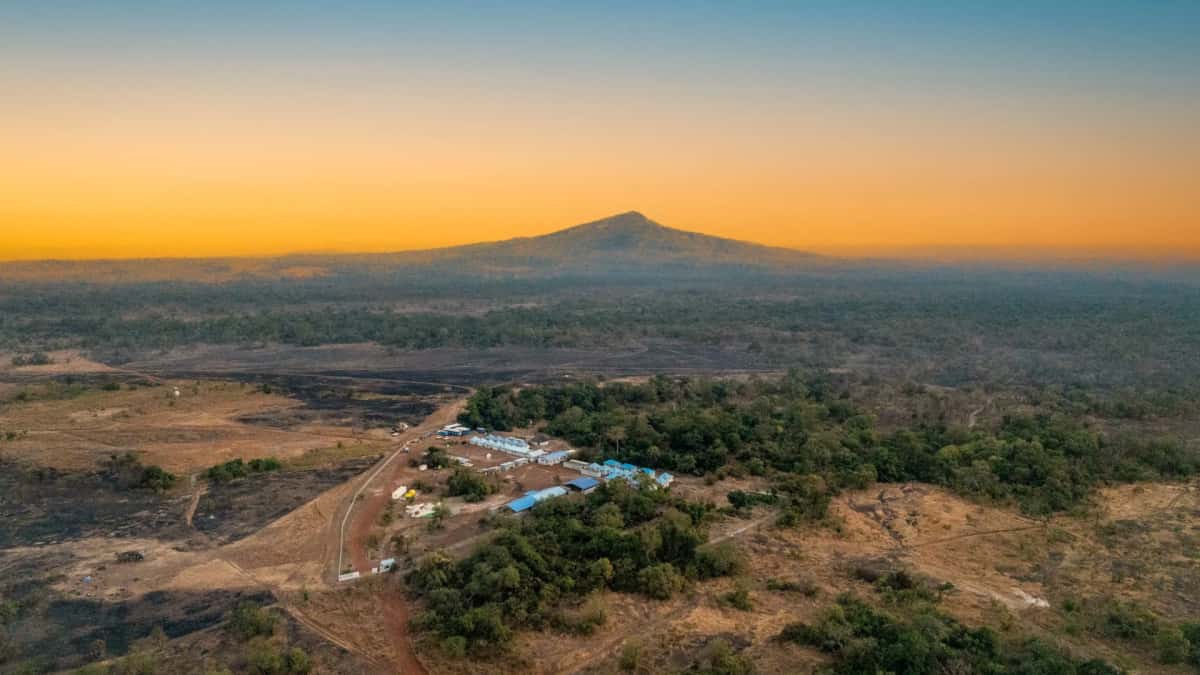
At the Chocó mine in El Callao, Bolívar state, Heeney Capital and Mercuria signed a 30-year contract with the Venezuelan Mining Corporation in September. The agreement contemplates an initial investment of up to US$1 billion, subject to applicable regulatory restrictions and authorisations. In May 2026, the two firms had announced strategic agreements for Venezuela; the company estimated those arrangements could support annual mineral exports of US$2.2 billion.
Siembra Minera is another asset under discussion. It has historically reported resources of nearly 52 million ounces of gold and 5 billion pounds of copper. Gold Reserve, which holds a 45% interest, is negotiating with the Venezuelan government. Augusta Capital could invest up to US$200 million to acquire half of Gold Reserve’s interest. The figures are historical resources, not independently verified reserves. Gold Reserve sought to recover Siembra Minera after the political change in January 2026; the company and the Brisas deposit had been expropriated.
The mining sector remains small relative to oil. From January to November 2026, oil accounted for 97.1% of the US$15.6 billion in reported oil-mining revenue. Plusmining said access to assets or future supply while competition is limited may attract traders, but agreements alone do not establish that production will rise.
Aluminium and coal assets draw competing bids
Venalum, the state aluminium producer, shipped approximately 15,000 tonnes to the United States in September. Mercuria and Heeney Capital are competing with Glencore to operate the smelter, which has annual capacity of 430,000 tonnes. Sustaining that capacity would also require the restart of bauxite extraction at Los Pijiguaos.
In Zulia state, Glencore and Peabody Energy are assessing a joint offer for coal assets, while Heeney Capital is pursuing a separate proposal with Alabama-based Drummond. The target, state-owned Carbozulia, produced 350,000 tonnes in 2024, compared with 8.7 million tonnes in 2000.
GEM Mining Consulting chief executive Juan Ignacio Guzmán said established producers would compare Venezuelan investments with projects in more established jurisdictions. He identified enforceable titles, resolution of historical claims, predictable taxes and the ability to repatriate profits as conditions for larger commitments. Independently verified reserves, reliable infrastructure, sanctions approvals acceptable to banks and insurers, and protections for local and Indigenous communities are also needed.
Guzmán expects trade recovery and the possible restart of existing gold, iron, bauxite and aluminium operations to come before new, capital-intensive projects. Plusmining said clearer evidence of an industrial recovery would require multiple projects to secure permits and financing, begin on-the-ground investment and then record measurable production gains.
More in Mining Stocks

Huawei found guilty on 10 US counts, with financial penalties still unresolved
The Brooklyn case spans Iran-related banking and alleged trade-secret theft as Huawei prepares to challenge the verdict.
Axinntus adds three mining contracts, but Centinela service remains a pilot
The expansion builds on Axinntus’ shift from power plants into mining, while the newest service has no disclosed performance benchmarks.
Pacific Imperial shares surge as Kestrel and Electrum take private-placement stakes
Five-year warrants accompany the shares, leaving the investors’ eventual ownership dependent on a later decision.