
Strategy’s Bitcoin holdings top enterprise value, testing Saylor’s funding model
A US$4 billion preferred-share repurchase expansion comes as weaker crypto prices challenge the financing cycle behind Strategy’s accumulation.
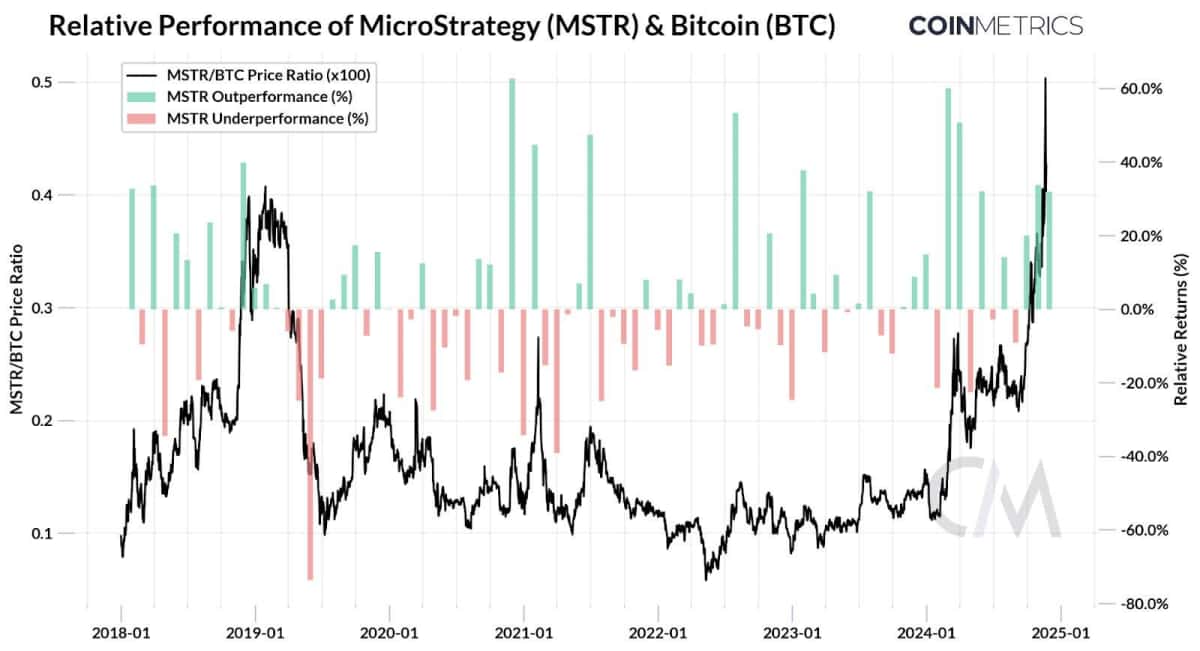
coinmetrics.substack.com
Why it matters: Strategy’s ability to fund further Bitcoin purchases depends in part on whether investors will keep supplying capital through its shares and preferred securities.
US$52 billion — Strategy’s approximate enterprise value
US$53 billion — approximate value of its Bitcoin reserves
851,305 BTC — the company’s reported holdings
US$4 billion — the expanded preferred-share repurchase programme
Strategy’s enterprise value has fallen below the value of its Bitcoin holdings, putting pressure on a financing model built around issuing securities to fund further purchases. The company, formerly known as MicroStrategy, had an enterprise value of about US$52 billion, compared with approximately US$53 billion for its 851,305 bitcoins.
The ratio, which executive chairman Michael Saylor calls mNAV, incorporates debt and preferred shares into enterprise value. A reading below 1 means that enterprise value is less than the value of the Bitcoin holdings; it does not mean Strategy has sold those assets or, by itself, establish that the company cannot raise more capital. The threshold was first crossed in June.
Buyback expansion coincides with further Bitcoin purchases
On Monday, Strategy increased its preferred-share repurchase programme by US$1 billion, taking its total to US$4 billion. Saylor also said the company repurchased US$212 million of its STRC preferred shares and bought US$29.6 million of Bitcoin between November 16 and 22. The company began making daily payments on its preferred shares earlier in November.
Bitcoin’s pullback sharpened the financing question. The cryptocurrency fell below US$56,000 on November 21, its lowest level since September 2024, before recovering nearly 3% on Monday. The decline came amid concerns about a possible unwinding of investments linked to artificial intelligence and a retreat from riskier assets.
Strategy has relied on repeated common-share sales and, later, perpetual preferred-stock offerings to raise money for Bitcoin purchases. That cycle was supported by a share price that offered investors amplified exposure to the cryptocurrency. If the shares no longer trade at a premium to the reserves and preferred securities face steep discounts, raising funds on terms that support continued accumulation could become more difficult. A higher cost of capital would add pressure, although the mNAV reading alone does not show that financing has stopped.
Shares remain well below their November 2024 peak
Strategy’s shares rose more than 3,500% from 2020 to late 2024, but remained more than 80% below their November 2024 record despite gaining about 75% in the third quarter of 2026. They rose around 13% on Monday, alongside technology-linked shares.
The company had at times bought more Bitcoin than the amount newly created through mining, and during part of 2026 accounted for a majority of net accumulation by corporations and exchange-traded funds. In June, it disclosed a US$2.5 million Bitcoin sale, its first since 2022, a departure from the reserve expansion that had marked its approach in previous years.
Stéphane Ouellette, founder and chief executive of FRNT Financial, said the market showed little appetite for leveraged Bitcoin exposure under current conditions. He said Strategy would remain under scrutiny if Bitcoin failed to halt its decline, as the company’s performance can make it appear especially successful in rising markets and leave it exposed to criticism in falling ones.
More in Mining Stocks

Gold rebound lifts Sibanye, AngloGold and Newmont after a week of pressure
Bullion had just posted its steepest weekly fall since March, while the morning’s share gains offer no clean read on what drove each stock.

Matías Lagos takes charge of Chile’s mining pilot centre in its third phase
The CNP wants to bridge technology validation and mine-site use, but it has not disclosed the initiatives or targets for this next stage.

Sungrow’s GEPS 2026 looked beyond product launches to partner growth
Installers, distributors and EPC partners came from more than 80 countries, but the summit’s central question was how to turn that reach into business.