
Metalite expands Quebec’s Launay gold project, but Macamic targets remain untested
A 29.9-kilometre mapped fault corridor ties three exploration blocks together, but the case still depends on historical records and field checks.
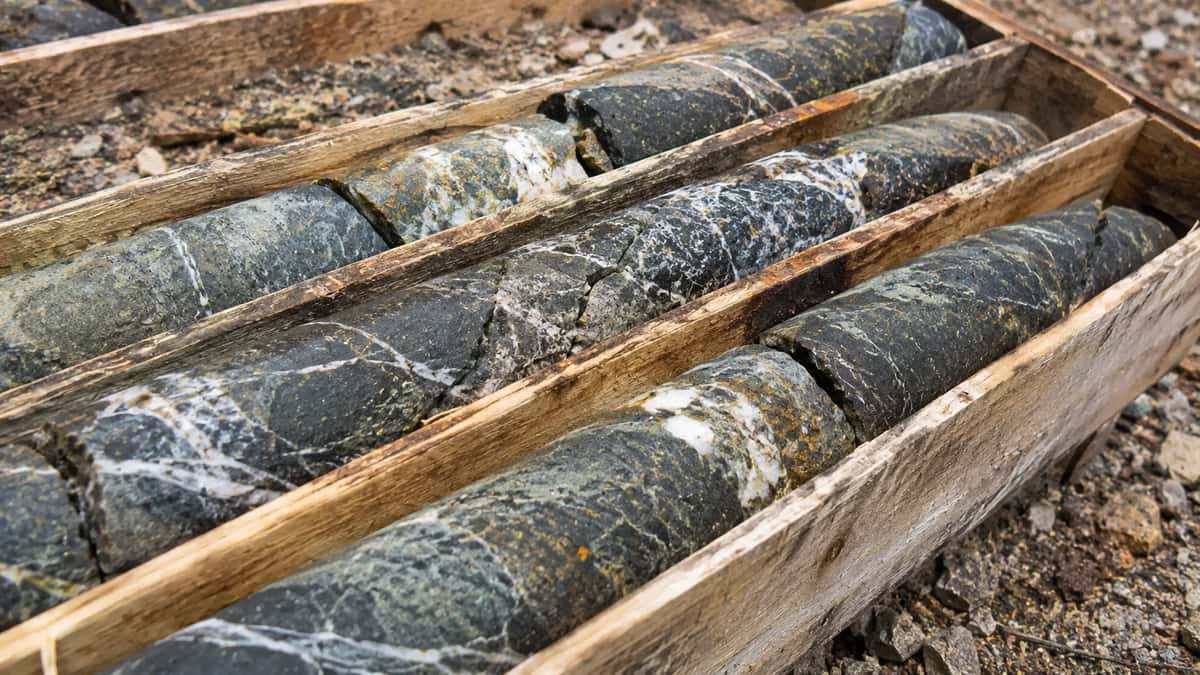
Why it matters: The added ground broadens Metalite’s exploration options in Abitibi, but mapped structures and historical assays do not establish a gold resource.
3,352 hectares — approximate area added through 59 mineral claims and applications.
About 14,000 hectares — total area across Launay’s three exploration blocks.
29.9 kilometres — mapped segments of the Macamic fault across the property.
19 applications — mineral rights still awaiting Quebec approval.
Metalite Resources expanded its Launay gold project in Quebec by approximately 3,352 hectares, adding 59 mineral claims and rights applications along the Macamic fault, the company said on November 20, 2026. The enlarged property covers about 14,000 hectares across three exploration blocks, but the expansion does not establish a mineral resource or demonstrate that the mapped structures contain economically recoverable gold.
Three blocks carry different exploration histories
Launay comprises Chauvignet, Macamic-Authier and Lyndhurst. Chauvignet, the central block, covers approximately 5,015 hectares and includes the Trojan zone, where historical work recorded 105 diamond drill holes totalling about 21,826 metres. Metalite says the data can help guide evaluation of deformed volcanic rocks, intrusive contacts and quartz-vein systems associated with the area’s gold exploration.
Macamic-Authier covers approximately 4,978 hectares to the northwest and adds a substantial length of the Macamic fault, alongside historical silver and lead occurrences. Lyndhurst covers approximately 3,933 hectares and lies where the Lyndhurst and Macamic structural corridors interact. The blocks have different levels of historical coverage; the company’s stated aim is to identify areas where structures and hydrothermal processes may have concentrated gold.
The mapped Macamic fault segments total 29.9 kilometres across the property: about 13.2 kilometres in Macamic-Authier, 8.9 kilometres in Lyndhurst and 7.9 kilometres in Chauvignet. Launay lies within the Abitibi greenstone belt, which extends across Quebec and Ontario. A regional fault is a geological feature of interest, but its presence alone does not confirm mineralization or a deposit.
Historical records guide follow-up work
Metalite reviewed and digitized 88 historical assessment reports for Macamic-Authier, identifying 24 previous holes within the block with a combined length of approximately 3,606 metres. The records include geological descriptions, geophysical surveys and earlier drilling, which the company can use to identify areas already tested and information gaps.
One historical occurrence, Chemin de Fer-Sud, is associated with silver and lead. Reports from 1962 describe three main quartz veins hosted in chloritic schists, with pyrite and lesser chalcopyrite and galena. A historical sample returned 0.17 g/t gold, 77 g/t silver, 0.12% copper and 1.15% lead. Metalite’s current professionals have not verified those results in the field, so they are exploration context, not evidence of an economically recoverable resource.
Field checks and approvals remain ahead
Metalite’s 2026 exploration work combined high-resolution satellite imagery, radar, LiDAR topography, historical data and field prospecting. The company also used TerraEye spectral studies to identify possible alteration signatures. The work flagged 17 locations for geological review, with six selected for priority follow-up; these are preliminary targets, not drilling results.
Planned follow-up includes soil geochemistry, ground geophysics and further geological checks to compare remote-sensing anomalies with field conditions. The company will also need to secure approval for 19 mineral-rights applications and obtain the necessary regulatory authorizations before new drilling. Road access near Macamic, Authier and Taschereau and a railway close to parts of the property may support exploration logistics, but do not establish mine economics. Launay remains at the exploration stage, with future work subject to approvals and financing.
More in Mining Stocks

Anthropic shares retreat after record IPO as AI infrastructure costs loom
Its SEC filing identifies electricity and grid connections as constraints on data-centre expansion, testing how quickly computing capacity can grow.

SpaceX secures US$44 billion for Nvidia chips, with lease risks still in play
The processors will be held in a separate financing vehicle, while SpaceX remains responsible for lease payments under the deal.
Nuclea Energy buys Moltex reactor assets, but the 500 MW design is not licensed
The acquisition adds fuel-recycling technology to a portfolio built around smaller reactors for remote power users.