Chile's exploration rebound leaves junior miners chasing capital for new finds
Majors still dominate the budget, while a proposed junior-market regime has yet to become a working route to capital.
Why it matters: Chile's ability to replace ageing copper resources depends on whether exploration capital reaches beyond extensions around operating mines.
US$874.7 million — Chile's exploration budget in 2025, its highest since 2013.
51.4% — the share spent exploring within existing mines, against 23.6% for initial exploration.
78.9% — the share of exploration spending controlled by major miners, compared with 14.8% for junior companies.
77 of 235 — Cochilco-identified prospects that were inactive.
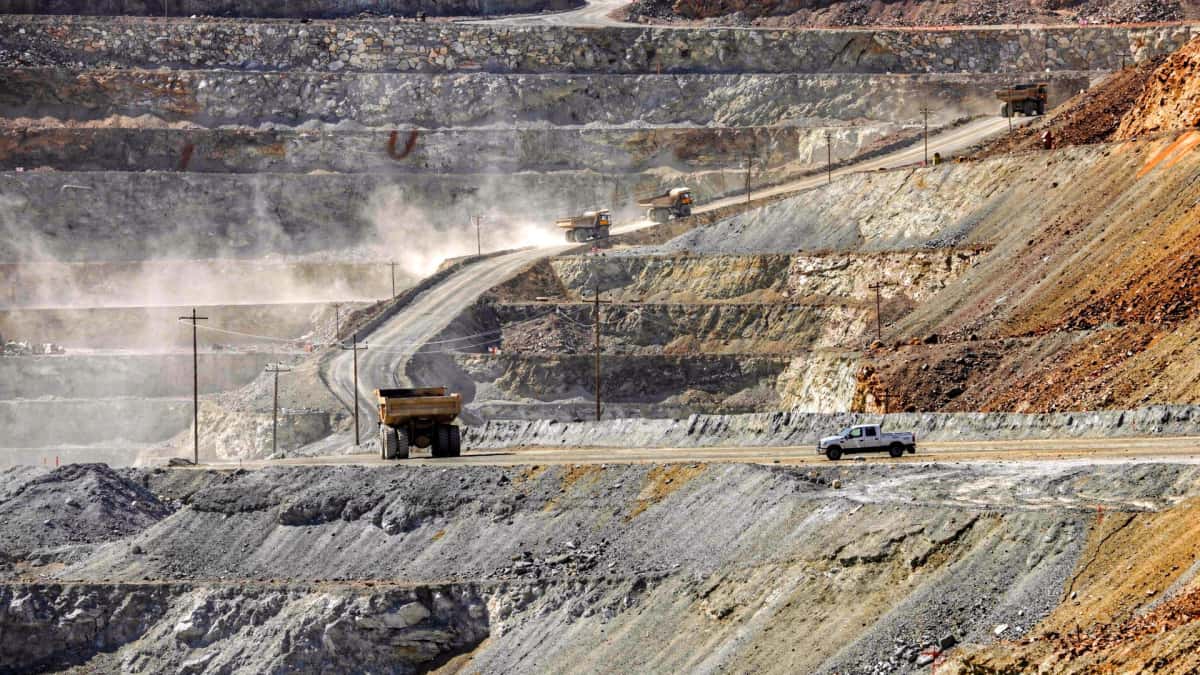
Chile's mining exploration budget reached US$874.7 million in 2025, its highest level since 2013, but the spending mix and concentration of capital leave junior explorers with a smaller role in funding the search for new deposits. The country attracted 7.1% of the global exploration budget of US$12.4 billion, retaining its position as the world's fourth-largest destination since 2013.
The total remains below the US$1.035 billion peak recorded in 2012. After falling to US$459 million, the budget has recovered, but participants at the eighth Fexmin exploration and mining fair argued that a rising total does not necessarily mean more greenfield exploration. More than half of Chile's 2025 spending went to exploration within existing mines; initial exploration aimed at finding new deposits accounted for less than a quarter.
Most spending stays close to operating mines
The distribution reflects a project pipeline weighted toward expansions and brownfield development, according to Undersecretary of Mining Álvaro González. Chile produced 5.4 million tonnes of fine copper in 2025, below its 2018 record of 5.8 million tonnes.
Juan Ignacio Guzmán, general manager of Gestión y Economía Minera, proposed the term “khaki” exploration for work within 10 to 20 kilometres of operating mines. Such exploration can connect discoveries to existing infrastructure, but it is distinct from exploring a district without mines. Guzmán said the work may target resources that can be incorporated into current operations even where they are lower grade, deeper, or contain clay or impurities. He linked the issue to costs, noting that 60% of Chilean copper production sits in the fourth quartile of the global cost curve.
The geological potential is not considered exhausted. The US Geological Survey identifies Chile's Eocene-Oligocene metallogenic belt as one of the areas with the greatest density of undiscovered copper, although deposits lie at greater depths. Fexmin president Patricia Narváez also pointed to gaps in geological information, particularly in central and southern Chile.
Junior explorers face a capital gap
Cochilco's register identified 94 companies with exploration activity: 83 junior companies, including 48 Canadian, 18 Australian and 15 Chilean firms. But majors accounted for 78.9% of spending, against 14.8% for juniors, which often take on the early-stage risk of identifying deposits. The register also counted 235 prospects, 77 of them inactive.
Exploration geologist Aquiles Alegría said independent geologists can fund early work personally before seeking to option projects to junior companies. EY tax specialist Matías Moroso said Chile lacks tax incentives specifically focused on exploration. Some existing mechanisms require a company to have income or sales, while VAT on drilling, studies and engineering can build up as a financing cost for exploration-only businesses. Moroso also cited uncertainty around the tax treatment of net smelter return and earn-in agreements.
A proposed statutory regime would allow stock exchanges, with approval from the Financial Market Commission, to create a segment for mining exploration issuers. The proposal would replace some registration and public-offering requirements with rules proportionate to a company's development stage, but it is not yet in force. Moroso cited Canada's flow-through shares, which let junior companies transfer exploration expenses to investors, as one model Chile could adapt.
Vicuña illustrates the long path from discovery to drilling
The cross-border Vicuña district offers examples of how long exploration can take. Filo del Sol was discovered in 1997 and JoseMaría in 1994. A Filo del Sol diamond-drilling campaign in 2020 and 2021 reached greater depth after about two decades of limited drilling. Hole 041A intersected 858 metres at 1% copper equivalent, including 300 continuous metres at 3.5%. Those reported intervals are drill lengths; no true widths were provided.
Vicuña Corp., controlled equally by BHP and Lundin Mining after a merger completed in January 2025, reports resources exceeding 46 million tonnes of copper, 97 million ounces of gold and 1.77 billion ounces of silver across its two main deposits. JoseMaría is advancing through feasibility and pre-construction work, while Filo del Sol is undergoing feasibility studies.
The company plans a further 55,500 metres of drilling in 2026 and 2027, mainly at Filo del Sol, using up to eight rigs at elevations of 4,500 to 5,500 metres; some holes could exceed 1,500 metres. The program is planned exploration, not announced production, and its results will depend on the campaigns as they progress.
More in Mining Stocks
Falcon Metal gains an ASX route through Jacaranda as Botswana assets remain in exploration
From Kalahari copper to Orapa kimberlites, the portfolio covers established mineral districts but still depends on work to define its targets.
Kinross faces investor suit over 2-million-ounce production target
Investors allege the miner maintained its outlook despite a resource shortfall, with recovery problems at Round Mountain central to the case.
Tudor exits Teck and Southern Copper, but its 13F leaves copper exposure unclear
The filing captures listed holdings at quarter-end, while several instruments that could carry metal exposure remain outside its scope.